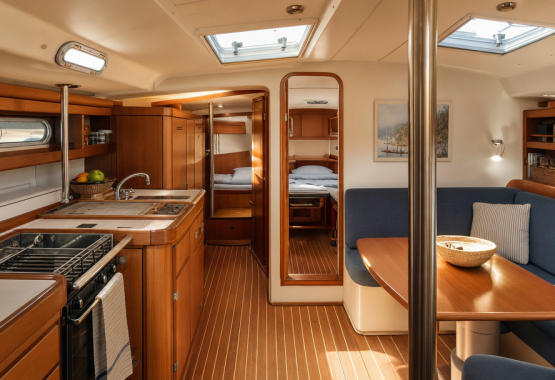
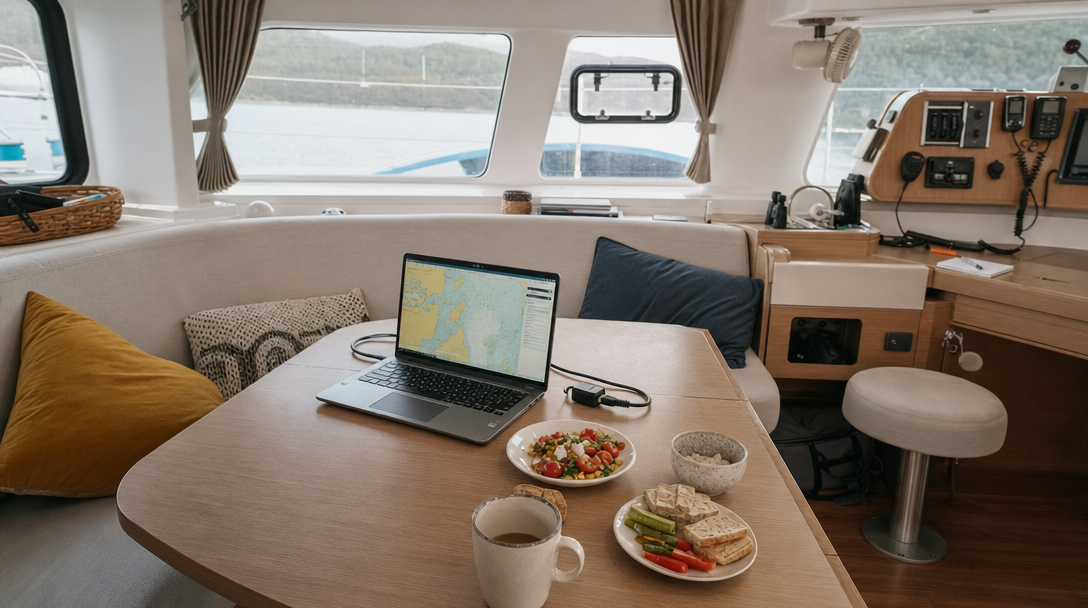
Coastguard rescuers board a small sailing catamaran and stand still. The engine vibrates softly at idle. A laptop screen glows on the table in the wardroom, with the navigation system running. Half-drunk coffee is cooling nearby, and the food prepared for lunch is on the counter. Passports, cash, and phones are all in place. Flares and life jackets are neatly stowed in the cabins. But there's not a single person on board.
How could three experienced yachtsmen vanish from a well-maintained vessel in broad daylight? The mysterious disappearance of the crew of the catamaran Kaz II led police to consider theories ranging from a pirate boarding to a carefully planned escape. However, the official investigation came to a frighteningly prosaic conclusion, linking the tragedy to a single tangled fishing line.
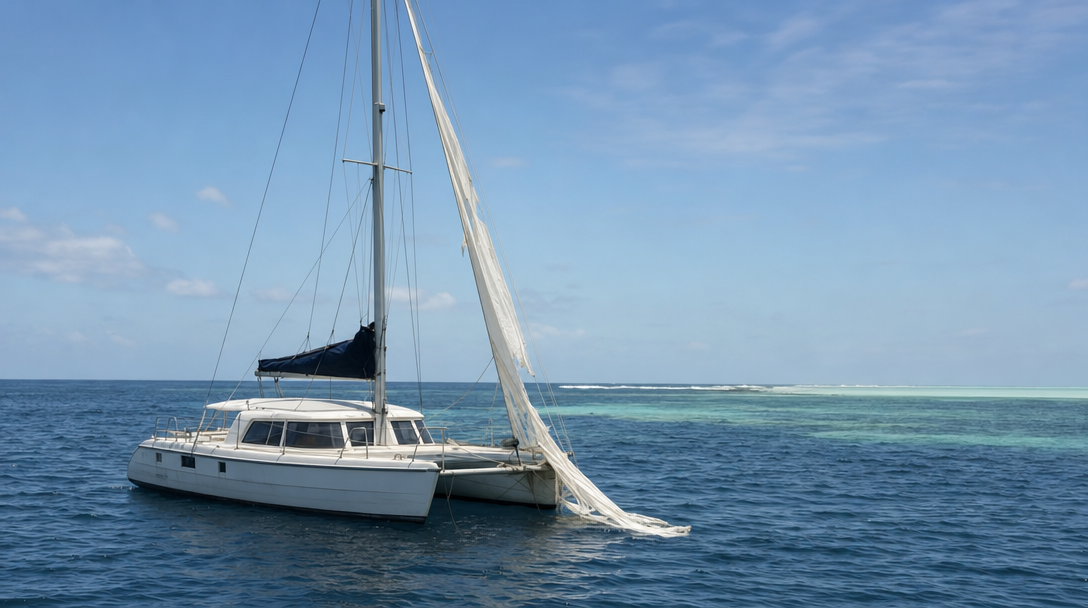
What was discovered on the empty catamaran "Kaz II"
On April 18, 2007, an Australian Coast Guard patrol helicopter spotted the vessel offshore. One of the sails was torn and lashing the water, and no one responded to radio calls. Rescuers were only able to reach the catamaran by boat two days later due to heavy seas.
There was no sign of an emergency evacuation inside. Three life jackets were still in place, the EPIRB, flares, and inflatable raft were intact. The radio was on the emergency frequency, and the engine continued to hum in neutral. The owner's gun was locked in the safe.
Forensic experts found no blood, no broken items, no damage to the hull, or evidence of a fight. The combination of a perfectly functional vessel and untouched belongings baffled investigators. The lack of signs of a struggle or preparation for evacuation indicated that the crew abandoned the empty catamaran "Kaz II" abruptly and simply did not have time to use emergency equipment.
Who set out on the voyage and what is known about the first days?
Three experienced yachtsmen set out on the voyage: 56-year-old owner and skipper Derek Button, and his neighbors, brothers Peter and James Tunstead, 69 and 63. The morning before departure, they calmly stocked up on groceries, filled the tanks, stowed fishing gear, and checked the radio. James called his wife and said the weather was perfect.
On Sunday, April 15, at 10:00 a.m., the vessel departed the harbor of the resort of Airlie Beach. The first days of the passage proceeded as planned. Coastal stations recorded normal progress along the route, and no distress signals were received. Until the latest video recording, there was no evidence of any breakdown, conflict, or alarm that could have foreshadowed the yachtsmen's disappearance in Australia.
The key to solving the mystery was a small digital camera found on a table in the wardroom. The last video was filmed on April 15 at 2:30 PM. The footage shows Derek at the helm, Peter sitting in the stern with a fishing rod, and James filming them, cracking jokes. The boat is noticeably rocking on a five-foot wave, but the men are completely calm. Just an hour after this recording, according to the GPS, the catamaran veered off course and began drifting erratically.
Which versions of the disappearance have not been confirmed?
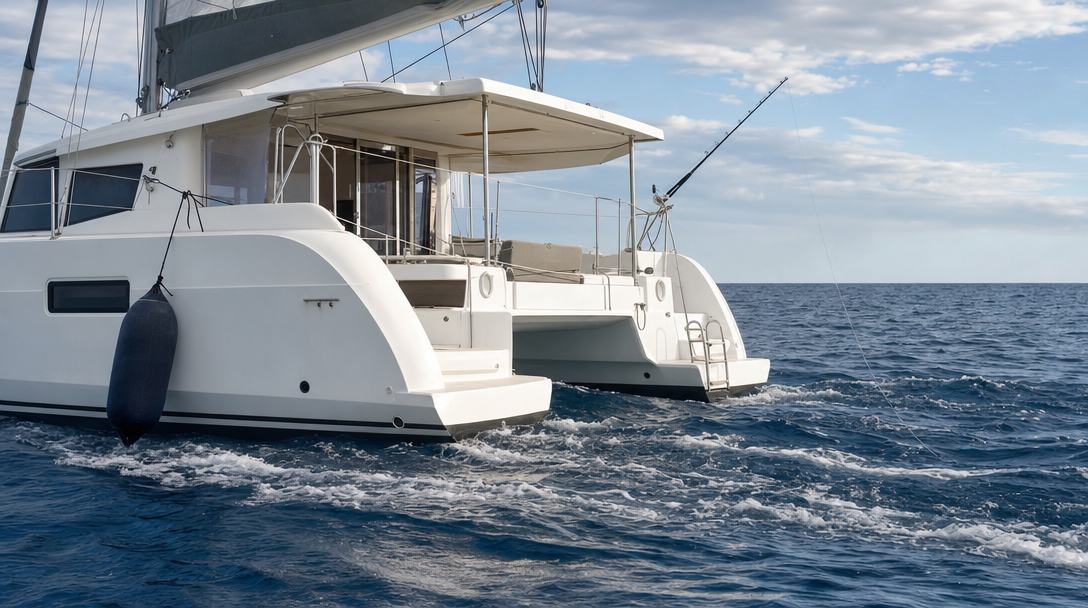
Initially, the press and police were working on a criminal scenario. The trigger was fenders—heavy rubber tubes typically suspended during mooring—that had been lowered overboard. A theory arose that a third-party vessel had approached the catamaran and the crew had been murdered. However, a video recording revealed that the fenders had been dangling overboard even while the men were on the boat. They had simply forgotten to stow them on deck after leaving port.
An expert examination completely disproved the boarding theory. There were no footprints or abrasions from mooring ropes on the deck. All valuables, cash, and expensive electronics were still there. A check of bank accounts and insurance policies also ruled out a staging: the men had no significant debts, and their insurance policies did not provide for missing persons payouts.
The tragedy could not be attributed to a sudden storm either. The wind did indeed pick up along the route that day, and the waves reached one and a half meters. But for a ten-meter sailing catamaran, these are operational conditions. The official investigation into the disappearance of the Kaz II concluded that the cause lay not in an external attack or destructive weather, but in an internal chain of tragic accidents.
How the official version explains the disappearance of the crew
After a year of investigation, Queensland's Chief Coroner Michael Barnes published his report. It used the so-called "Swiss cheese" model: a disaster occurs due to the confluence of several small, initially non-fatal factors. Based on navigation data, video, and the boat's condition, the investigators reconstructed a possible scenario.
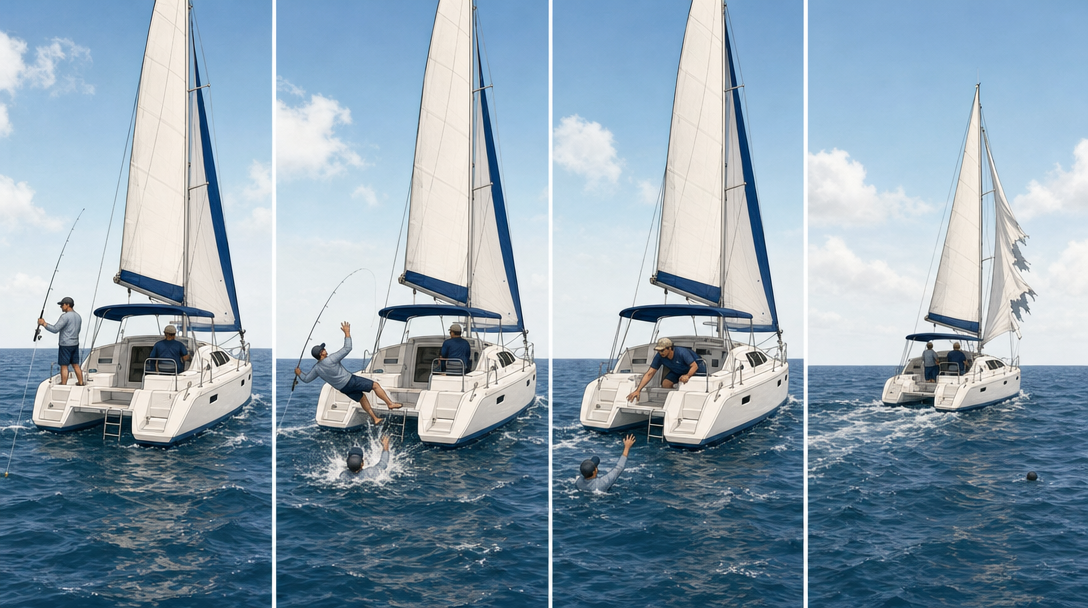
- Tangled fishing line. After recording the video, Peter remained at the stern. According to investigators, the unraveled trolling line became entangled in one of the steering propellers.
- The fall of Peter. To untangle the tackle, the man stepped out onto the narrow, slippery platform behind the stern railing without a life jacket or harness. The boat rocked sharply on a wave, causing him to lose his balance and fall into the water.
- Rescue attempt. Hearing the scream, James ran out of the wardroom. Acting instinctively, he leaned over the railing, trying to reach his brother, but the rocking motion sent him overboard as well.
- Skipper's maneuver. Derek Button was left alone on the boat. Seeing his friends in the water, he immediately shifted the engine into neutral and rushed to the deck to lower the sails.
- Boom strike. The catamaran, without a rudder, turned its bow into the wind. At that moment, the boom—the heavy metal beam at the bottom of the sail—flipped over. The coroner suspected the boom struck the skipper on the head and threw him into the ocean, tearing the sail with the sudden jerk.
This reconstruction answers the question of what happened to the Kaz II crew, establishing a logical chain of events. However, the only established facts are the unraveled fishing line, the torn sail, and the vessel off course, while the actual falls are merely a probable model for investigators.
Why did the catamaran continue moving while the crew was unable to escape?
Once in the water, the three men were doomed. The catamaran, with its engine running and the remaining sails inflated, continued to move away at about 10 km/h. The remaining life preservers, radio, and raft were out of reach. According to the coroner's report, the sailors quickly exhausted themselves trying to catch the boat and drowned in the strong current.
Despite the coherence of the official account of the Kaz II's disappearance, unanswered questions remain. Forensic experts found no traces of blood or microfibers from the skipper's clothing on the heavy metal boom. Furthermore, it remains unclear why Derek Button, upon seeing people overboard, didn't immediately throw them a life preserver, which was hanging right by the wheel.
The tragedy of the empty catamaran demonstrated in practice a strict yachting rule: any safety equipment, from a safety harness to a life jacket, is only useful if it is put on before an emergency situation gets out of control.