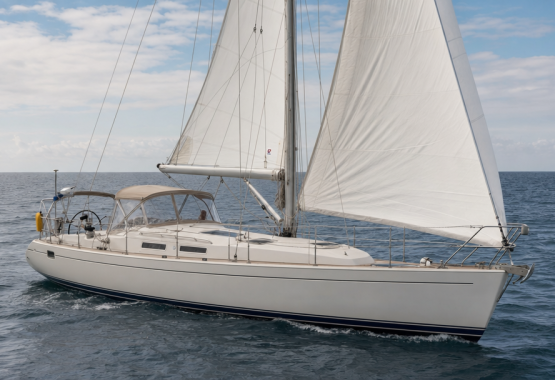
Before leaving, the crew routinely loads cardboard boxes of parts, glass bottles, aerosol sunscreen, and a car charger into the lockers. On shore, these items seem harmless and convenient, but on board, the humidity, list, and constant vibration change the rules of the game.
What's truly dangerous, and what just makes life more difficult? The list of things to avoid on a sailboat combines harmless maritime superstitions, cleaning hassles, and real risks. While a banana in the galley is just a joke, a battery cable without a fuse can cause a fire. Understanding these differences helps you understand which items simply need to be replaced before the season, and which areas of the boat require immediate technical inspection.
What's just out of place on a boat: bananas, glass, and cardboard
Bananas top many lists of undesirables on board. This is an old maritime superstition with many theories about its origin, but the fruit itself poses no real danger. The only exception is a racing boat with a superstitious skipper, where a banana might be an unwelcome guest solely for the sake of the crew's peace of mind.
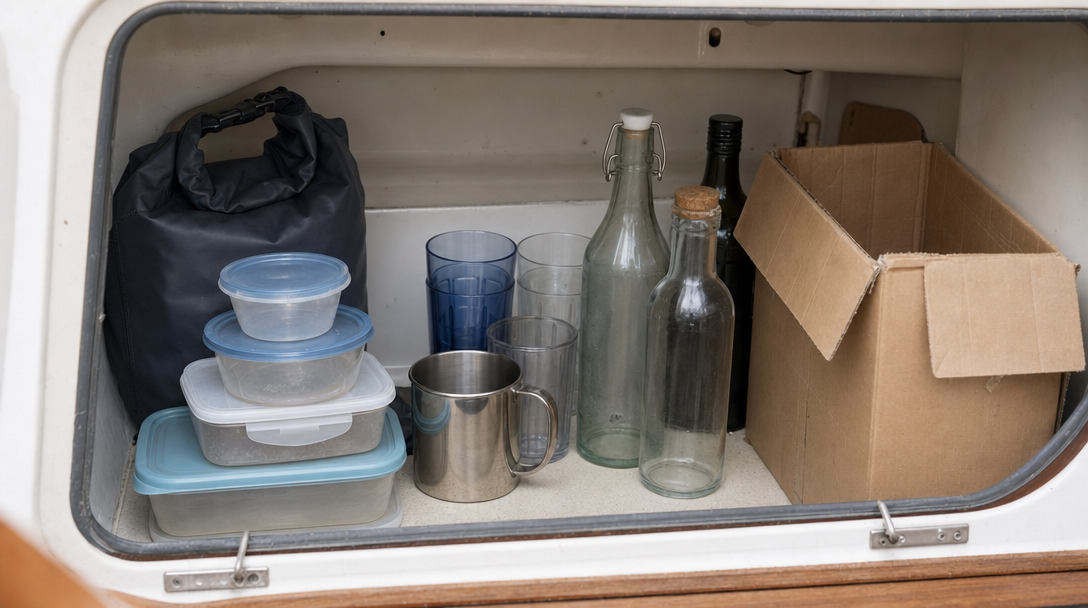
Glass is a different story. Wine glasses, bottles, glass mugs, and jars easily shatter when the boat rolls, rolls, or is hit by a wave. The practical answer to the question of why glass shouldn't be used on a boat is simple: shards end up in cockpit drains, bilges, non-slip surfaces, and under the floorboards. A broken bottle turns routine cleaning into a long and dangerous search for small shards in areas where the crew often walks barefoot.
Cardboard boxes on a boat are also poorly suited for long-term storage. In a humid environment, they become damp, deteriorate, moldy, and stained. Insects hide in the folds and glued seams, and the paper itself becomes a rodent bait. A box of parts forgotten in a dark locker for a couple of months turns to dust and becomes a breeding ground for pests.
For storage and everyday life on board, there are more reliable solutions:
- glass should be replaced with stainless steel, acrylic, food-grade plastic or thermos mugs;
- Instead of glass bottles, it is better to choose metal cans;
- Replace cardboard with plastic containers, dry bags, mesh bags, or tool organizers.
A separate household observation concerns Yeti thermos mugs: when left near a compass, such a metal container can deviate its reading by up to 10°. This isn't a reason to avoid metal, but it is a good reason to avoid placing random objects near the navigation station.
What household items create excess dirt and maintenance?
Protecting your skin on the water is essential, but using aerosol sunscreen on the deck quickly becomes a problem. The sprayed product settles on cushions, gelcoat, non-slip surfaces, canopy, handrails, helm, and rigging. This leaves surfaces greasy and slippery for a long time, directly affecting the safety of movement on the boat.
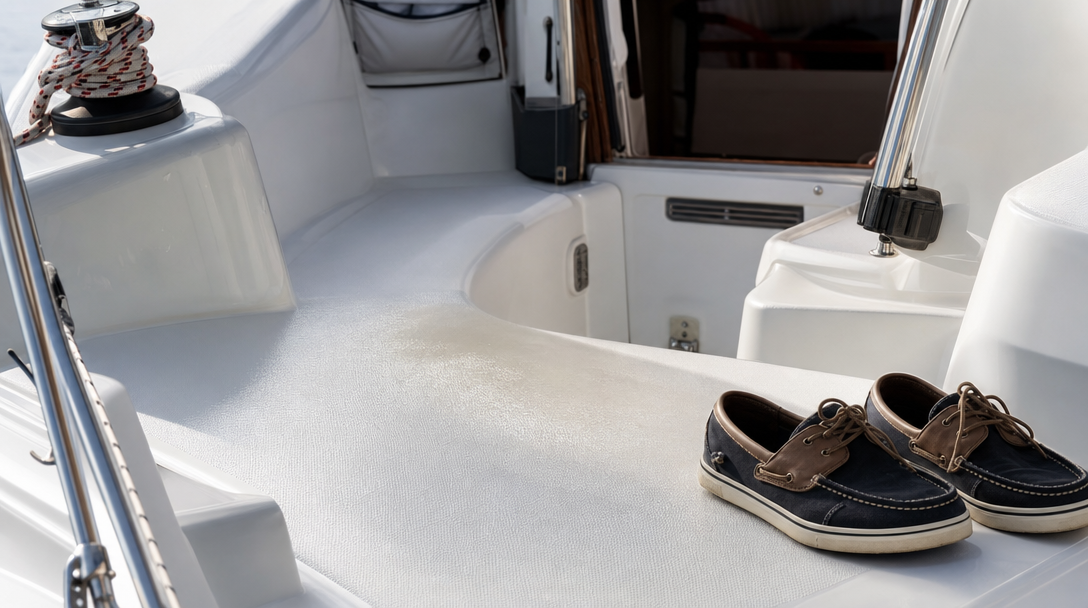
It's more practical to apply the cream before going out on the water or use a lotion and a stick. Another source of cleaning problems is dark-soled shoes, which leave black marks on the gelcoat, cabin floor, and cockpit. This isn't an emergency, but the boat already requires constant maintenance. Before boarding, guests should simply check whether their shoes are suitable, and crew members should choose deck shoes with light-colored or special non-marking soles.
Why household solutions aren't suitable for marine electrical applications
Marine electrical equipment constantly operates in a humid, salty, and vibrating environment. Because of this, a temporary solution that seemed reliable at the time of installation eventually turns into a hidden threat. Most often, problems begin with household extension cords, surge protectors, cheap car chargers with alligator clips, and switches from the hardware store.
Why does untinned wire age unnoticed?
A standard copper cable initially works well, but over time, the bare copper begins to corrode just beneath the insulation. This damage is undetectable by external inspection. When attempting to repair a faulty circuit and stripping the wire, the strands are found to be black for several centimeters. After a couple of cuts, the cable becomes too short and no longer reaches the terminal.
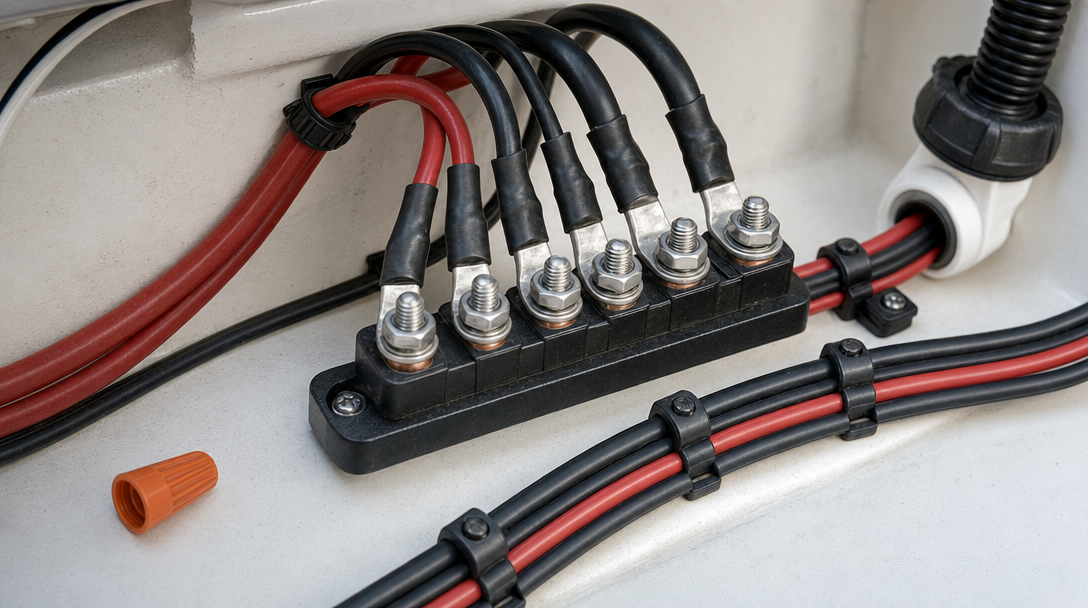
Special tinned boat wire offers significantly better corrosion resistance. It's especially important to use it in bilges, lockers, aft compartments, behind panels, and in mast wiring. Inspecting these hidden and damp areas provides much more information about the system's condition than a quick glance at the wires at the chart table.
Which connections are considered temporary?
A standard household extension cord or charging clip is often used on board simply because "everything worked last time." However, on the water, clips quickly loosen, become coated with an oxide film, fall off, and start sparking. Common household twist-on connectors and screw-on plastic caps also lose contact due to vibration, causing intermittent faults. A twist-on connector found behind a panel doesn't necessarily mean the entire wiring is faulty, but it is a good reason to thoroughly inspect the surrounding components.
When assessing a boat's electrical system, it's important to immediately distinguish between temporary garage installations and reliable marine solutions. Signs of proper installation include tinned copper cable, special crimp connectors, ring terminals, adhesive-backed heat shrink, high-quality connectors, busbars, and mandatory strain relief. The connection must be not only electrically stable but also mechanically robust.
- Check hidden and damp areas for signs of corrosion under insulation.
- Do not leave automotive clamps or household extension cords as a permanent part of the system.
- If a twist is found, inspect nearby connections and circuits.
- Make sure the wires do not put strain on the terminals and connectors.
What to check first in heating and battery circuits
A portable heater on a boat is one of the most serious sources of risk. A cabin is a small, sealed space: combustion quickly burns up oxygen, fuel-burning appliances can produce carbon monoxide, and an open flame greatly increases the risk of fire. Additionally, some heaters produce severe condensation, especially when placed close to fabrics, wood, fuel, and batteries.
Carbon monoxide is insidious because it can't be seen or smelled. Therefore, any fuel-burning appliance in the cabin requires a working CO detector. A safer heating solution is considered a permanent marine system with a separate exhaust and forced ventilation. Yachtsmen sometimes still use hanging kerosene lamps, but these are more of a localized source of light and comfort than a full-fledged and safe heating method.
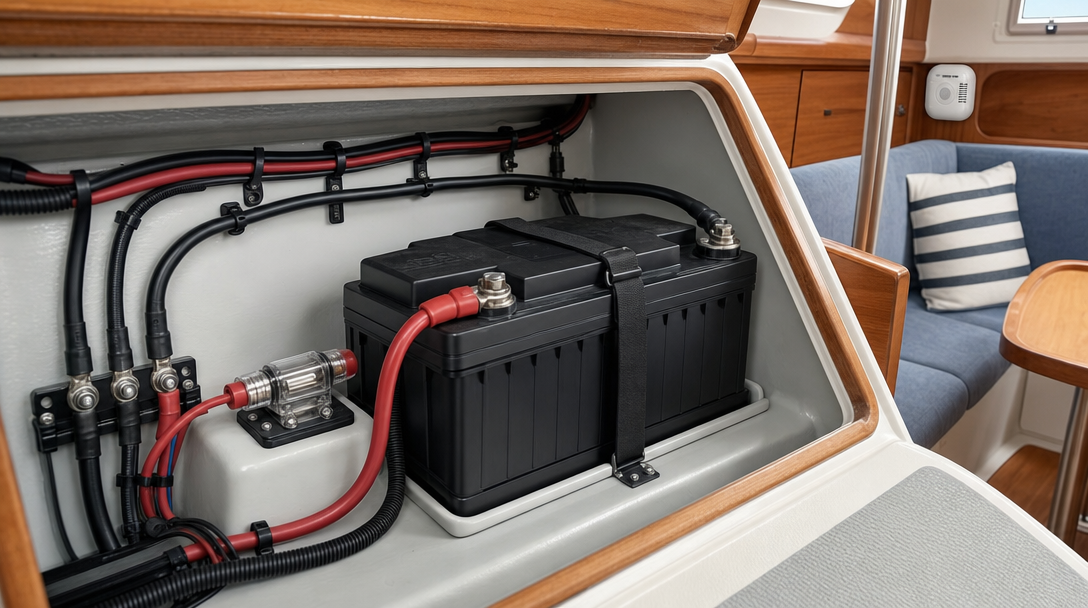
The second critical section is the wires connected directly to the battery. When a short occurs, the battery can deliver a colossal current. If the cable doesn't have a fuse or circuit breaker near the power source, the wire itself effectively acts as a fuse. It instantly heats up, melts the insulation, ignites nearby cables, and causes a massive fire.
Most often, small additional circuits are left unprotected: power for the radio, USB chargers, the solar panel controller, or an unknown wire running behind the trim. But the battery doesn't care how light the load is under normal operation. In the event of a short circuit, current will flow unimpeded through the circuit. This is why the fuse on the battery wire must be located as close to the terminal as possible and strictly match the rating of the load.
For example, if the impeller of a bilge pump seizes due to debris, the motor will continue to draw more and more current. If the fuse rating is correctly sized (say, 7.5 A for a specific small pump), the circuit will simply open. However, if you install a 15 or 20 A breaker "with room to spare," the circuit will overheat and burn out. The fuse should always be the weak link.
- Check that there is a working CO detector in the cabin if a fuel-fired instrument is used on board.
- Trace each wire from the battery and make sure the protection is installed close to the power source.
- Check the fuse ratings against the power consumption of specific circuits, inspect the cross-section of the wires and the condition of the terminals.
- Be sure to label active circuits and remove old, unused wiring.
What to remove from the boat and what to check before leaving
Bananas can safely be relegated to the category of amusing superstitions, while dirty shoes and sunscreen sprays should be listed as reasons for unnecessary cleaning. Glassware and cardboard boxes should be permanently replaced with plastic and dry bags due to the unique conditions on board. However, fuel heaters, twisted wiring, and improperly protected battery circuits require special attention.
Before heading out on the water, just ask yourself four short questions to improve boating safety:
- Is there any breakable glass or soggy cardboard on board where it would be more logical to use plastic and stainless steel?
- Have temporary car clamps and household extension cords become a permanent part of the on-board network?
- Is the CO sensor working if there is a fuel heater or stove running in the cabin?
- How to protect boat wiring from fire: Is there a proper fuse on each cable coming directly from the battery?