A yacht listed for €500 seems like a rare bargain: the price is comparable to the cost of a typical trip, and the boat is already moored. The question immediately arises: should I book tickets and go for a viewing, or keep looking? A low price alone doesn't indicate the condition of the hull or the convenience of the layout. It could hide a truly great deal, or a never-ending series of repairs immediately after moving in.
An inexpensive yacht for living and cruising can cost very little. There are known cases of seven-meter boats being purchased in Sweden for 500 euros, and sometimes vessels are sold for one dollar or even without a price being announced. A couple of days of actively monitoring local websites can compile a list of 150 boats in a dozen countries. This range of options is essential: only a live comparison will reveal which one is truly suitable for life on the water.
Why a low yacht price doesn't eliminate post-purchase costs
An affordable boat is almost always sold on the used market, but age alone doesn't determine its condition. A vessel can still be in good condition even 70 years after its launch. There are indeed offers on the market for a few hundred euros or a mere dollar when the previous owner urgently needs to transfer the yacht to new hands.
The advertised price is just a down payment. Once you've moved on board, hidden faults or components requiring urgent repairs are sure to be discovered. Experienced yachtsmen recommend setting aside a reserve budget—roughly half the boat's price or even more. This will allow you to comfortably spend your first few months on the water, without turning your life into a constant search for spare parts.
Former charter boats require special attention. A recent cosmetic refit often creates the illusion of well-maintained vessels, masking the severe wear and tear from intensive chartering. The condition of such vessels requires special attention, not relying solely on their attractive appearance.
Therefore, before purchasing, it is useful to immediately divide the budget into two parts: the cost of the yacht itself and a reserve of funds for initial repairs and furnishings.
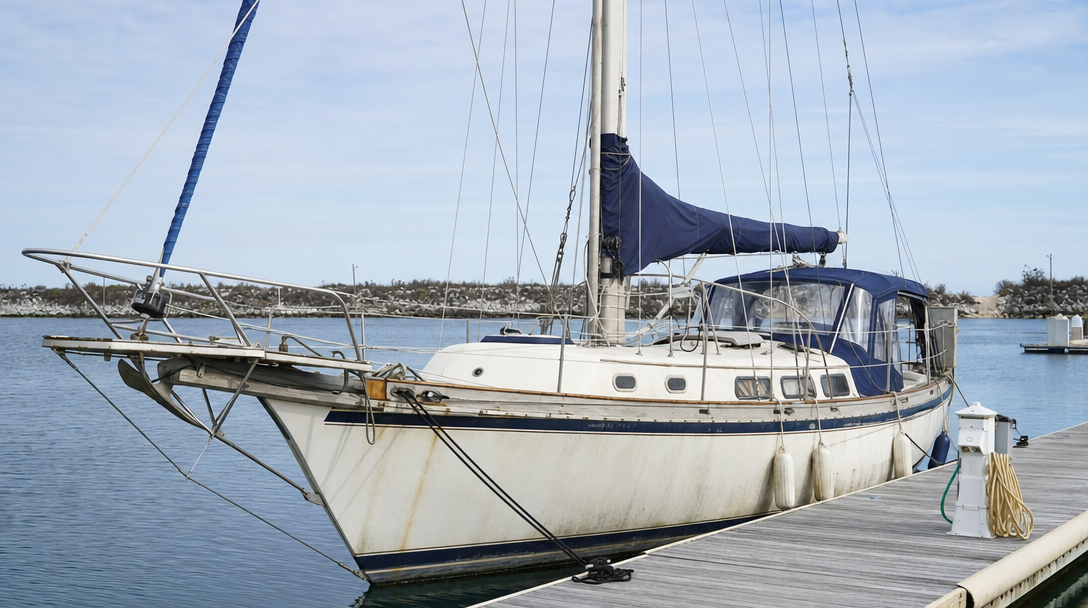
Where to look for cheap yachts and not limit yourself to one website
It's best to search for a boat using several channels simultaneously. Experience shows that local sites in Scandinavia, especially Sweden and Denmark, produce good results. Many interesting offers regularly appear on websites in Germany, the Netherlands, and other European countries.
| Channel or direction | What to look for | What to consider |
|---|---|---|
| Local sites in Europe | Ads in a specific country's language | Search queries need to be translated |
| Marins | Classifieds and boats marked for sale | A personal visit will be required |
| USA | eBay, Craigslist, and auctions | A low starting price does not mean it is ready to go to sea. |
| Greece | Boats left at the pontoons | Requires on-site verification of information |
| Areas after hurricanes | Damaged yachts for restoration | The starting price does not reflect the cost of repairs. |
Marinas don't just post ads on designated boards. Yachts are often sold without an online listing—a "For Sale" sign on the boat's rails is sufficient. If you can rent a car, it's worth simply driving along the coast and inspecting the marinas in person.
There are rumors among yachtsmen about abandoned boats at pontoons in Greece, which marinas are allegedly selling off to pay off debts. However, such rumors always require on-site verification and don't guarantee an easy deal. A similar situation is developing in regions affected by hurricanes. There are known cases of two damaged catamarans being purchased for a combined $10,000, but the final cost of their restoration remains unknown.
In northern latitudes, especially in Scandinavia, prices often drop toward the end of the sailing season. Owners find it easier to compromise on price than to pay for winter storage in dry dock. In the fall, it's a good idea to check classifieds sites more often than usual.
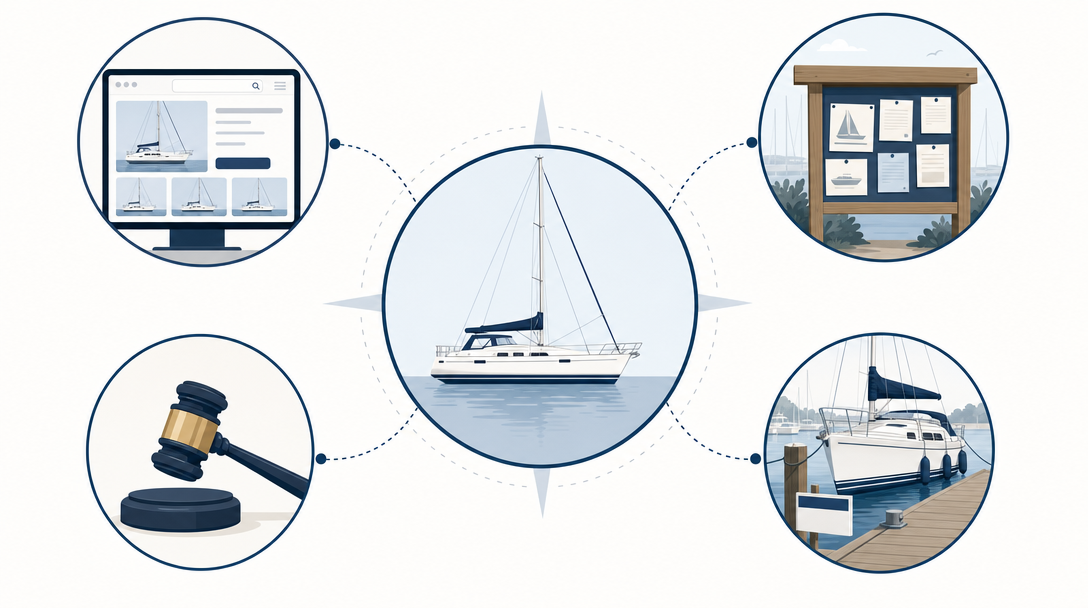
How to Build a Broad List and Achieve Lower Prices
If you're looking for cheap yachts in Europe, it's best to avoid global English-language portals. Simply translate the search query "buy a yacht" into your local language and browse regional search results. This is where the bulk of private listings from direct owners are published.
- Select multiple regions and localize your query. For each destination, look for ads in the local language and immediately bookmark relevant websites.
- Gather a broad list. A shortlist of thirty options won't be enough: half will be discarded during the rewriting stage, and the rest will disappoint upon inspection. It's advisable to build a database of at least 100–150 references.
- Check for updates regularly. Great deals are quickly snapped up. Your boat database will need to be updated daily until the moment you buy.
- Contact sellers before your trip. Make sure to confirm the exact location of the boat, the current price, and the owner's willingness to show the boat in person.
- Leave room for negotiation. It makes sense to consider boats priced slightly above your limit. With careful and time-consuming bargaining, you can sometimes knock the initial price down by half.
How to negotiate when buying a yacht always depends on the seller's motivation and the defects identified. A wide range of options is beneficial because it allows for unhurried negotiations. If the owner refuses to budge, you can always turn around and inspect the next boat on the list. The main thing is to make sure the seller is available and available for a meeting in advance.
What to check on a yacht for living before making a decision
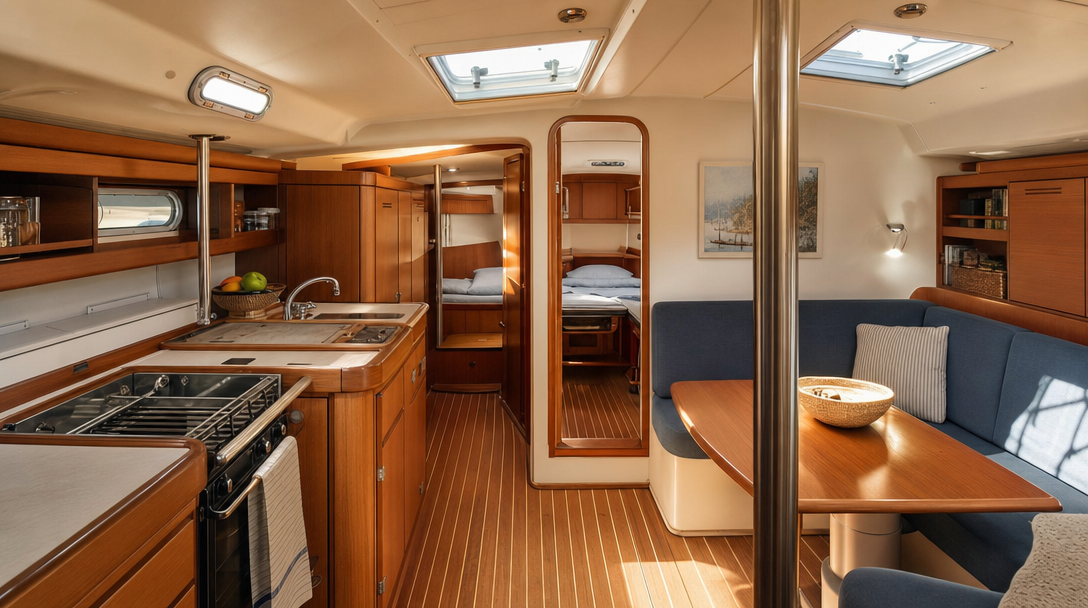
The same hull length doesn't guarantee the same interior volume. A narrow, ten-meter boat with a sporty design will only accommodate a tiny head and a camp stove. A vessel of the same length, but designed for cruising, will offer two separate cabins, a full bathroom, a galley, and a wide cockpit. When choosing a yacht for living, you need to consider its layout.
No photograph can truly convey the ergonomics of the space. When inspecting, it's important to go down to the cabin and check the headroom: constantly having to bend over quickly becomes tiring. Lie down on the bunks to assess their length and width. The discomfort of a cramped shower or an awkward galley will only become annoying over time.
In person, it's easier to spot technical nuances that the seller doesn't mention, such as excessive condensation on the steel body or a damp smell behind the panels. Such details can help you reject a problematic car in a timely manner.
Comfort levels should be assessed with some reserve. If a yacht feels cramped in calm waters in a marina, this discomfort will be greatly increased in the open sea with constant pitching and heeling.
Even if the first boat you inspected seemed like a success, it's worth forcing yourself to go to two or three more viewings. The contrast will help you realistically compare ceiling heights, passage widths, and overall comfort.
How does a yacht's length affect its cruising speed?
Hull length directly determines not only living space but also performance. The shorter the vessel, the lower its average cruising speed. A standard ten-meter yacht under sail achieves around 4.5–5 knots, accelerating to 6.5 knots only with a strong tailwind. In reality, this is comparable to the speed of a leisurely bicycle ride, so the scenery around you will change very slowly.
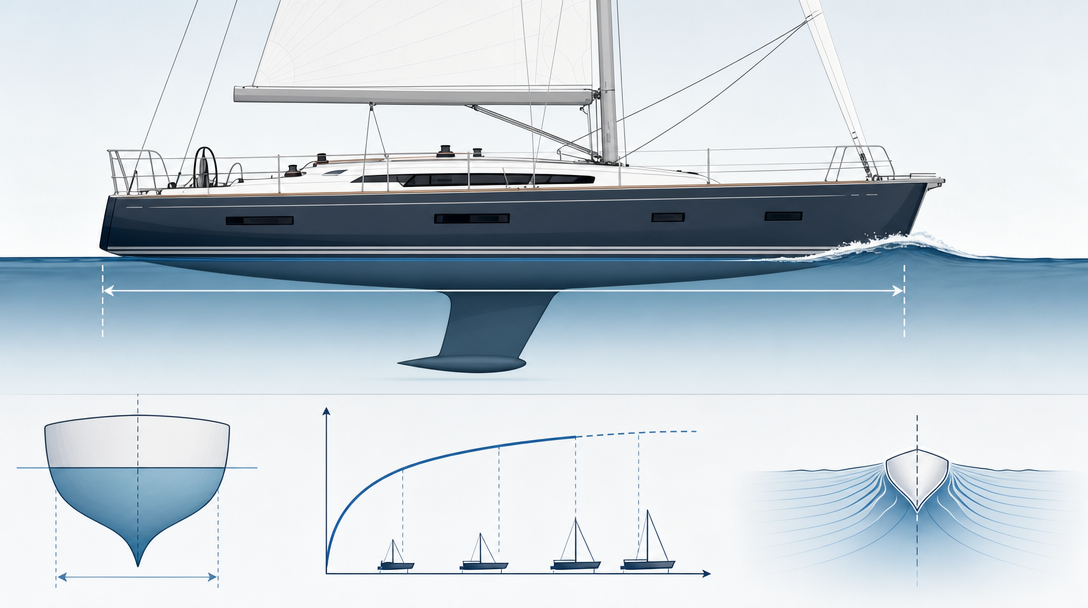
The main benchmark for a classic displacement boat is its waterline length. As it moves, the bow pushes a wave ahead of it. As speed increases, this wave stretches, and when the stern begins to sink into its trough, the boat reaches its physical limit. It's virtually impossible to accelerate the heavy hull any further.
Froude number: what does the approximate speed calculation show?
The approximate formula for a yacht's maximum speed in displacement mode is simple: V ≈ 1.34 × √LWL, where LWL is the waterline length in feet. The result is calculated in knots. For example, for a waterline length of 21 feet, the theoretical maximum is approximately 6.4 knots.
Of course, in heavy seas or against a headwind, the actual figures will be more modest. However, this formula for a yacht's maximum speed helps us understand in advance the cruising speed a particular hull can support. When choosing a yacht for cruising, it's important to accept these hydrodynamic limitations in advance.
What to check before buying a cheap yacht
A modest price tag turns into a truly good deal only after a thorough audit. Expand your search, negotiate with owners up to half the price, and be sure to budget for initial repairs.
- Is it possible to come to the marina and inspect the vessel in person?
- Is it comfortable to move around the cabin at full height and sleep on the standard bunks?
- Are the traces of heavy charter use hidden behind the fresh coat of paint?
- How much money will be left in reserve for unexpected breakdowns immediately after the transaction?