At night the wind increased to 30-35 knots, and gusts exceeded 40. Catamaran Escape The ship was crossing the Gulf Stream, where an easterly wind met a westerly current, creating short, steep waves. The mast already had one reef, but the load needed to be reduced again. A paradox arose: the correct intention to reduce sail area necessitated a maneuver that, in such conditions, proved fatal. The crew turned the ship's bow into the wind—and lost control of the boom.
Yacht wreck Escape It can't be pinned down to a single error or malfunction. The exact cause of the boom failure is unknown, but a combination of factors triggered the disaster. Darkness, a headwind, high sail loads, and a complex furling system all converged. True maritime safety in such situations begins long before the emergency maneuver—with time management, control of the vessel, and competent crew management.
How a chain of events on Escape led to a loss of control
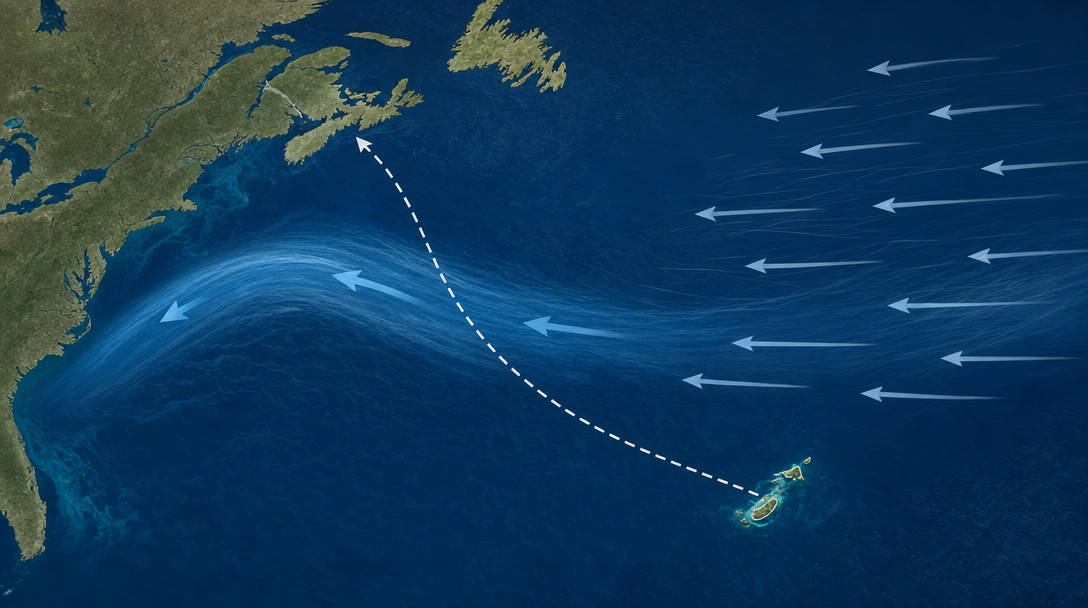
On June 9, 2022, Karl and Anne-Marie departed St. George's, Bermuda, bound for Nova Scotia. Two experienced crew members were on board. The crew waited out Tropical Storm Alex and hoped to take advantage of favorable winds along its outskirts. The first 48 hours of the passage passed calmly: the crew navigated squalls, adjusted sail area promptly, and settled into the ship's rhythm.
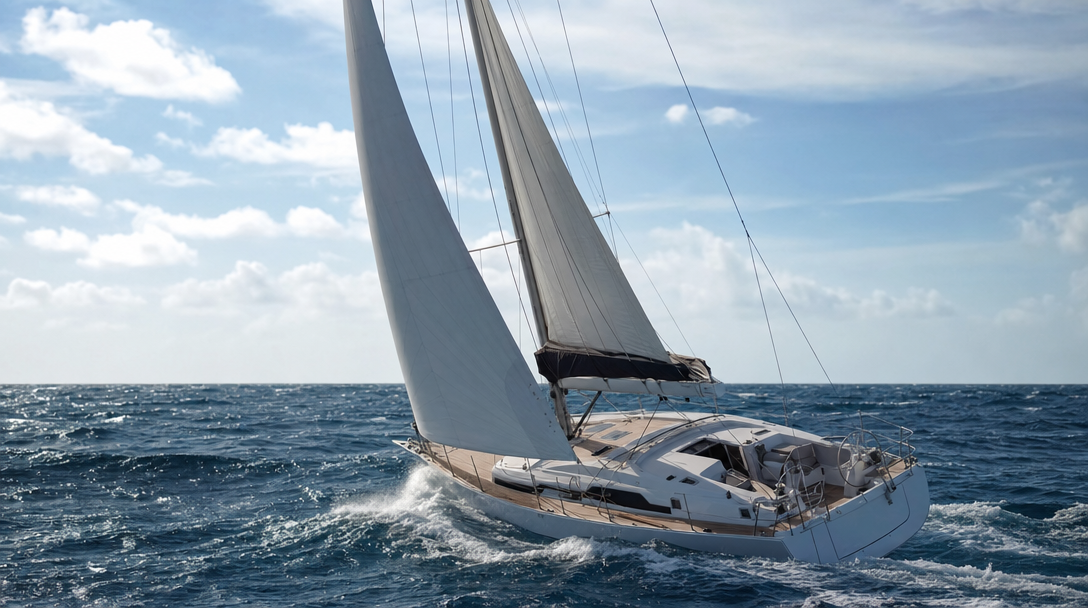
Late at night on the second day, the situation deteriorated sharply. The wind increased from 17-19 knots to 30-35 knots, with gusts over 40. The yacht was crossing the Gulf Stream in a typical upstream wind: the waves became short and rough, and the pitching became unpredictable. Escape She was sailing full course with her sail area already reduced, so the decision to take the next reef seemed absolutely correct.
However, the mainsail furling system required the yacht to be brought into the wind. To ensure the sail would wrap evenly around the inner shaft, the boom had to be held at a precise angle. This was extremely difficult to achieve in the dark and on steep waves. During reefing, the boom got out of control and, under the enormous load, began to swing from side to side. It remains unclear whether the equipment failed, the crew made a mistake, or both.
The taut mainsheet struck Anne-Marie, causing serious injuries. Karl, operating the winch at the mast, rushed to his wife's aid and failed to notice the boom's reverse movement. The impact resulted in a severe compound fracture of the leg. The force of the jockey's movement ripped the mainsheet from the deck. The remaining crew pulled the injured from the danger zone, activated the EPIRB, transmitted a VHF distress signal, and miraculously secured the boom. Rescuers evacuated Karl and Anne-Marie, but they did not survive. Before setting sail, the crew should clearly identify which operations require course changes, require precise boom angles, and force crew members to remain under loaded rigging.
Why is it better to complete the corrugation before dark and the load limit
Usually the practical question of when to reef a yacht arises at the moment when one has to act in a hurry. Escape The first reef was taken in time, but the next stage had to be laid in the dark on a raging sea. The old maritime rule of "reef at sunset" works differently: it forces you to reduce sail before normal visibility and margin for error disappear.
After sunset, work on deck always becomes more challenging. The sails blur, distances become blurred, and fatigue sets in due to disrupted circadian rhythms. Reefing the sails in advance doesn't mean the boat has to drag itself along under bare rigging forever. The point is to avoid having to fight the sails at the peak of the roll, in cold weather, and in gale-force winds.
Experienced captains try to utilize the yacht's capabilities at approximately 80%. The remaining 20% isn't lost speed, but rather reserve time for reaction and troubleshooting minor problems. If you push the boat to the limit of the polar diagram, equipment and crew will begin to fail. Eighty percent is the comfort zone, where the yacht remains fully controllable.
Maintaining such a regime consists of several habits:
- the sail area is reduced before the boat begins to bury its bow;
- a stable course and the well-being of the crew are valued more than additional knots of speed;
- the tackle is not overloaded just to see the breaking point;
- Wind values for each reef are discussed at the chart table, not in the middle of the night watch.
Removing sails in a timely manner does not eliminate the risk of damage, but it does allow maneuvers to be carried out when the crew is in control of the situation, rather than fighting back.
How a wind against the current changes the cost of a maneuver
The immediate danger of upwind winds isn't even the strength of the squalls. The oncoming airflow collides with the water, creating chaotic waves with a very short period. Under these conditions, the boat is thrown violently from side to side, and the dynamic loads on the rigging increase severalfold.
For the crew Escape This circumstance proved decisive. The set mainsail furling dictated a strict requirement: bring the vessel into the wind. With such a turn, the yacht loses momentum, waves begin to hit the bow, and the vertical pitching becomes extreme. Maintaining the perfect boom angle on a stopped boat in the midst of square waves proved an impossible task.
Of course, this doesn't mean a blanket ban on classic head-on reefing. The sail handling method always depends on the mast design and rigging. Some modern systems allow for reefing at full speed, releasing the halyard directly on the broad reach or gybe. However, this technique should only be used if it's compatible with the equipment and the crew has mastered it to the point of automaticity.
When planning a yacht passage in a storm or residual swell, it's crucial to superimpose the weather map on the current diagram. If the route crosses the Gulf Stream or the Agulhas Current, it's important to decide in advance whether the boat will need to be turned for reefing, who will secure the boom, and whether the crew has the physical strength to maintain control of the gear.
How the crew and yacht must comply with the conditions of the passage
True crew safety never rests on just one person. If only the skipper understands the weather, sail plan, and equipment limits, then the crew is simply passengers. During long shifts, someone must back up the captain while he sleeps. To ensure this, all crew members are given access to navigation software, forecasts, and route planning.
Thresholds and procedures must be available to the entire crew.
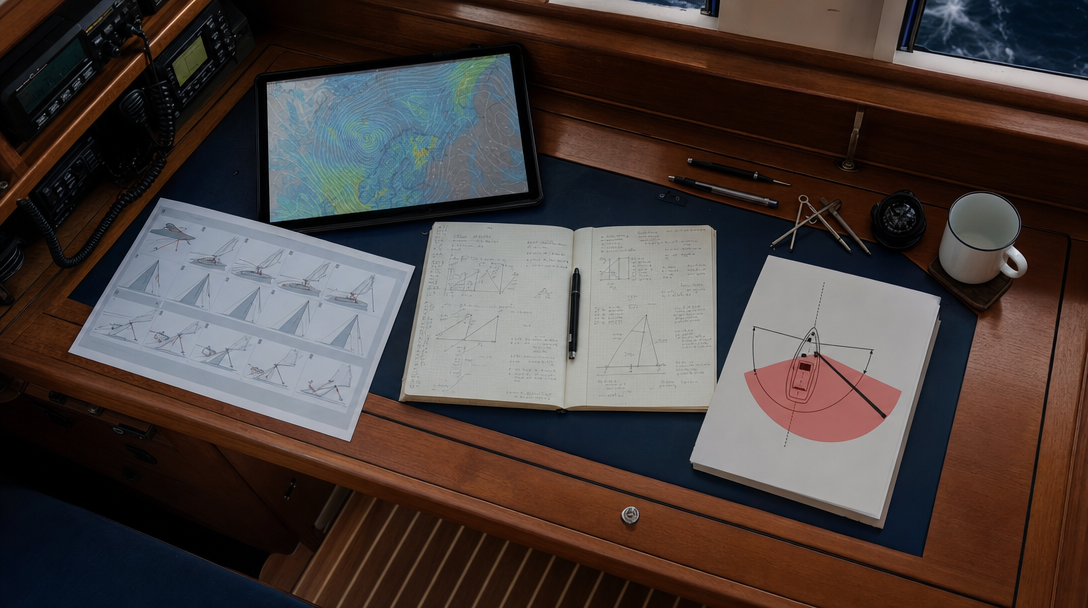
It's not enough for the crew to simply pull ropes; they must understand the precise sequence of winches and stoppers. It's good practice to record precise wind thresholds. For example, the first reef is taken at 16 knots, the second at 21, and the third at 27. The exact figures vary by vessel, but a chart with these values and the detailed procedure should be kept on the chart table to avoid depending on the memory of a tired skipper.
- Can each watchman independently write out the reefing order?
- Does the team know how to read wind maps and apply them to the route?
- Do the sailors know where the fire extinguishers are, how to turn off the electricity, and what to do if a man falls overboard?
- Will life on the boat stop if the captain is out of action?
The size of the yacht increases the cost of losing control
The unsuccessful maneuver became fatal also due to the vessel’s size. Escape It was a large yacht with a huge mast, powerful hydraulic systems, and a colossal sail load. On such boats, the boom weighs hundreds of kilograms. Any taut rig carries destructive energy, and losing control of the sail leaves the crew no time to correct the error.
Therefore, choosing a yacht based on crew level isn't a matter of blindly searching for a smaller boat. It's a matter of balancing the power of the systems with the ability of a specific crew to handle them at 3 a.m., in steep waves, and under extreme fatigue. If the sails are powerful enough to injure crew members at the slightest delay, and only one person can operate the systems, the vessel requires a hired professional crew.
Why the first 72 hours require extra caution
The first three days at sea are often the most challenging, emotionally and physically. The crew is just getting used to the rocking motion, their circadian rhythms are disrupted, and hidden technical problems haven't yet surfaced. Escape The situation got out of control at the end of the second day - right in the middle of this vulnerable adaptation window.
- Slow down. In the first days, you shouldn’t chase maximum speed and carry full sails.
- Take reefs in advance. It is better to reduce the sail area before the crew becomes tired and the sea becomes rough.
- Let people get into the rhythm. Ensure that the watch schedule is followed and that navigation is monitored by more than just the skipper.
- Leave some resources for surprises. At the beginning of the journey, the boat cannot be considered perfectly tested, so all maneuvers must be performed with caution.
A conservative approach won't prevent the front from arriving, but it will make the yacht's safety during the first 72 hours of the crossing a manageable process. The logic is simple: first stabilize the operation of the machinery and crew, and only then accelerate the vessel.
What to keep in the crew work plan. The intention to add an additional reef wasn't a mistake in itself—reducing sail area was dictated by the weather. The risk was magnified many times over because the maneuver coincided with darkness, a steep headwater wave, and the limitations of the furling system, forcing the boat to stop with its bow to the wind.
Before heading out to sea, the crew should clarify four things: are the rapids marked on paper? Are the watchkeepers able to operate the winches without prompting? Will the current create dangerous waves along the route? Can the crew handle the boom if the captain is unavailable? A safety margin is built on shore—when people still have time to discuss things, not just focus on survival.