The crew approaches the chartered yacht via the pontoon, and the first thing they do is disconnect the boat from shore power. This may seem unexpected, but this is how a proper inspection begins: you need to check the actual charge of the batteries, not whether the equipment is operating from the marina's power supply.
What should you check when accepting a yacht to avoid being held responsible for someone else's damage? When chartering a yacht, it's important to remember: accepting a boat isn't just a formal paperwork signing. While the vessel is moored, you should walk around the hull, turn on the equipment, identify any missing items, and document the damage. Recordings, photos, and videos will help you discuss any issues before setting sail and will protect you from disputes upon return.
Where to start when inspecting a yacht and what to record from the outside
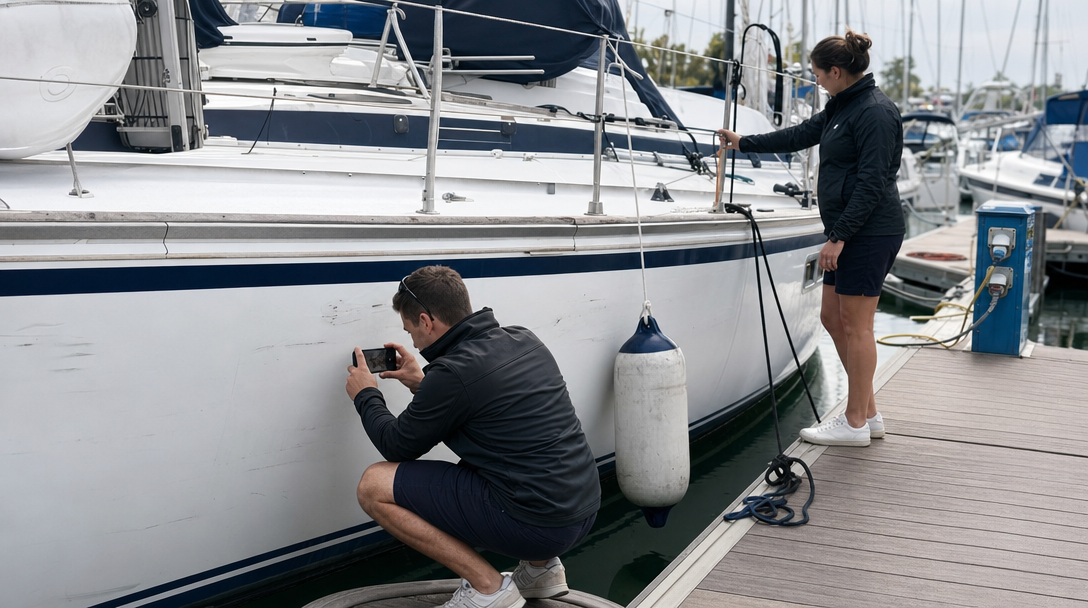
After turning off the power, it's worth walking around the sides. Inspect the hull, shake the stanchions, sheets, and rails, checking their tightness. What damage to the yacht should be recorded upon acceptance? Take pictures of any scratches, chips, or questionable parts.
Keep a notebook to jot down questions for the briefing. Count the fenders right away: it's easier to check the completeness before the hassle of unmooring. While walking the deck, pay attention to the following elements:
- Rails, posts, sheets and rails - reliable installation and no defects.
- The body has chips and scratches for photo fixation.
- Life raft - location and expiration date.
- Mooring lines - no critical abrasions.
- Tuzik is the general condition of an inflatable boat, if one is provided.
- Outboard motor - stable starting.
- Bathing platform - smooth opening and secure fixation.
It's best to complete the yacht inspection before chartering at the stern, checking the outboard motor and platform mechanism. Once any external defects have been documented, it's time to assess the condition of the sails.
How to check sails and underwater parts if inspection is postponed
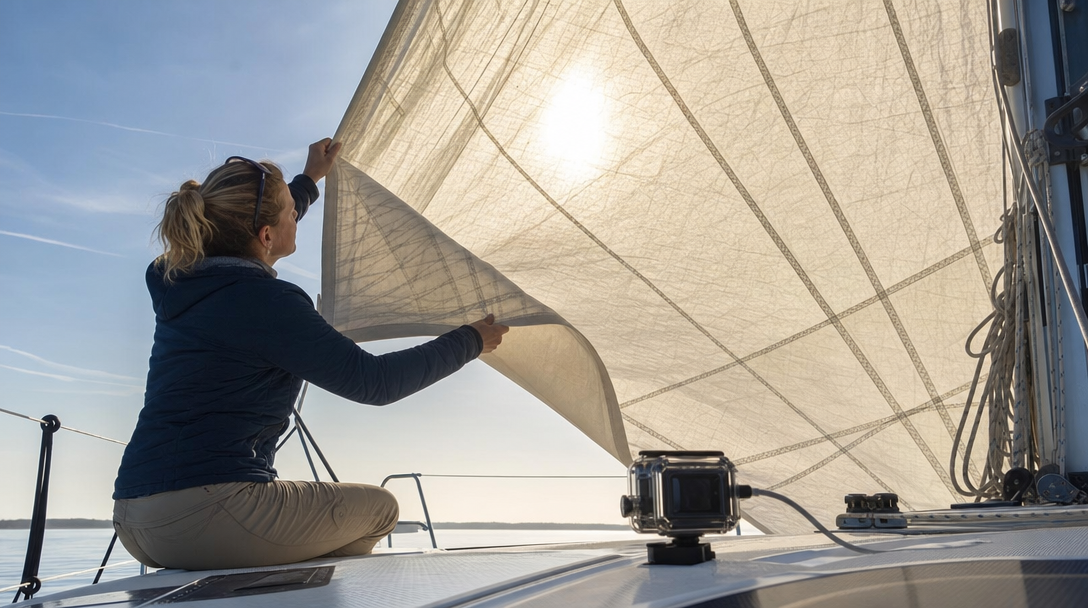
It's best to unfurl the sails while still in the marina, if the wind strength allows. It's helpful to examine the canvas against the sun—this helps identify even the smallest tears and abrasions. Any defects found are immediately photographed for later presentation to the company representative.
Sometimes strong winds make it difficult to safely set the sails at the pontoon. When figuring out how to inspect the yacht before a charter in such conditions, simply mark this task in your notebook and return to it at the first opportunity in open water. The underwater section of the hull is also inspected later, at a convenient anchorage, using an underwater camera. It's important to keep track of these items and not forget them after setting sail.
What to check inside the car: electrical systems, odors, household systems, and the engine
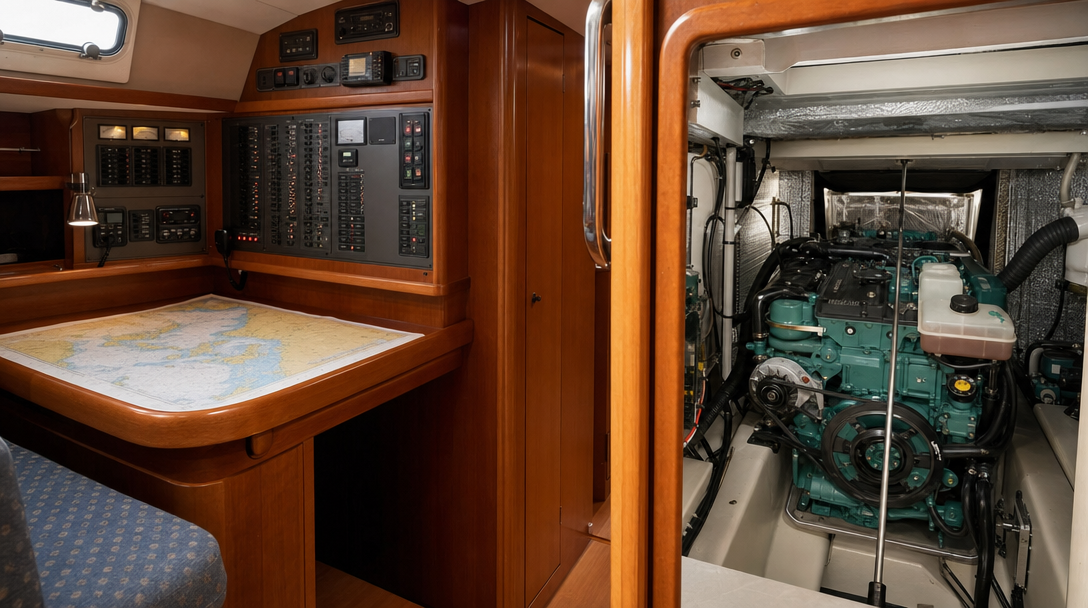
Once you're in the saloon, sniff the air. A strong smell of diesel fuel, gas, or sewer odors coming from the bathroom is a good reason to call a manager to investigate the source of the problem. The crew usually has a yacht acceptance checklist waiting for them on the chart table. It should be completed from start to finish, but don't limit yourself to just the suggested items.
When deciding how to test the yacht's electrical system, first examine the control panel. Make sure the water and fuel tanks are full. Since shore power is already disconnected, the gauges will show the actual remaining battery charge—it should be at least 12.5 V. The external navigation lights are tested later, after dark, by activating the appropriate switches on the panel.
Then, walk around the cabins and wardroom. Assess the quality of cleaning and the availability of the requested bed linen and towels. Open and close the overhead hatches, checking for cracks in the glass. Be sure to lift the floorboards to ensure the hold is dry. Refrigerators should be clean, dry, and producing a noticeable cold inside.
Gas stove and household equipment
To test the stove, locate the gas valve and turn on the gas supply. Light each burner and the oven one at a time. The main goal is to ensure they are actually working, not just to confirm the presence of the appliance in the galley.
Engine compartment
Lift the engine cover. The area around the engine should be clean, free of oil and coolant leaks. Then check the fluid levels—either yourself, if you remember the procedure, or with a service technician. A visual inspection doesn't replace a road test, but it allows you to immediately spot any obvious faults.
How to check water, toilets, and pumps before leaving
Flush and fill the toilet several times in each bathroom. If the system is equipped with a waste tank and it's closed at the marina, a full test will have to wait until you set sail. However, if there's a strong unpleasant odor inside, this may indicate a clogged tank—it's best to report such suspicions before unmooring.
- Make sure the shower pumps are powered on in the control panel and test them in all bathrooms. If you have an automatic pump-out system, pour a little water in to test it.
- Activate the main water system and open the faucet in the galley. Water should flow steadily and with good pressure.
- Listen to the sound of the pump to understand its location. Also, locate the water tank transfer valves or inquire about their locations during the briefing.
- Turn on the bilge pump from the panel: its operation should be accompanied by a loud, distinct buzzing sound.
Toilets, shower pumps, domestic water supply, and bilge pumping are independent systems. The galley's water pressure doesn't guarantee that water will drain from the shower trays.
How to check the safety, engine, navigation, and anchor in the cockpit
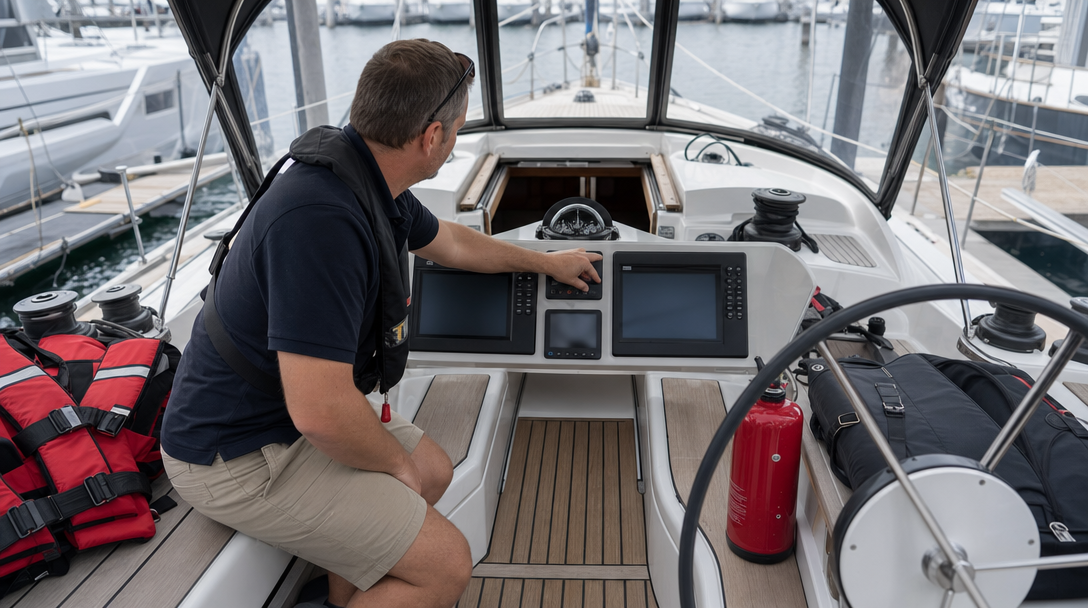
Checking the yacht's life-saving equipment includes counting the life jackets and harnesses, as well as finding the book if it's listed in the inventory. Note the location of all fire extinguishers and locate the fire blanket, which is usually attached near the stove. After this, you can turn on the power for the navigation, autopilot, and anchor winch from the main control panel.
Checking a yacht's engine before heading out to sea begins with starting the diesel engine (or both engines on a catamaran). Look at the exhaust: water should be squirting out vigorously along with the exhaust gases, confirming the cooling system is working. Then engage forward gear and check for air flow from the rotating propeller coming from under the stern. Move the handle to neutral, engage reverse, and note which direction the stern is thrown.
If a bow thruster is installed, test it with short left and right pulses. Next, evaluate the operation of the electronics: chartplotter, fishfinder, wind indicator, and autopilot. It's important not just to see the screens illuminated, but to ensure that the instruments are responding and providing readings.
The yacht's anchor winch is tested at the bow. The mechanism should raise and lower the anchor reliably. Before returning to the cockpit, be sure to secure the raised anchor with a pin or stopper rope.
A full yacht inspection before heading out to sea is based on practical testing. From a stable exhaust to the operation of the rudder, every system is tested in action.
What to give to the charter company after accepting the yacht
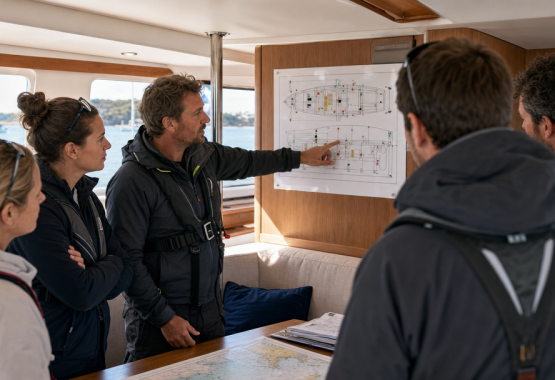
After checking in the yacht, compile all the defects you found into a single list. This should include any external defects, missing inventory, suspicious parts, or malfunctioning systems. Discuss these points with the charter company representative during the briefing, and save any photos and videos for the remainder of the trip.
A compiled list of defects should be provided to the receiving manager upon yacht delivery. This practice protects the crew from unfounded claims and helps the charter base better prepare the boat for subsequent clients.