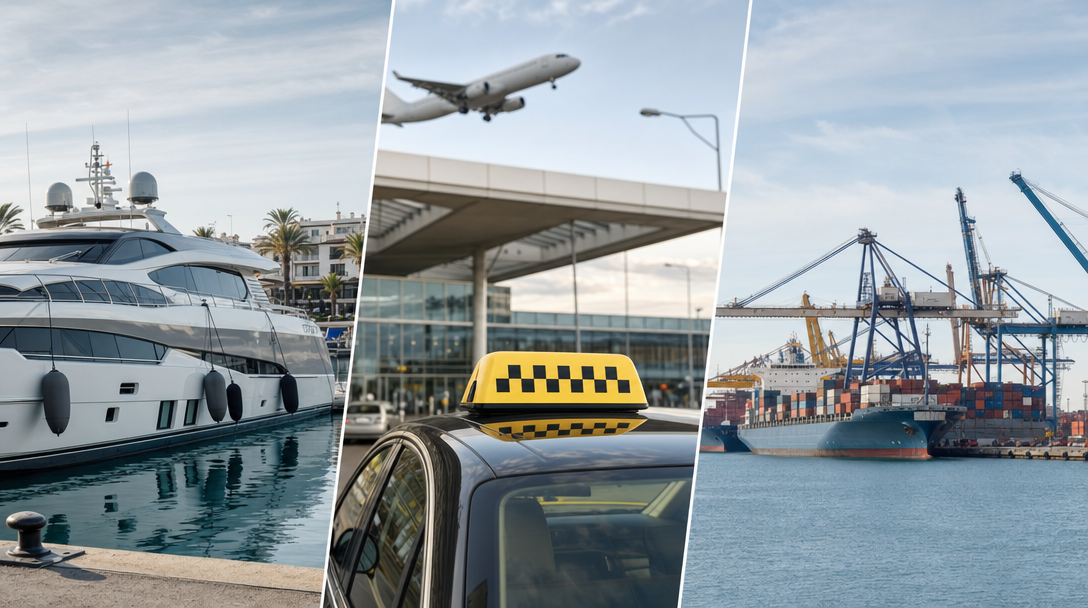
Leaving your boat in Valencia means facing a choice: pay extra for a comfortable urban environment or save money by docking closer to the airport. Valencia Yacht Port is a classic example of the latter scenario. Mooring a yacht here can cost as little as €13 per night (for this particular boat), and a taxi ride to the terminal will cost around €20. But is it worth choosing this mooring if you plan to live on board?
Beyond the gates of this marina, there are no cozy embankments—straight to the rugged port facilities. We explore what a crew gets for a small fee and why Valencia Yacht Port in Valencia is better suited for storage than for a car-free city getaway.
Who is Valencia Yacht Port suitable for and what does its location mean?
Valencia Yacht Port is located in the southern part of the port area, making it closer to the airport than the central moorings. This is a major practical advantage for owners planning to leave their boat and fly home. A taxi to the terminal costs approximately 20 euros, making the transfer quick and affordable.
An office and parking lot are located at the marina entrance. But beyond the parking lot, city life ends: a roundabout lies ahead, a commercial port lies in a straight line, and fenced-in industrial facilities surround. Evening strolls are out of the question, so any trip outside the marina without a car will require calling a taxi.
This setting makes Valencia's marina ideal for boat storage. The vessel can be left for long periods, and the crew can easily access its scheduled voyages. However, living on board requires specific considerations. Basic amenities are available on site, but the lack of civilization outside the gates means that before booking a berth, you'll have to decide whether the boat will simply wait for its owner or whether the crew plans to spend significant time on board.
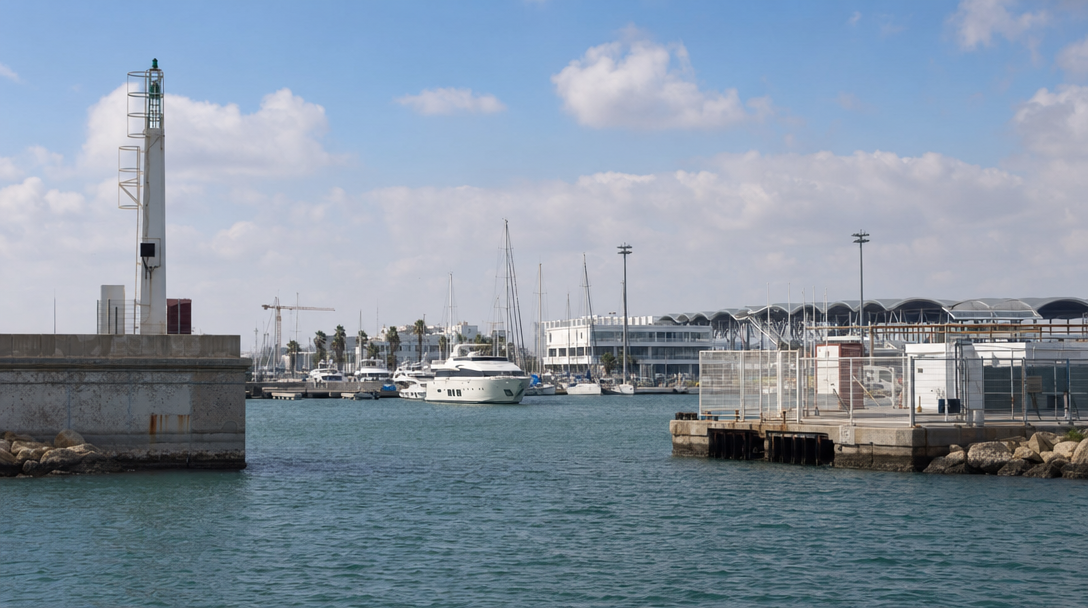
How the entrance, pontoons and mooring areas are arranged
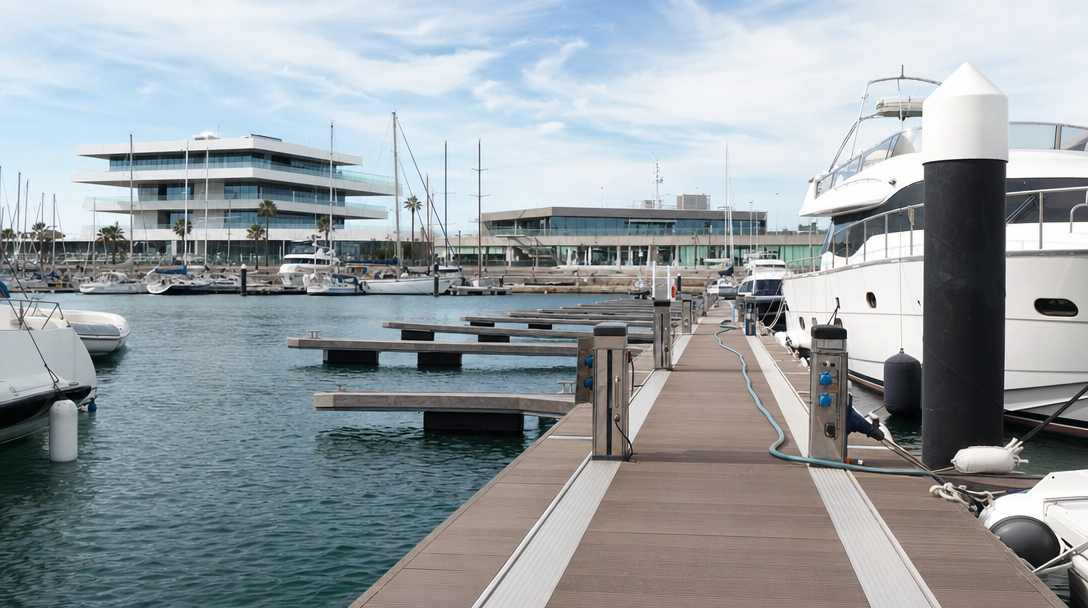
The marina entrance is quite wide. When the wind is offshore, the water remains calm, and large waves do not enter, although conditions can change in other weather conditions. Concrete floating piers are installed inside, which compensate for slight fluctuations in the water level—the expected difference is about 10 centimeters.
Electricity is supplied to metal panels on poles. However, water must be hauled via long hoses directly along the pontoons, which can be inconvenient when connecting and moving around the pier. Most piers are designed to accommodate several boats, although there are designated spaces for larger motor yachts. Due to the specific layout of utility lines, it's a good idea to check the location of the nearest panel and the length of the hose before mooring.
Mooring at Valencia Yacht Port is simplified by side finger pontoons. Instead of fishing out mooring lines, simply bring the boat alongside and secure the mooring lines to the cleats. For many yachtsmen, this mooring method is much more comfortable than the classic Mediterranean option.
What infrastructure is available inside the marina?
The enclosed area has everything necessary for boat maintenance and crew recreation. The basic kit includes:
- electricity and water on the piers;
- toilet and laundry room with washing machines;
- marina office next to the exit;
- parking;
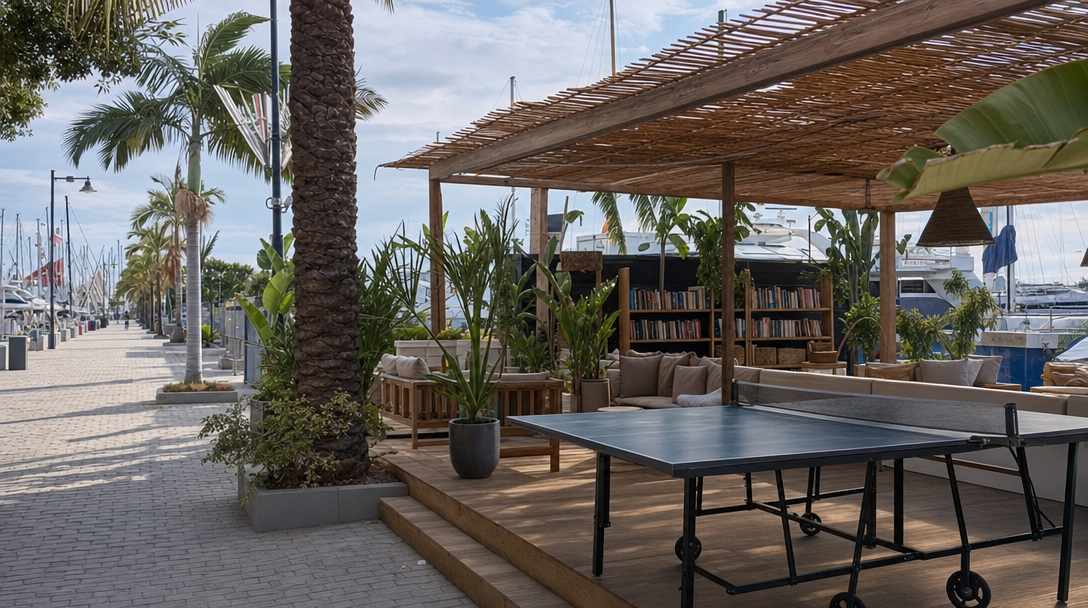
- a seating area with books, plants and a table tennis table.
A landscaped path lined with palm trees and a small chill-out area soften the industrial landscape. It's a pleasant place to spend time doing household chores. However, the Valencia Yacht Port infrastructure only covers the most basic technical needs of a yacht.
Facilities like laundry and showers may be closed at night, so it's best to check their hours with the office immediately upon arrival. The marina is well-suited for boating, but it's no substitute for an urban environment.
What's on the premises and how much does it cost to stop?
In the far corner of the water area, there's a bar with an artificial beach and a cozy summer terrace. This is the only place on the property where you can grab a bite to eat. The establishment is summer-only, so it's worth checking opening hours in advance during the winter or off-season.
The bar's prices aren't exactly budget-friendly for everyday dining. A two-course meal will cost around €15 per person, and the final bill with local beer and wine can reach €24. Alcohol is inexpensive, but eating out regularly is expensive, and there are no other restaurants within walking distance.
The crew will have to travel to a supermarket for groceries, such as the nearby Alcampo. Therefore, the search query "Valencia Yacht Port berth price" must be assessed holistically: a low berth rate entails additional transportation costs for food and travel into the city.
How to evaluate Valencia Yacht Port before choosing a location
The parking area is vast: it takes about half an hour to circle it. Yet the water area appears half-empty. Although palm trees and recreation areas are planted within, the infrastructure is in need of repair in places—broken posts and damaged concrete elements are common on the pontoons.
Mooring conditions at Valencia Yacht Port vary greatly depending on the pier you choose. From the open waters, the noise of the commercial port, where container ships are unloaded, is clearly audible. Closer to the fence, the hum subsides. For a boat closed for the winter, the background noise is unimportant, but spending the night surrounded by the roar of machinery isn't everyone's cup of tea.
The pontoons are occupied by both well-maintained yachts and apparently abandoned vessels with tattered sails. This further emphasizes the transit and storage nature of the area. The inner area is safe and convenient for maintenance, but the port environment deprives the berth of its usual yachting comfort.
Valencia Yacht Port: boat storage – yes, RV living – with restrictions
Whether you need to winterize your boat, make a quick repair stop, or fly home, the affordable marina in Valencia will fully meet your expectations. Its proximity to the terminal, convenient finger pontoons, and basic infrastructure make it practical. However, if you plan to live aboard without a car, the isolation from the city and the lack of supermarkets will quickly become a problem.
Before booking a place, be sure to clarify a few details:
- What is the exact price for your boat size?
- How much does a taxi to the airport or city center cost now?
- Is the required type of pontoon available and is your hose long enough to reach the utilities?
- What are the opening hours of the bar and utility rooms?