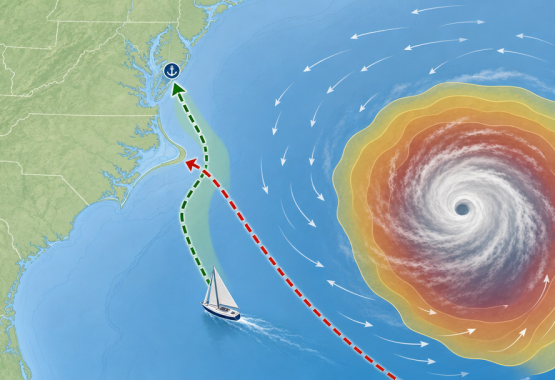
Imagine this: a short Caribbean crossing, scheduled for an hour and a half, suddenly stretches to four and a half. Storm after storm engulfs the boat, and the limited speed makes it impossible to escape the bad weather. In such moments, the choice between a sailing or powered catamaran becomes more than just a matter of taste. What's more important: saving fuel and enjoying the calm of sailing, or being able to increase speed, outpace the storm, and arrive at the marina on schedule?
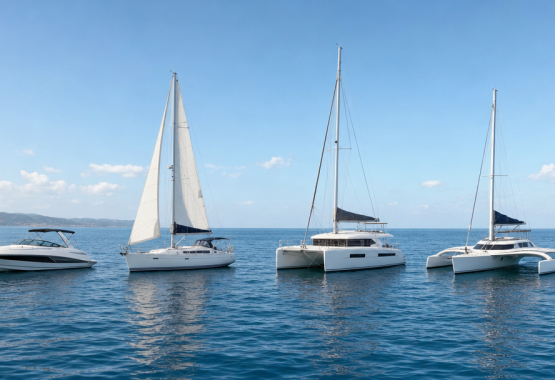
A sailing or powered catamaran is a choice between two fundamentally different approaches to travel. One offers autonomy and economy, while the other offers speed for navigating currents and challenging weather conditions. Making a decision requires more than just comparing engine power. You'll also need to weigh the cruising area, budget, travel schedule, and the crew's willingness to work hard onboard.
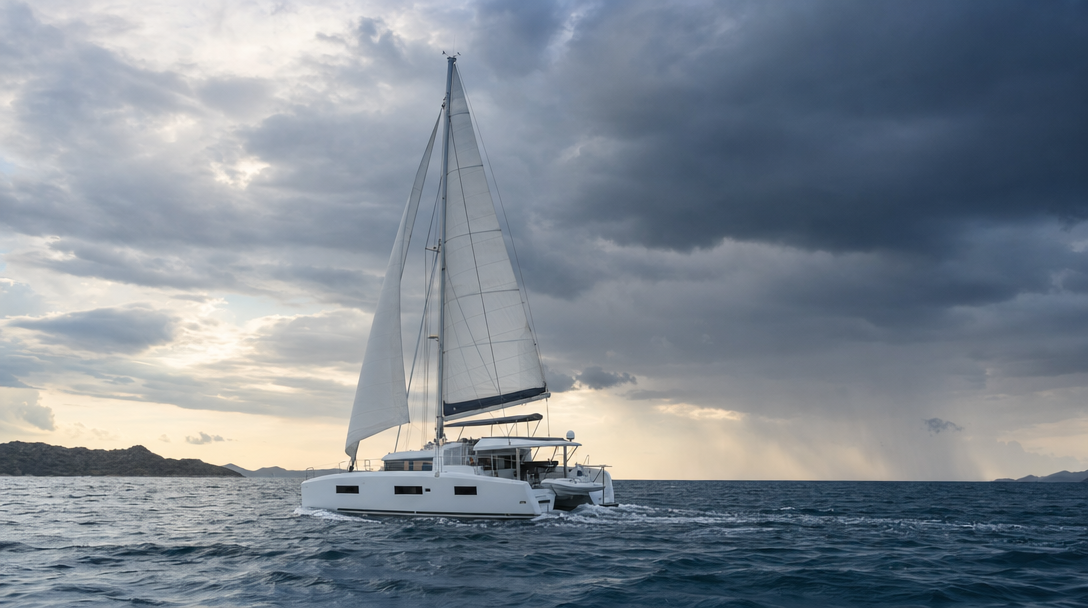
Why can't a motor catamaran be built by simply replacing the engines?
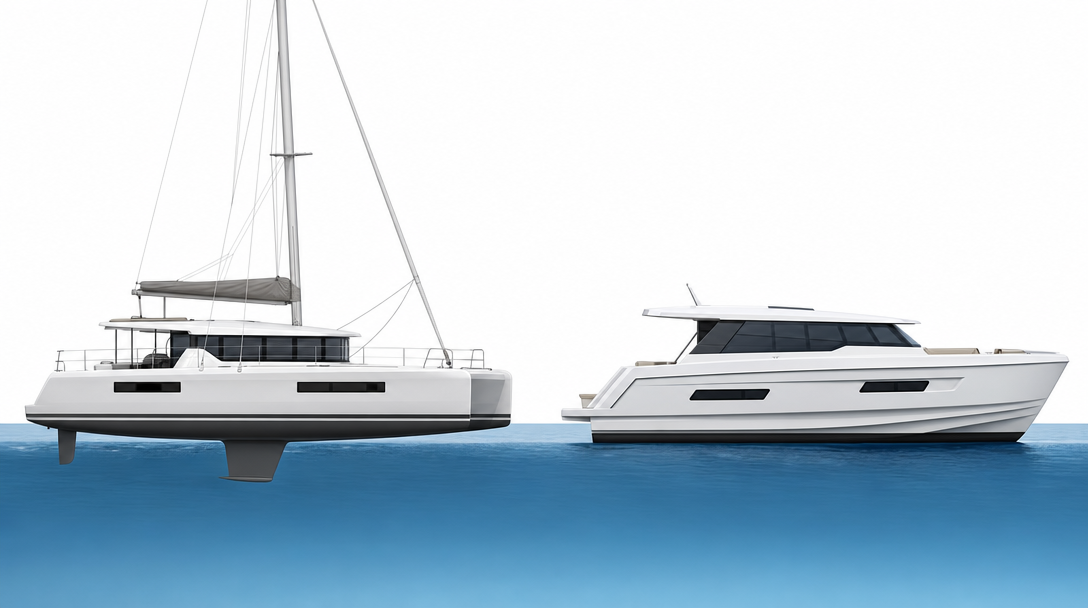
Many people think that simply adding more powerful engines to a sailing catamaran will turn it into a fast motorboat. But this approach doesn't work. A sailboat has a keel, and the hull shape from bow to stern is designed for sailing and is limited to a certain theoretical speed.
A power catamaran is built differently. Its hulls are specifically designed for heavy propulsion systems, high speed, and planing. Simply equipping a sailing model with large engines would still limit it to the speed limit determined by its hydrodynamics.
There are slightly modified sailing hulls on the market that are sold as motor catamarans. When choosing, make sure the model you choose has a motor hull designed for high speed, and isn't a compromise. The boat's design is evaluated first, followed by the engine power.
How a sailing catamaran benefits from cost and range
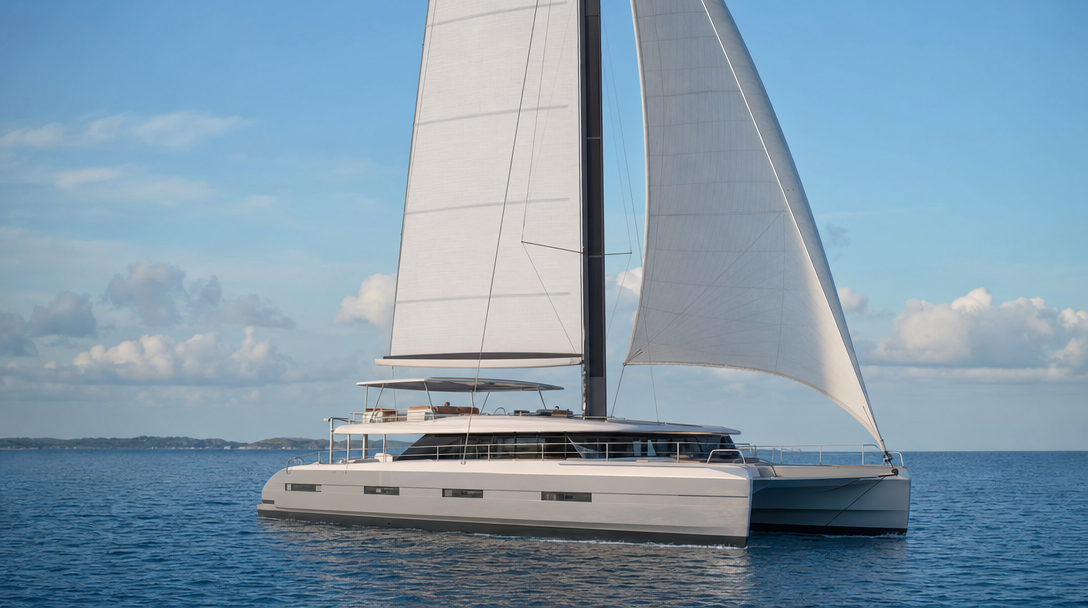
A catamaran's fuel consumption depends directly on its type. Sailboats are equipped with relatively small and efficient engines. Fuel consumption can be further reduced by powering the boat with the sails up, as the wind absorbs some of the load. And when under full sail, no fuel is consumed at all.
Because of this autonomy, a sailing catamaran is often chosen for long voyages without a strict schedule. The sails serve as a fully functional backup propulsion system in the event of engine failure. The cruising range is limited only by the presence of suitable wind, giving significant independence from refueling.
When the boat is sailing without engines or a generator, complete silence reigns on board. The only sounds are the sound of the water and the wind. The absence of vibrations, odors, and diesel exhaust during long voyages often proves as valuable to the crew as the financial savings.
The difference in budget is noticeable already at the purchase stage. A motor catamaran typically costs 25–30% more than a sailing catamaran of comparable size. While a sailing catamaran costs around $1 million, a motor catamaran in the same class can cost between $1.2 and $1.5 million. The final price depends on the configuration, but a reinforced hull, larger propulsion systems, and fuel systems inevitably increase the budget.
Small sailing engines are easier and cheaper to maintain due to the smaller volumes of oil and labor required. Additional energy can be generated from the sun: technology allows solar panels to be integrated directly into the mast. For all these advantages to be realized, the crew must be prepared to handle the rigging—only then can the efficiency be realized.
When speed and space make a motor catamaran more practical
Speed isn't just about completing a route quickly. A fast pace allows you to stay on schedule, navigate narrow straits with strong head currents, and avoid approaching weather fronts. Having extra power gives you the chance to outrun a storm system before conditions become dangerous.
The power reserve also comes in handy in choppy seas, when the boat is being rocked violently. In some cases, briefly increasing speed to 15 knots for 5–20 minutes and plane-up helps to clear rough water more quickly, immediately improving the well-being of the crew on board.
On coastal voyages, a motorized catamaran for fast passages allows for precise navigation. A sailboat often has to tack, which lengthens the journey. If the boat is based far away and the owner comes aboard for just a few weeks a year with a pre-planned itinerary between islands, the high speed allows for the visitor to reach all destinations without having to adjust for wind conditions.
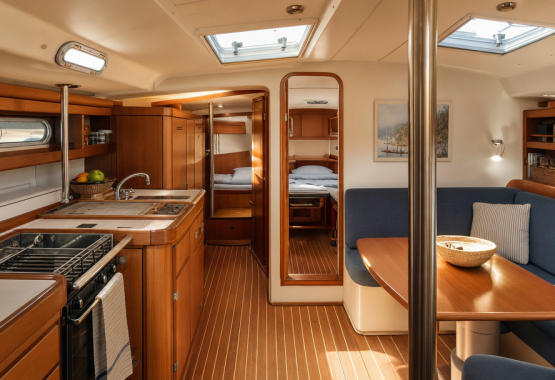
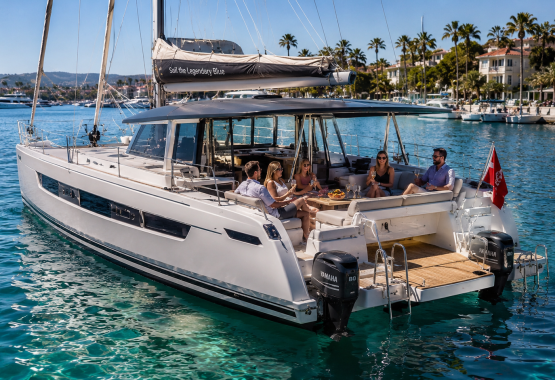
The absence of a mast radically changes the layout. The saloon lacks a massive structure running through it, creating a more open space. On larger models, the flybridge and upper deck are free of winches, ropes, and boom. The bow often features a solid hard deck instead of mesh trampolines, adding additional usable space.
A motorboat requires no sail maintenance. The mastless design cleans up the boat's appearance, and the hardtop provides a platform for solar panels, free from shadows.
Without long keels and masts, a motorboat has a minimal draft and a low overall height. These characteristics make it much safer to approach beaches in the Bahamas and pass under fixed drawbridges in Florida without requiring them to be raised. When planning, it's important to compare the required speed and height restrictions with the actual waters.
How do the limitations of each type influence your choice?
Sailing isn't always a straight and perfect course to the destination. Unfavorable winds force you to tack or reduce speed to two knots. When there's no set schedule, a leisurely pace becomes part of the experience. But if you need to arrive at the marina by a specific time, the route can be quite lengthy.
On short stretches, sailboat owners often start the engines to cover just a couple of miles. The crew simply doesn't want to hoist and trim the sails for a half-hour passage. Therefore, fuel economy should be calculated based on the crew's actual habits.
Maintenance of a sailing catamaran and a motor catamaran differs dramatically. A sailing boat requires constant maintenance of shrouds, winches, and stoppers. Long voyages require a substantial supply of rigging parts. During storms, the sails bear the brunt of the stress. If the crew isn't physically prepared to handle the rigging in rough weather, this can become a problem.
A motorboat eliminates this work, but requires significant budgets for diesel engines and maintenance of large engines. The absence of a mast reduces the risk of lightning strikes at anchor near sailing vessels, although it doesn't eliminate the risk entirely. Ultimately, the choice comes down to which workload is more acceptable: regular sail handling or the expense of a powerful motor installation.
How to choose a catamaran based on your route, budget, and travel schedule
When comparing a sailing catamaran and a motor catamaran, it's best to start with a clear understanding of your itinerary. For a leisurely, budget-friendly round-the-world trip, a sailing option makes more sense. If the boat is based in the Caribbean and the crew flies in for the weekend for quick island hopping, a motor yacht will be a better choice.
How do you choose a catamaran for your trip? You'll need to consider your budget, crew fitness, draft and height restrictions, and current conditions. The specific model may alter your estimate, but the basic conditions immediately point you in the right direction.
| Condition | Sailing catamaran | Motor catamaran |
|---|---|---|
| Economical long-distance sailing | Suitable when ready to use sails and not depend on speed. | It is possible, but requires high fuel costs. |
| Scheduled movement | Wind and the need to tack may increase travel time. | High speed helps to plan arrival more accurately. |
| Fast transitions between islands | Suitable if travel time is not critical. | Convenient when time on board is limited. |
| Shallow water and bridges | The keel and mast may restrict the route. | Less draft and height give more options. |
| Ready for service | Requires attention to sails, mast and rigging. | There is no rigging, but large engines are more expensive to service. |
| Short trips to the boat | Suitable for those with a relaxed schedule and an interest in sailing. | Allows you to use limited time faster. |
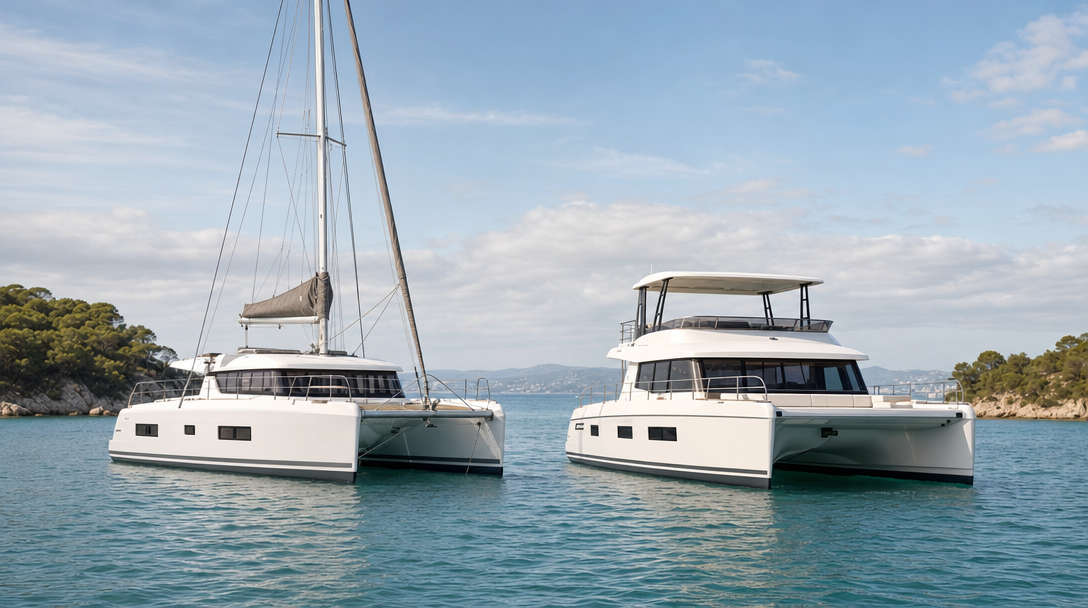
Bottom line: you need to choose based on the scenario, not on a dispute about boat types.
A sailing catamaran excels when economy, range, and quietness are key. A motorboat excels when speed, shallow draft, a spacious flybridge, and the ability to arrive at port on time are crucial. There's no universally best option—the ideal boat between 55 and 65 feet is unique to each individual.
Before purchasing, it is helpful to answer four questions:
- How critical is it to arrive at a certain place at a given time?
- Are the ongoing costs of fuel and maintenance for large engines acceptable?
- Is the crew ready to service the sails, mast and rigging?
- Are there any shallow waters, bridges, strong currents or short passages between islands along the main route?