You're scrolling through listings, comparing a spacious yacht for long voyages with a compact boat for a relaxing weekend. Will your family crew have enough experience to confidently handle the helm, or would it be better to look for a smaller vessel? The same model might be a great solution for a group of experienced sailors, but it will turn a vacation with beginners into a challenge.
Choosing your first yacht isn't a matter of simply comparing prices and layouts. Before making a purchase, you need to figure out where the boat will be moored, who will handle the sails, and how much it will realistically cost to maintain. Space, maneuverability, berth location, and the final budget always require compromise.
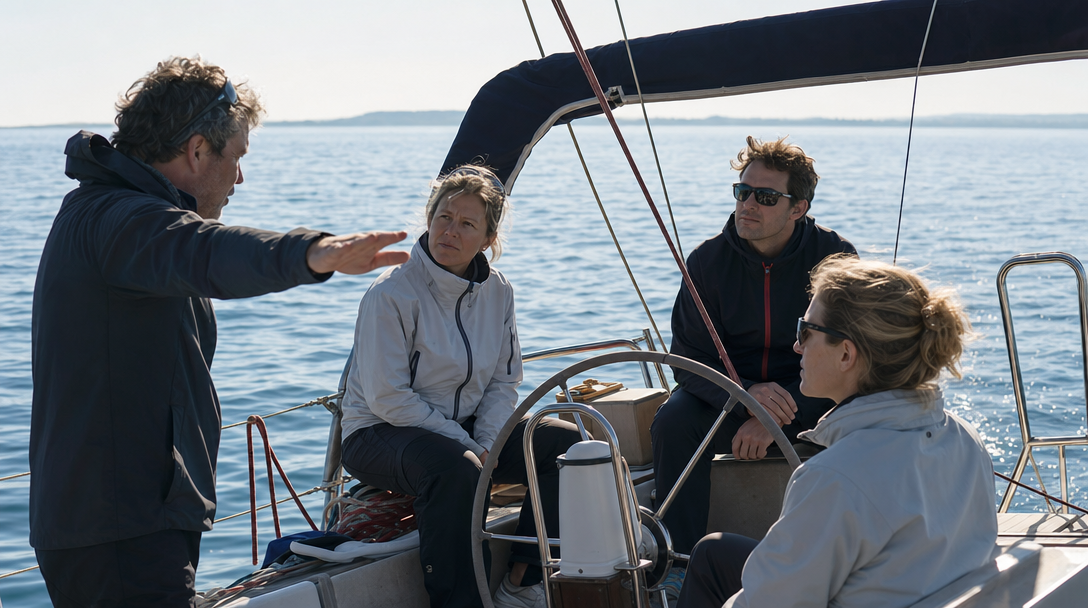
First, decide how and with whom you will swim.
When choosing a yacht, it's best to start by determining your cruising area and the format of your trips. Relaxed weekends in a nearby bay, long sea voyages, and adrenaline-fueled races all require very different things from a vessel. It's helpful to plan your basic itinerary in advance.
The crew composition is no less important. The selection criteria will be different if you plan to have experienced friends on board, and quite different if you're sailing with inexperienced relatives. The buyer's job is to understand what features of the boat their permanent crew really needs.
Your own experience also sets limits: some buyers have only been on the water a few times, while others have tens of thousands of miles under their belt. Before purchasing, it's helpful to experience as many different boats as possible to assess their suitability and avoid buying a vessel that's not suited to your needs.
Write a brief description of your future options before you begin market research. List the cruising area, the number of people on board, your usage style, and any vessel features you're not willing to compromise on. Next to these, highlight any areas where compromise is possible. This list will help you weed out unsuitable options.
How to match yacht size with experience, handling, and storage space
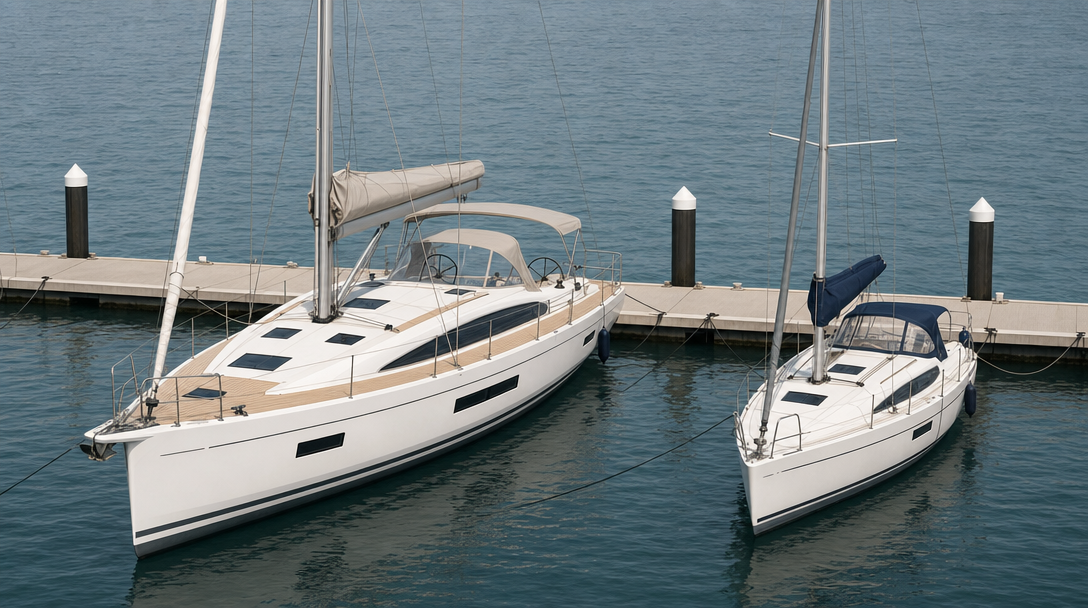
The size of a first yacht determines more than just the number of cabins. A spacious boat offers comfort, but maneuvering it in a tight marina is inherently more difficult. It may have less desirable handling characteristics and be less enjoyable than a vessel with less living space and the same hull length.
When choosing a yacht size, don't look for a single ideal size. Old-school sailors often cite smaller vessels as the best option, having learned on boats with relatively simple sail control systems. But today, a wide range of models are suitable for a first purchase.
Many first-time owners choose yachts between 35 and 45 feet in length. This is a common range, but it still requires consideration of the sailing objectives, crew composition, helmsman experience, and available berths.
The size of a vessel directly impacts storage rates: larger boats will incur higher berthing fees. Desired interior space should always be balanced against personal confidence at the helm and the cost of available berth space.
Calculate your ownership budget, not just the price of the boat
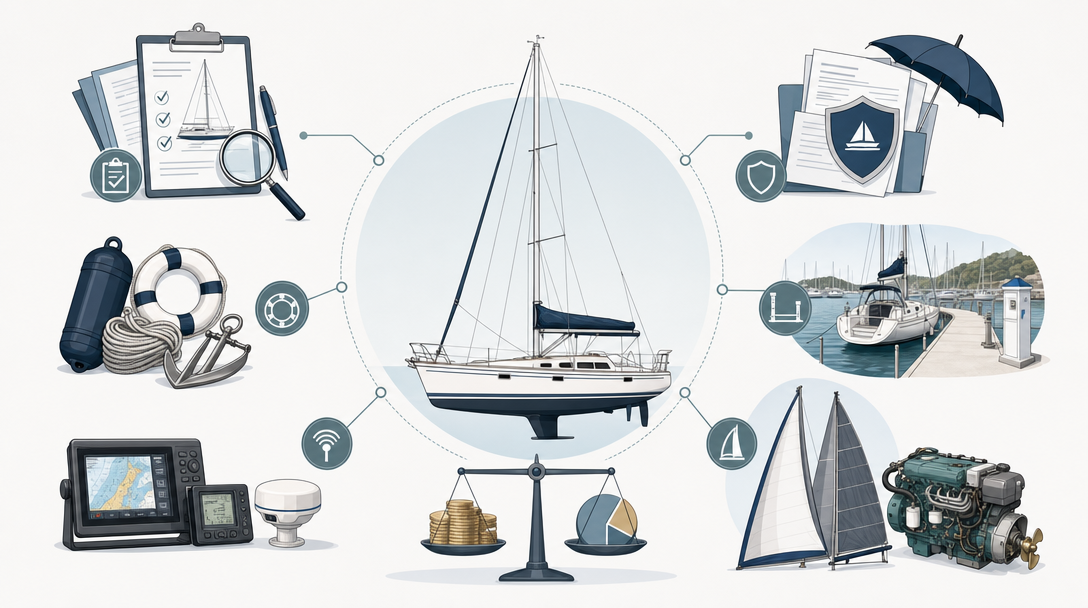
Your yacht purchase budget should never match the seller's listing price. The boat's price should be lower than your initial budget. The difference will be used to cover the associated initial costs before you begin operating the boat.
The cost of owning a yacht includes more than just the first year's expenses. It's important to set a realistic annual budget and leave some contingency for unexpected expenses. New vessel owners often underestimate the total cost of subsequent investments, especially when upgrading older equipment.
| Expense category | What to consider | When does it arise? |
|---|---|---|
| Buying a yacht | The price of the boat should leave a reserve for associated costs. | At the transaction stage |
| Initial costs | Inspection, insurance, updating of outdated equipment, first year of mooring or marina | Before purchase and during the first year |
| Regular expenses | A realistic annual budget and contingency fund | During ownership |
| Equipment upgrade | Electronics, safety equipment, deck equipment and sails | If necessary |
| Large rare works | For example, a possible engine replacement | During ownership |
Expenses on an older yacht can be especially significant: replacing navigation electronics, safety equipment, sails, and deck fittings often costs more than the hull itself. It's also worth planning a reserve for major, infrequent purchases, such as a possible engine replacement.
Sometimes a more expensive boat equipped with modern systems can be more cost-effective than a cheaper vessel requiring significant upgrades. When comparing offers, mentally divide the capital into the purchase price, initial costs, annual budget, and repair fund.
Check the storage location before making a decision
It's important to find out where to store your yacht after purchase before finalizing the deal. You can keep it in a tidal zone, at a dock, or in a marina, but the desired location doesn't always have available berths. Failure to find a berth can become a serious obstacle after the purchase.
The cost of storage can vary significantly, and the boat's size directly dictates the mooring fee. When considering a specific model, check in advance for availability of a space suitable for its size and compare rates for available storage options.
Berth availability links the desired boat length with the realistic annual budget. A lack of suitable berths can be a compelling reason to opt for a more compact boat.
Conduct due diligence and secure the terms of the deal in writing
Once a suitable vessel is found, the buyer makes an offer subject to satisfactory inspection results, proof of ownership, tax status, and financing approval. This step moves the initial interest into the due diligence stage.
Verification of documents and contract terms
- Make an offer with stringent conditions regarding inspection, financing and tax status.
- Execute a written yacht purchase and sale agreement. This typically requires a deposit of 10%.
- Make sure the seller is the legal owner of the vessel. Also, check the boat for any outstanding mooring fees, repair bills, loans, maritime mortgages, and other encumbrances.
- Please note that at this stage, the offer becomes legally binding. Completion of the purchase typically takes 14 to 30 days, and insurance must be purchased upon signing the contract.
A written contract protects against situations where key agreements remain mere verbal promises. Checking the yacht's documents before purchase insures the new owner not only against title issues but also against debts owed by others.
Decisions after yacht inspection
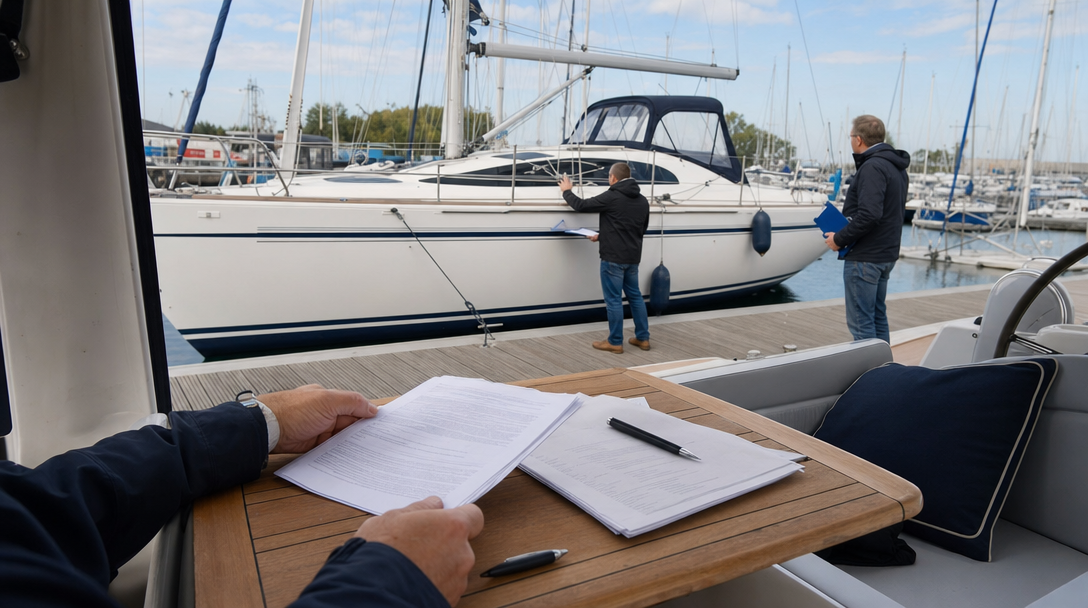
A yacht inspection before purchase is a crucial step in the deal. If the inspection reveals significant defects, the total cost of repairing them is assessed first.
If upcoming expenses exceed 10% of the purchase price, the buyer has options. They can renegotiate the final amount, offer to split the repair costs with the seller, or cancel the purchase of the vessel entirely.
This doesn't mean that any detected defect will negate the purchase. The purpose of the inspection is to realistically compare the actual condition of the hull with the contract terms and budget.
What to check before buying your first yacht
The first yacht should not be based on abstract ideas, but on the specific cruising area, the crew's skill level, and available moorings. The vessel's dimensions and equipment should be evaluated in conjunction with its handling and the total cost of ownership.
Before making a final decision, ask yourself a few questions:
- Is the boat suitable for my main sailing scenario and permanent crew?
- Are its size, controllability and the cost of available parking comparable?
- Have initial, annual and potential major expenses been taken into account?
- Have the written terms, documents, insurance and inspection results been verified?