Waves as high as three-story buildings and winds ready to destroy everything in their path. From the outside, it seems like a small yacht is doomed in a storm, and the first thought is obvious: no one will survive in such a situation. But in the ocean, a counterintuitive rule applies: as long as the vessel is physically afloat, staying inside is much safer than trying to escape on an inflatable raft.
A storm's appearance doesn't mean imminent disaster. A boat's ability to survive a strong roll, the impact of a water mass, and even a complete capsize depends on the structure beneath the water and the composure of the crew. Why do the laws of physics protect a well-maintained vessel more reliably than the instinct for self-preservation dictates?
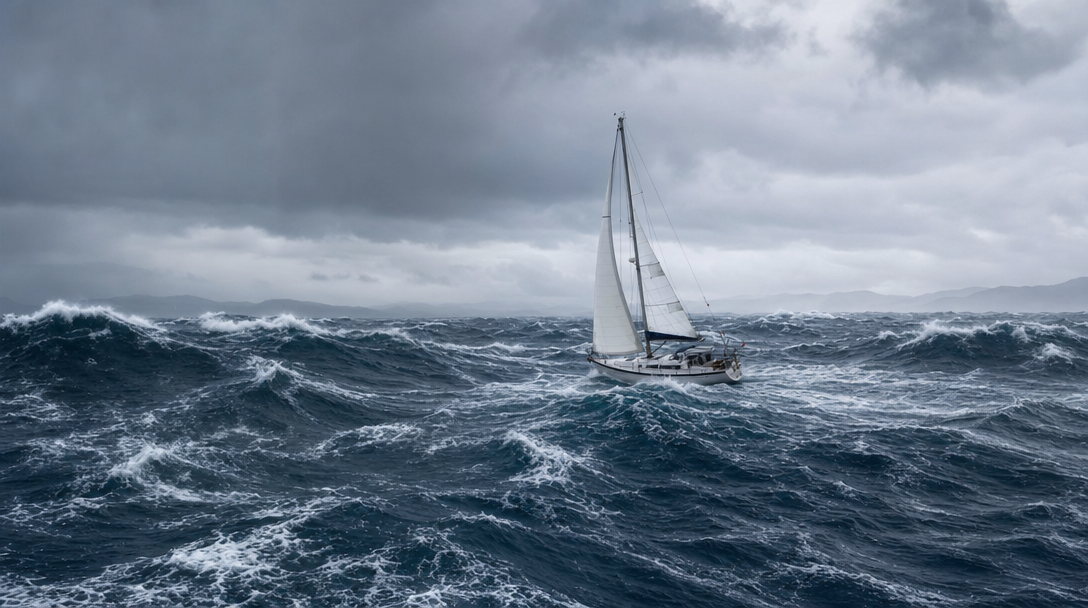
Why does a keel return a yacht to a vertical position?
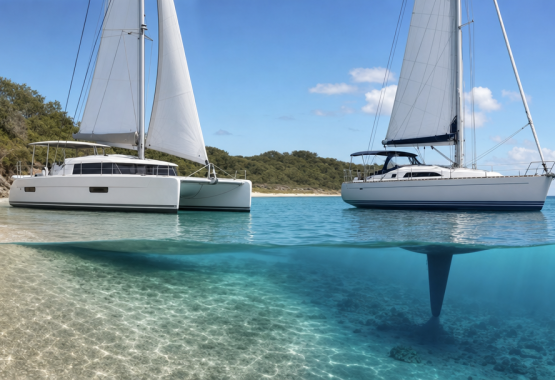
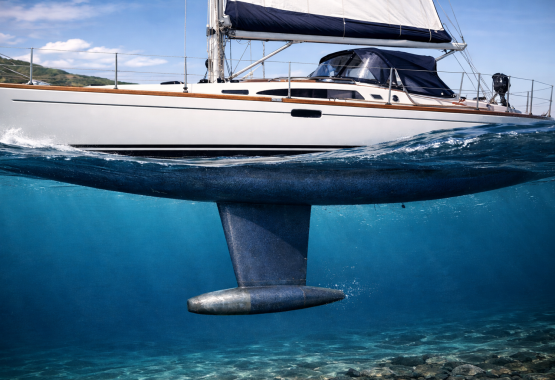
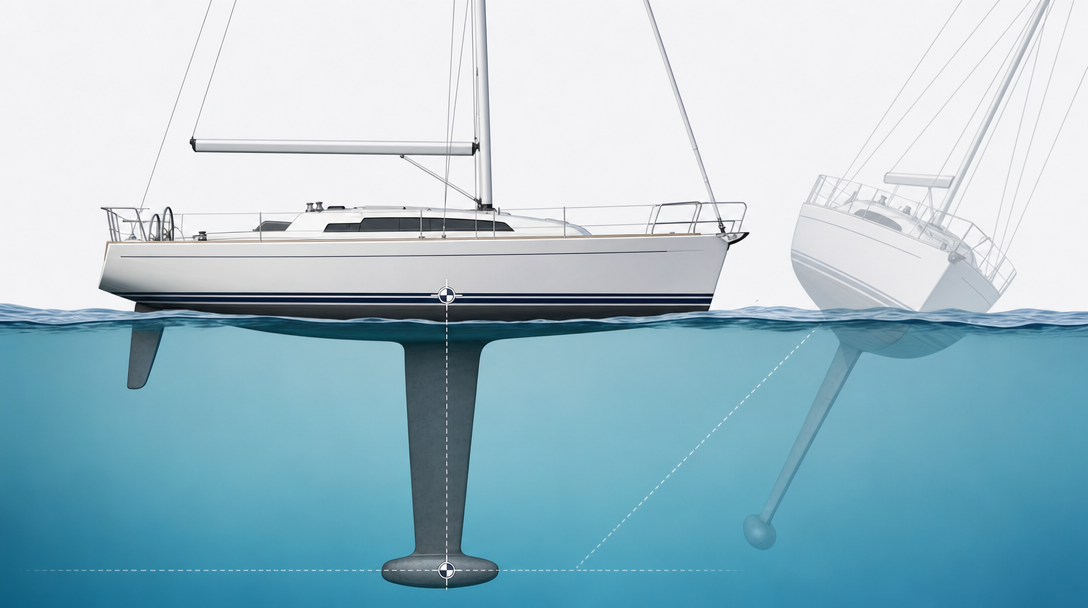
The yacht's main safety feature is hidden underwater—the keel. This heavy lead fin extends several meters down, and its mass can account for between a third and half of the entire vessel's weight.
This ballast shifts the center of gravity extremely downward. Even if a wave tilts the boat strongly, it tends to return the keel to its lowest point. It's like a tumbler doll: an external force tilts the structure, while the internal mass distribution returns it.
A severe heel can cause the mast to completely float, leaving the hull horizontal. Usually, after a short pause, the vessel automatically returns to an even keel. The yacht can even survive a capsize—a complete upside-down roll, in which it completes a 360-degree rotation and then returns to an upright position.
This engineering calculation works flawlessly under two strict conditions: the hatches must be tightly sealed, and the keel must remain intact. A frightening heel angle does not indicate a loss of stability. The situation only becomes truly critical if the hull loses its watertightness or suffers structural damage.
How a yacht withstands big waves in the open ocean
A fifteen-meter wave, viewed from the shore, appears as a crushing wall of water. But in the open sea, its nature is entirely different. It is not a falling mass, but a moving bundle of energy, causing the surface to constantly roll.
Unlike shore structures, a small yacht doesn't absorb the impact directly. It rises smoothly to the crest, sinks into the trough, and then rises again. The vessel exists within this mass of water and moves with it, so a wave rarely strikes the hull directly and destructively.
Moreover, its small size gives the yacht a significant advantage over enormous ocean liners. The boat responds flexibly to the water's contours and doesn't break between two adjacent wave crests. A huge wave height in the ocean doesn't automatically mean destruction.
How the hull and keel work together under load
Self-righting after a heeling is only possible if the yacht's fiberglass hull remains watertight. Most modern cruising vessels are built from fiberglass. While this material doesn't always inspire confidence, first impressions can be deceiving.
Under extreme impact, fiberglass doesn't break, but rather bends slightly, absorbing and dissipating the energy before returning to its original shape. Metal in a similar situation can deform or split along the welds, whereas a plastic hull can withstand enormous cyclic loads. Naturally, safety is guaranteed only as long as the hull remains physically intact.
It is on these fiberglass yachts that the participants of the solo Vendée Globe round-the-world race navigate the harsh and dangerous waters around Antarctica. The boats' return home demonstrates the material's reliability in extreme conditions.
What crew decisions reduce the workload during a storm?
A vessel's reliability is only half the equation. The other half depends on the people. The natural human instinct is to resist and actively control the boat, but an experienced crew understands that in a critical moment, it's better to relax control and go with the flow.
Corrugation and reduction of mast load
First, the sails are reefed. The canvas area is reduced to an absolute minimum. This is done to relieve excess stress on the mast and protect the rigging from breaking under the pressure of gale winds.
Drifting and holding the bow against the wave
The next step is a controlled drift. The yacht stops fighting the wind and simply surrenders to the elements. Abandoning attempts to maintain a rigid course relieves enormous stress on the boat's hull.
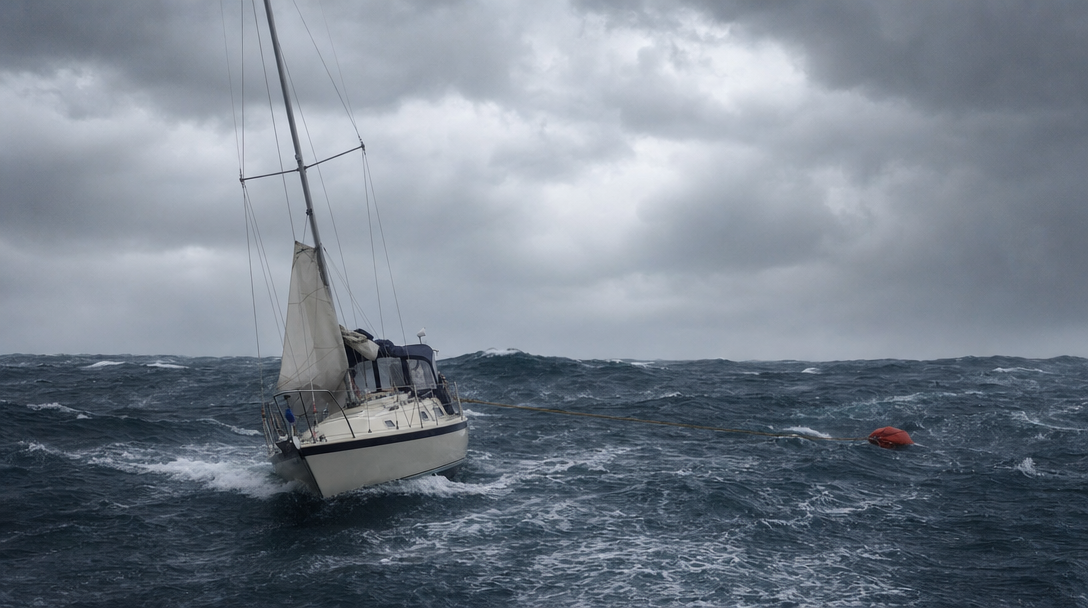
To prevent the most dangerous scenario—turning the vessel broadside into the wave—a sea anchor is used. This special floating parachute keeps the yacht's bow pointed directly toward the wave crests. The entire procedure boils down to three basic principles:
- Reduce windage. The corrugation reduces the critical load on the mast.
- Go to controlled drift. The yacht moves with the water, without trying to resist its contours.
- Keep the nose against the wave. The sea anchor prevents the boat from becoming broadside to the breaking water.
Why a serviceable yacht can be safer than a life raft
The tragic Fastnet Regatta in August 1979 vividly illustrated the cost of panic. More than 300 yachts set out to sea when they were suddenly engulfed by a fierce force 11 storm with waves up to 15 meters high. Fifteen people died in the race.
A large-scale investigation revealed a striking fact: most of the yachts abandoned by their crews in fear were later found completely intact. Experts concluded that the tragedies were most often caused not by the destruction of the boats, but by the captains' poor decision to enter life rafts too early.
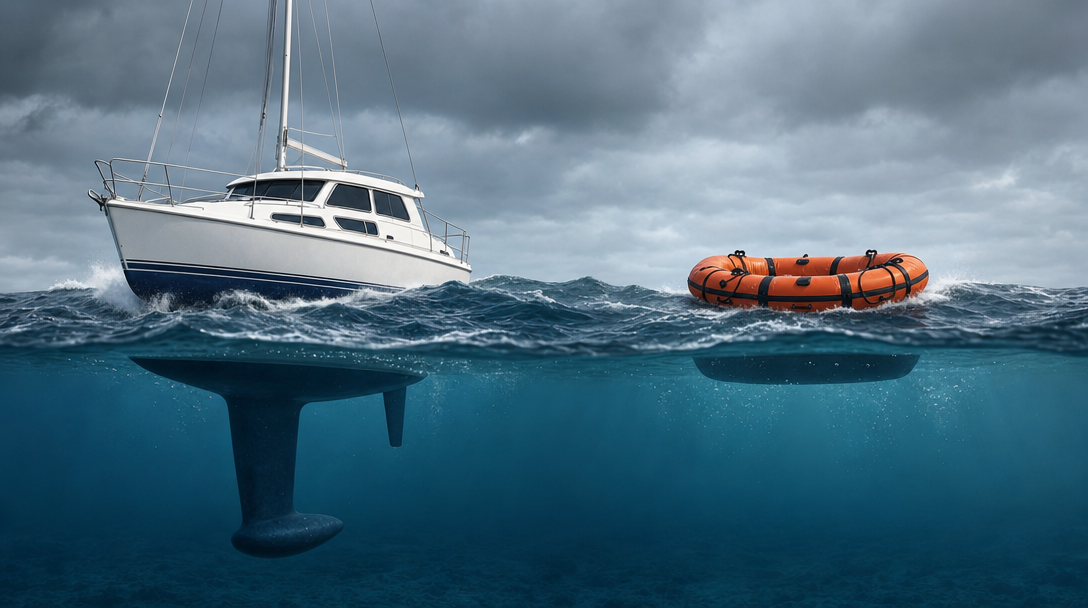
An inflatable raft lacks a heavy lead keel, so a wave easily flips it over like a light toy. Inside, it instantly becomes wet and cold, and the crew is powerless to change the situation. In an enclosed yacht, by contrast, it's dry and relatively warm. There, the crew can wait out the worst of the storm and conserve their strength.
Experienced sailors know the ironclad rule: never abandon a yacht during a storm just because you're afraid. As long as the keel is in place, the hull is intact, the hatches are battened down, and no water is pouring in, the boat can survive. Transferring to a life raft only makes sense when the vessel has sustained critical holes and is about to sink.
What determines a yacht's survival in a storm?
The yacht successfully survives ocean storms not through brute force, but through precise physics and discipline. Heavy ballast ensures stability, the fiberglass hull copes with cyclic loads, and drifting with a sea anchor allows the boat to glide safely through the waves. The crew's main task is to reduce windage in a timely manner and not interfere with the vessel's performance.
When caught in the eye of a storm, it's important to distinguish the frightening appearance of the elements from the actual threat. Just check four things: is the hull intact, is the keel in place, are the hatches sealed tightly, and is the vessel afloat without a critical influx of water? If all is well, a high wave is just water, through which the boat will surely pass.