You're standing on the shore, imagining dropping anchor off a deserted tropical island. It seems like the perfect excuse to buy a boat and set sail. But are you prepared for the fact that behind the beautiful view lies regular breakdowns, limited comfort, and constant repairs? Even after months at the shipyard, a boat rarely reaches a state where everything on board is working perfectly.
Before you begin researching and planning your round-the-world sailing trip, there are several practical considerations to consider. You need to find your personal goal, gain some firsthand experience on other people's decks, and understand what compromises you're willing to make.
First, decide why you are willing to live with constant breakdowns.
Life on a sailboat requires a strong inner motivation that won't disappear with the first serious malfunction. For some, the starting point is frigid spearfishing from a kayak in Alaska, where the yacht becomes a mobile home, a cooking base, and a means of transport, allowing them to explore new waters in warmer conditions.
The sailing format can vary greatly. Some prefer the tropics, others the northern latitudes. Some plan independent passages far from shore, while others prefer to spend the night in equipped marinas. The pace also varies: you can sail solo on long tacks or travel between islands in short stages with friends.
Initial plans often change after experiencing the real sea. The desire to live in complete isolation can give way to a more intense schedule: for example, six months sailing, followed by six months on land. This rhythm leaves time for trips inland and other hobbies.
Before browsing for-sale ads, it's important to honestly define five criteria: region, season length, autonomy, desired sailing pace, and crew composition. These answers don't have to be definitive, but they will guide you in choosing the right vessel.
Reduce your expenses and gain your first maritime skills at the same time
The challenge of saving for a sailboat isn't about your salary, but rather the difference between your income and expenses. If you earn $100,000 a year but spend $90,000, you'll only have $10,000 left over for your dream. You can create a budget for the purchase even without a six-figure income if you radically rethink your everyday spending.
- Cut back on regular expenses: restaurants, spacious housing, a new car, and other things you can easily do without.
- Learn to cook and repair things yourself. These habits not only save money on shore, but are also vital at sea, where most problems have to be solved by hand.
- Combine work with study. In one case, saving for a boat was helped by a spartan life in a mobile home with minimal electricity bills of about $20 a month, a 12-hour workday, and sailing lessons in his spare time.
Such a period of strict savings and intense work requires discipline. This approach doesn't set a one-size-fits-all budget for a round-the-world trip, but it does set the right direction: financial preparation begins with the ability to do without.
Learn not only how to sail, but also how to live on a cruising boat
Books, videos, and specialized courses like ASA programs provide an excellent foundation and understanding of shipboard life. However, for future sailing, it's important to clearly distinguish between theory, the thrill of the sport, and the real-life routine of cruising.
- Get basic knowledge. Study the theory and take accessible courses to understand the physics of water processes.
- Go sailing regularly. Membership in a local yacht club and participation in regattas develop attention to detail and hone yacht handling skills.
- Don't confuse regattas with cruising. In racing mode, the crew is focused on speed and results, while on a long journey, the focus is on purchasing provisions, maintaining systems, and comfortable living conditions.
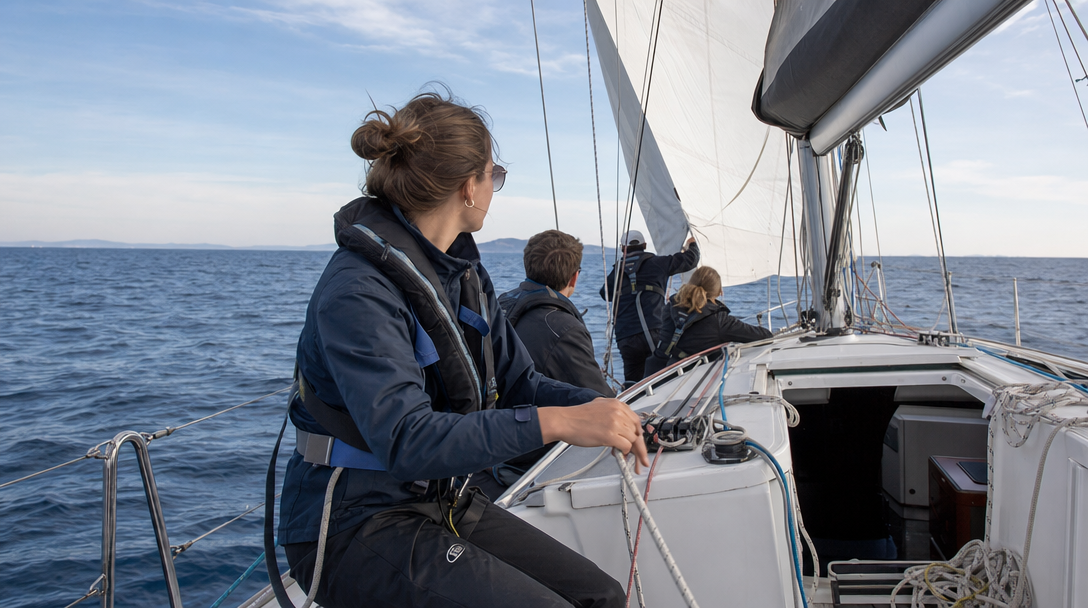
- Looking for a job as a crew member on a yacht. Spending days and weeks on someone else's cruising boat is the best way to learn how a vessel works without the financial responsibility of it.
- Use specialized sites. It is common practice to search for places on board through CrewBay.com, Findacrew.com, thematic groups and yachting communities.
A seat on the crew allows you to quickly check whether the confined space is repulsive. When searching for a yacht, it's worth considering not only the attractive route but also the season: a summer passage from Miami to Newport with a tailwind is completely different from the same route in the winter storm season.
Find a mentor and choose your captain carefully
If you're looking for a mentor in yachting, consider looking into yacht clubs, marinas, and ship repair yards. You might meet someone during a regatta or while chatting at the marina. A common practice is to offer to help an experienced owner with the dirty work of repairs in exchange for knowledge and a trip to sea together.
An experienced sailor will impart practical subtleties that textbooks gloss over. For example, they'll quickly point out that the ultra-strong 5200 marine sealant is a permanent solution that can turn future part removal into a real hassle.
The captain's personality requires no less attention when working with a crew. It's important to determine in advance whether they're willing to calmly explain what's going on and share their experience. If they're prone to aggression, irresponsibility, or excessive partying at the expense of safety, it's best to avoid going out: slamming the door and disembarking on the open ocean won't be an option.
The main result of this stage is having someone in your life with whom you can discuss the condition of the rigging or a strange engine noise. At the same time, you'll discover what style of communication on board suits you best.
Choose a boat to suit your needs, not your dream image.
When choosing a boat for a round-the-world voyage, remember that any option is always a set of compromises. The balance depends on budget, distance of the voyage, desired comfort, ease of maintenance, and the ability to handle the sails single-handedly.
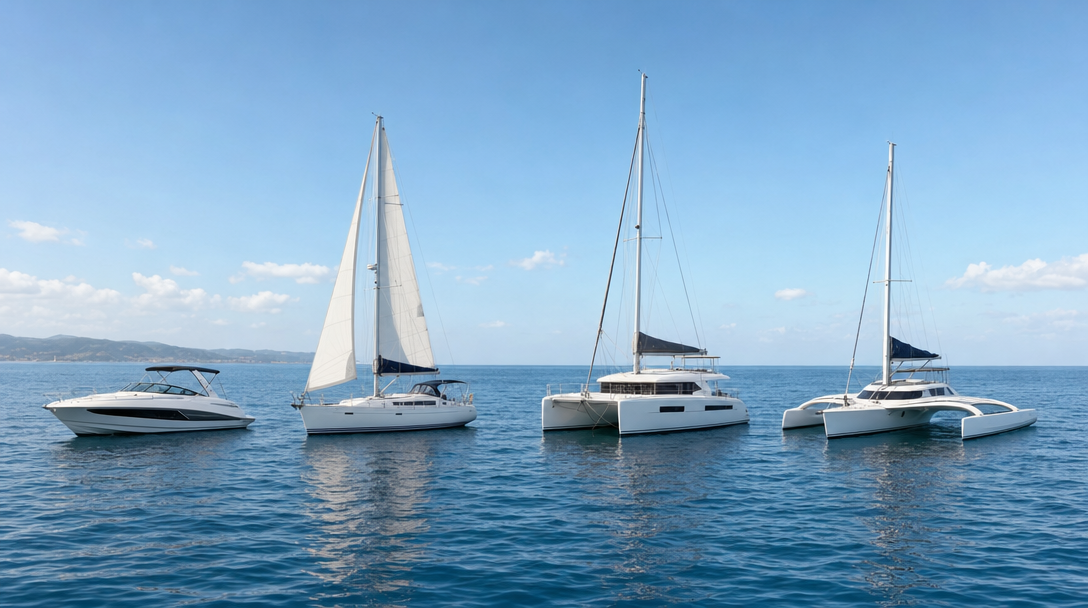
Motorboat, monohull, catamaran and trimaran
| Boat type | Strengths | Limitations and costs |
|---|---|---|
| Powerboat | Suitable for life on board and short distances. | Long journeys can significantly increase fuel costs. |
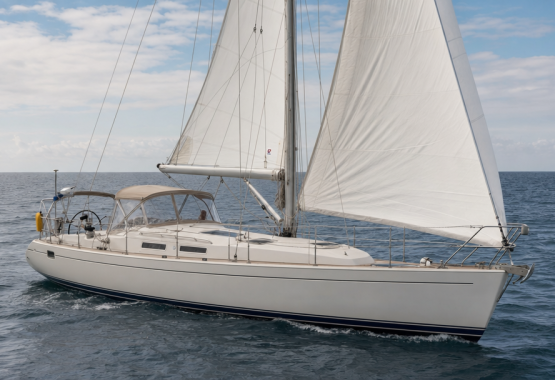
| Monohull sailing boat | Cheaper, easier to repair and maintain; convenient for solo operation and regular marinas. | Less space and stability at anchor compared to a catamaran. |
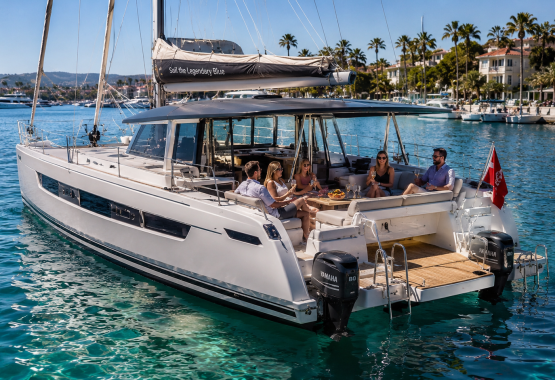
| Catamaran | It is stable, spacious, usually has two engines and can turn almost on the spot. | It costs significantly more than a single-hull boat. |
| Trimaran | It can be fast. | Rarely found on sale and less convenient for regular marinas. |
Market prices vary greatly depending on the hull type. For example, a used 37-foot monohull in working condition can cost $23,000. A catamaran of similar size and age can cost ten times as much—around $230,000—with some models reaching up to half a million.
What criteria should I associate with my own goal?
If low maintenance costs, simple systems, and the ability to dock in any tight marina are priorities, monohulls are a logical choice. If a low heel angle, a spacious saloon, and minimal draft are more important, you'll need to budget for a catamaran. A boat for a round-the-world voyage should be compact enough for solo control and practical enough for the chosen waters.
Search widely for a used boat and inspect it before making a deal.
You can buy a used sailboat on YachtWorld, Facebook Marketplace, Craigslist, in specialized groups, or simply by browsing marinas. The main rule is to not limit your search to your home region. Sometimes, finding the perfect option requires flying from the West Coast to the East Coast, methodically exploring marinas from the northern states to the southern ones.
How to expand your search and leverage the seller's situation
Having discovered a suitable vessel that has been idle at the shipyard for years, it's helpful to find out the reason. The long wait for a buyer and the approaching winter, which will require further maintenance costs, make the seller more accommodating.
In such a situation, a reasonable offer subject to a successful survey and sea trials has a better chance of success. The seller might reject a price of $23,000 on the first try, only to change their mind the next day. A good deal is achieved when there is cash on hand, clear technical specifications, and a willingness to forgo a purchase of $16,000 without inspection.
Why surveys are more important than emotions and a low price
A professional survey and sea trials insure against critical errors. Minor defects will always be found, but it's important to distinguish cosmetic defects from structural damage. If a faulty pump toilet is discovered during launch, this will be grounds for negotiating a replacement, not a reason to cancel the deal.
When deciding what to inspect before buying a yacht, it's best to rely on the hard facts: its operating history, technical condition, inspection results, and the scope of upcoming repairs. An outside perspective, especially that of an experienced mentor, is a great way to counteract any unnecessary emotionality.
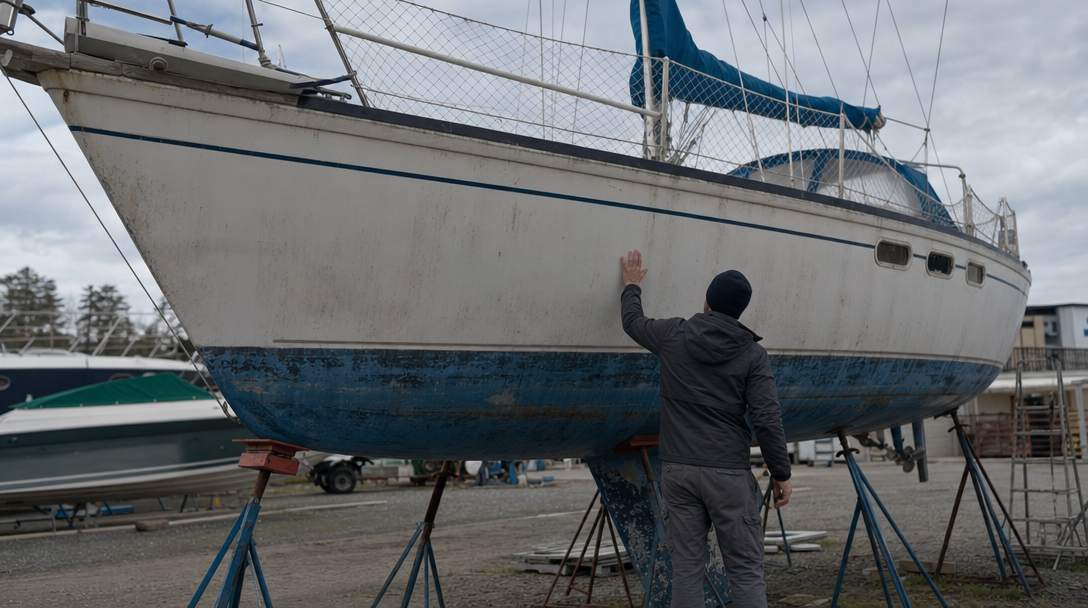
Extremely cheap or free boats pose a particular danger. Their restoration can easily cost years of life and thousands of dollars. Spending seven months in a dusty shipyard, overhauling every system, is a daunting ordeal. Purchasing one only makes sense if the vessel can be safely launched after moderate repairs.
Start with a simple boat and go to sea until it becomes perfect
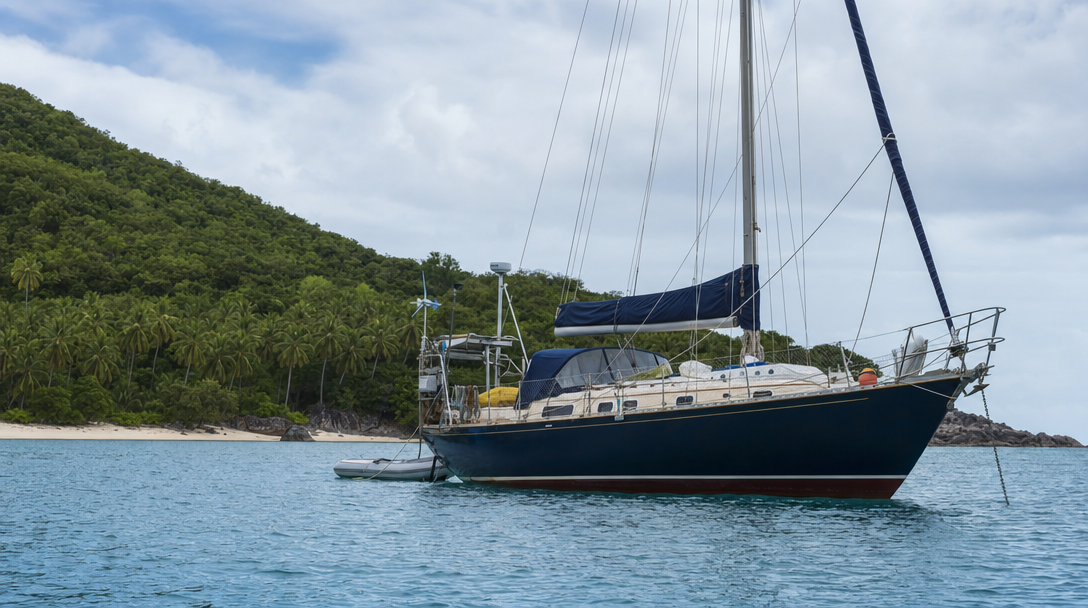
Eliminating complex systems greatly simplifies life on board. The absence of an electric anchor winch or air conditioning means these components won't require urgent maintenance mid-ocean. Choosing a 37-foot vessel over a massive 45-foot yacht saves time on repairs and leaves more resources for cruising.
Absolutely perfect boats don't exist. Even after a thorough overhaul, the engine may suddenly start leaking coolant through the exhaust. Of course, serious problems can't be ignored, but waiting for everything to work perfectly is pointless—you could end up stuck on dry land indefinitely.
After a lengthy repair, it's best to return to sailing gradually. Initially, anchoring just a couple hundred meters from your home marina will allow you to reacquaint yourself with the water without unnecessary risk.
A first yacht should be adequate, not excessive. Boats are designed to sail, and long periods of inactivity are detrimental to the engines and hulls. No amount of repairs can replace regular sailing.
Before you can sail around the world, you first need to start using a boat.
Preparing for a major voyage is a series of carefully considered, practical steps. First, a clear personal goal is formulated, then the budget is adjusted, and the crew accumulates practical experience. Only then, with the advice of a mentor, can you search for a compromise boat and check its technical condition.
Before taking the next step, ask yourself some questions. Do you understand your desired sailing style? Have you gained experience from long-term sailing? Are you willing to tolerate the yacht's constant minor imperfections just to set sail and set sail?