Can you just step onto the deck if you've already pulled up to the yacht in a dinghy? No: you must first ask permission, then remove your shoes, and allow the captain a clear view to maneuver.
The rules of conduct on a yacht revolve around three principles: coordination, safety, and respect for others' privacy. Guests should not board, press buttons, or jump into the water on their own. If an action is related to the yacht's operation or order on board, they should first consult the captain or watch officer.
What to do before stepping on board
Guest behavior rules on a yacht begin even before boarding. An invitation to board the boat does not automatically mean permission to go on deck. First, ask the captain or a crew member if you can board.
- Approach the yacht and ask a question. You can say, "Can I come on board?" or use the wording May I have permission to get on board?
- Wait for a clear answer. Consent may sound like this: Permission granted or "I allow." Answer negative means refusal. The phrase "not now" also requires waiting.
- Consider the possible reason for refusal. The boat may not be cleaned, the crew may be busy or simply not ready to receive guests at that moment.
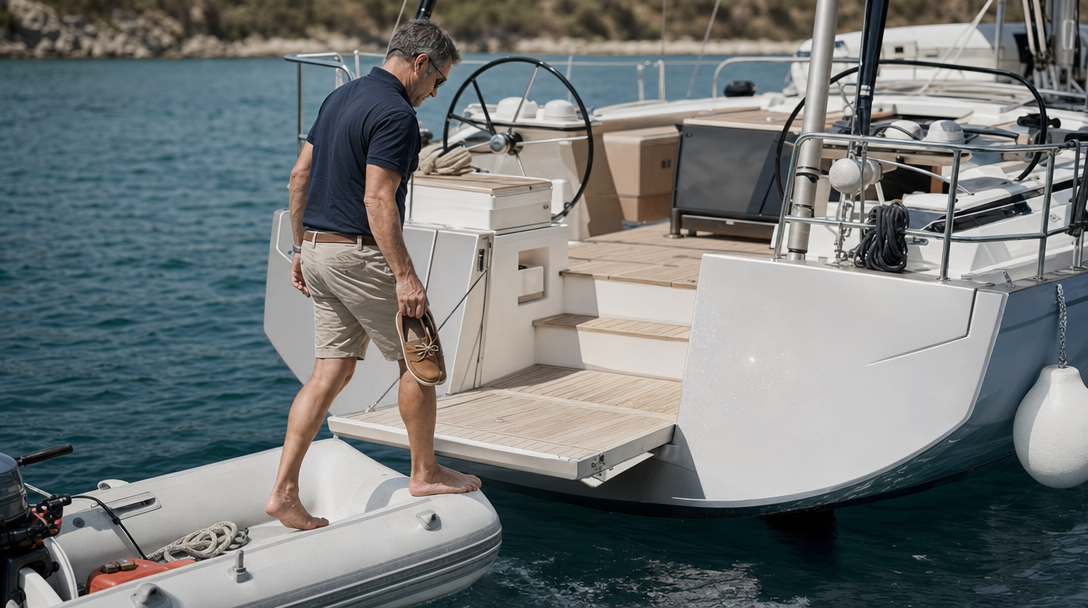
- Remove shoes before contact with the deck. If you arrive by dinghy and step out onto the aft transom, you must remove your shoes before boarding the yacht.
Shoes must be removed regardless of how clean or dirty the deck appears. Boarding someone else's boat with shoes on violates established procedures. The procedure is simple: approach, ask, wait for permission, remove your shoes, and only then board.
What cannot be touched or changed without permission
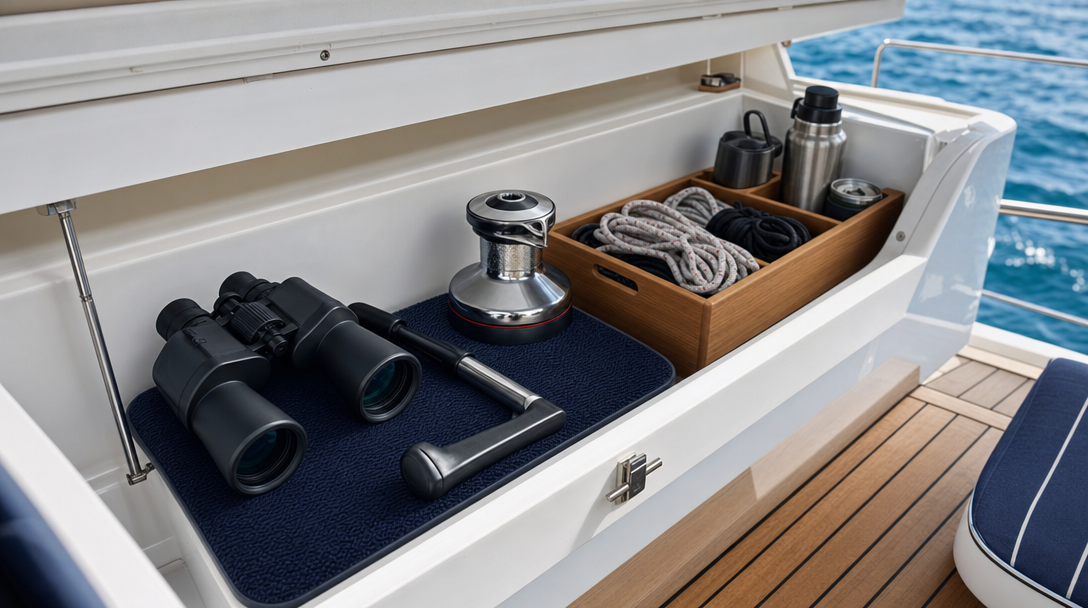
On a yacht, it might be interesting to test a button, winch, or other item. But before doing so, you should ask the captain or the person on watch.
- Buttons and switches. First, check if the selected button can be pressed. Once approved, you can perform the action and see how the equipment works.
- Winches and their handles. If you are allowed to adjust or check something, you must then return the handle to where it was.
- Binoculars, glasses and other crew items. The taken item should be put back in its original place, and not left where it is more convenient for you.
This also applies to simple objects that don't appear complex or dangerous. Don't change the placement or settings at your own discretion.
The guest's protocol is as follows: don't touch anything, ask a question, perform the action upon agreement, and then return everything to its original place. If permission is denied or the answer is unclear, it's best to leave the equipment and item alone.
How not to disturb the captain during movement and maneuvers
While on board, the captain's orders take precedence when it comes to control and safety. The "captain is always right" maxim should be understood here as a practical matter: while the yacht is moving or maneuvering, commands are carried out, and disputes are discussed only after returning to shore.
This is especially noticeable when entering a marina. Sometimes everyone on the boat gathers right in front of the captain to watch the maneuver, blocking his view. There should be a clear area in front of the helm for visibility.
Ask yourself: are you blocking the captain's view and can he see the direction the yacht is heading? If in doubt, step aside and don't take a position in front of the helm.
The same applies to swimming. Jumping from the yacht into the water is prohibited while the boat is moving, backing up, or has not yet dropped anchor. You must wait until it has come to a complete stop and receive the captain's express permission: only after this command may you begin swimming.

How to behave around other boats and in a marina
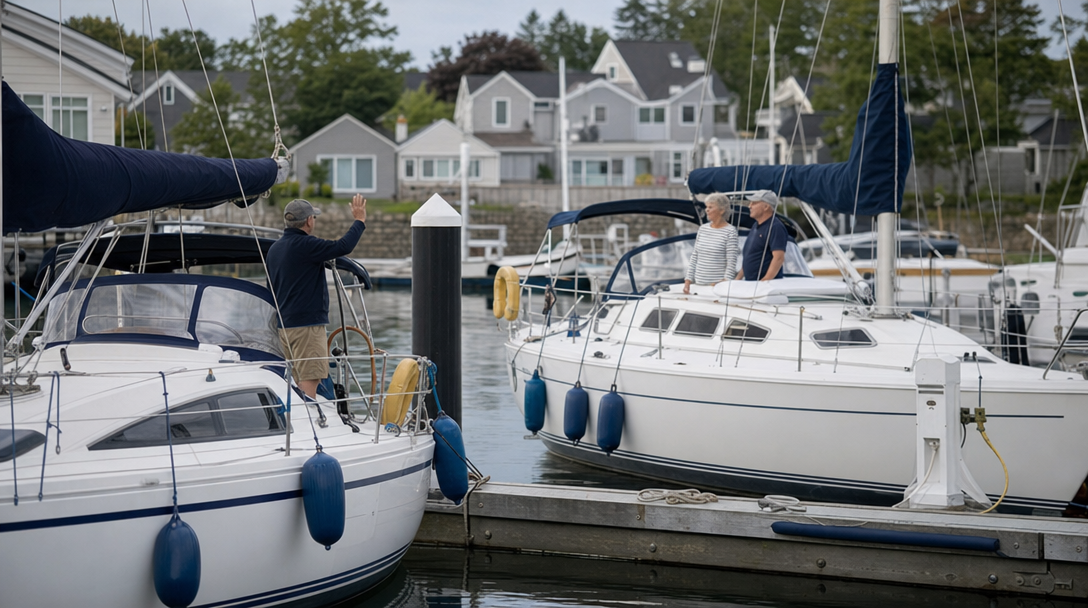
Yacht etiquette extends beyond just the crew. When passing a neighboring boat or catamaran, it's customary to wave. This is an unspoken gesture of respect for those sharing the same waters. Returning a greeting is a natural part of such interactions, but a lack of a response doesn't require special consideration.
A greeting does not imply permission to look at someone else's boat. Avoid peering through portholes, windows, or into the cabin, trying to figure out what people are doing on board or how the interior is arranged. When passing a boat at the pier, focus on your route and don't linger on your neighbors' private space.
Behavior in the marina is also related to noise levels. On charter pontoons, music and conversations can be loud, but in permanently populated areas, people tend to speak more quietly and turn down the music. When among neighboring boats, be mindful of their presence.
What traditions can be observed at will?
Some yachting elements are more about style than mandatory rules. For example, when entering a marina, you can choose between smart or smart attire. Not everyone does this, so it shouldn't be taken as a requirement. It's an aesthetically pleasing way to arrive at port.
Tradition also dictates when to lower the flag on a yacht. The flag is lowered at night and raised again in the morning; the triangular pennant need not be removed. Sometimes the flag is folded and secured with a red string or ribbon. This is an optional yachting "trick," noticed primarily by those familiar with the practice.
The main rule for a guest on a yacht is to ask first, then act.
Guests must obtain permission to enter and use equipment, obey the captain's commands while underway, not obstruct the captain's view, return borrowed items to their proper places, and respect neighboring boats. Thus, yachting rules link safety to actions onboard, and etiquette to consideration for others and their space.
Before the next step, check yourself:
- whether permission to enter or use the item has been obtained;
- Are you interfering with the captain's ability to see the direction of the maneuver?
- is it possible to touch the selected equipment or item;
- Did the yacht stop and did the captain allow swimming?