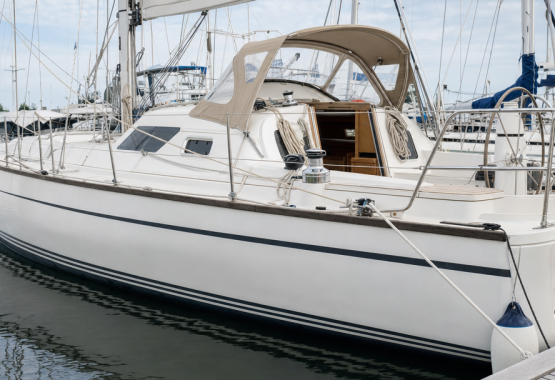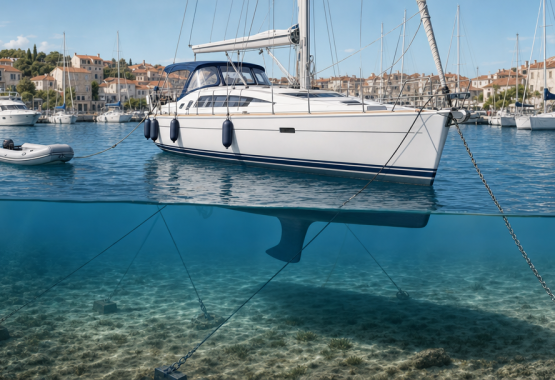
You approach a familiar yacht and are about to board. It seems natural to simply step from the dock onto the deck, especially if friends are there. But this is where it's easy to make your first mistake. You shouldn't start with a greeting, but with a request for permission. Then you'll have to check your shoes: ordinary soles leave black marks on the light gelcoat, and heels press into the expensive teak.
On the water, yachting etiquette is not a set of social manners. Every rule has a practical value. Scratches on the deck, broken dishes from a wave, conflicts during mooring, and empty fresh water tanks are all consequences of violated boundaries. Rules of conduct on a yacht help preserve the vessel, resources, and normal relationships among people in the confined space of a marina.
How to board a yacht without disturbing the crew's space
Every visit begins with a question. The deck and saloon are the crew's private space, so permission must be obtained before boarding another vessel. The same principle applies on the water: if there's no available space at the pier and you need to moor broadside (side to side) to another vessel, mooring begins only after permission from the neighboring vessel. There's a well-known case on the island of Poros, where a crew moored broadside without permission, and a fight almost ensued. This is a direct answer to the frequently asked question: is it permissible to board someone else's yacht without permission?
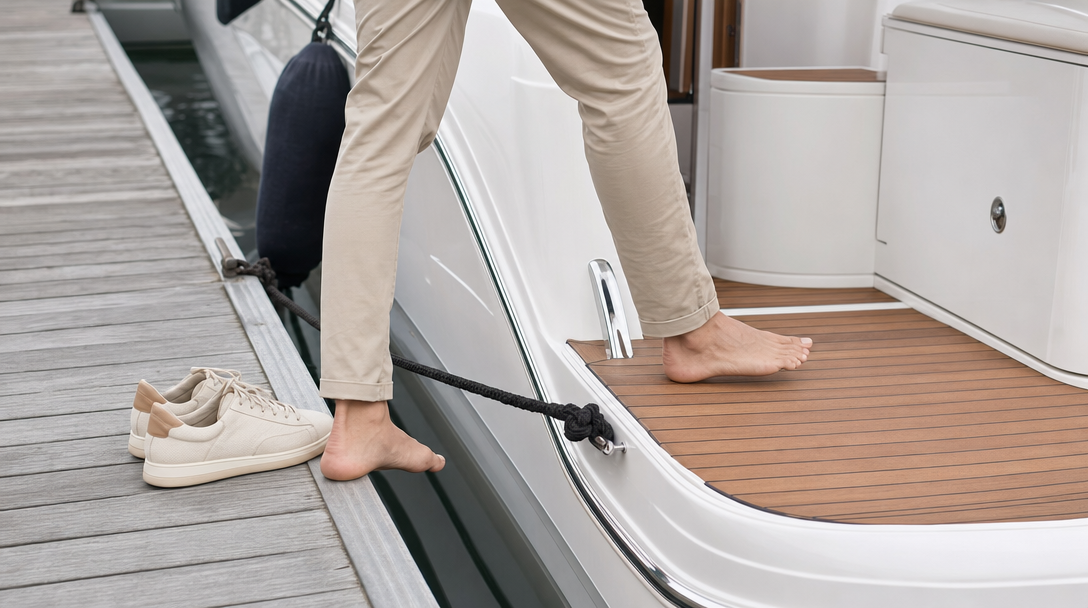
Once you've received permission, it's worth paying attention to your feet. Why do people take their shoes off on a yacht? Regular street soles stain the gelcoat, and heels damage the teak decking, which is expensive and difficult to restore. Shoes are removed even on your own boat. To protect your feet, wear closed-toe boats or sneakers with light, non-marking soles. Practicality is more important than appearance on board: skirts and heels are simply unsafe.
Yacht etiquette strictly protects privacy. It's not customary to look into other people's cabins, go down to the saloon, or take belongings without an invitation. Personal items are not allowed in the cockpit or common passageways. Before stepping onto the deck, it's enough to remember a short checklist: ask permission, remove your shoes, remove your belongings from the passageway, and do not open closed doors.
How to behave around other yachts on the water and at the pier
As soon as a boat leaves the pier, its actions begin to affect its neighbors. When passing or overtaking another yacht, it's important to control your speed. A strong wake can violently rock a neighboring vessel, break dishes in the galley, and ruin the rest of the crew's time. Therefore, how to behave near other yachts depends primarily on assessing your own wake.
Similar rules of good neighborliness apply at the pier. If the crew plans to moor alongside, someone else's boat is not turned into a free pontoon. The owner's consent is required, even if there are simply no other mooring options.
A yacht's appearance also serves as a means of communication. Naval flags are an international language, not just decoration. Using a pirate flag as a joke is not recommended: such symbols can disorient other captains.
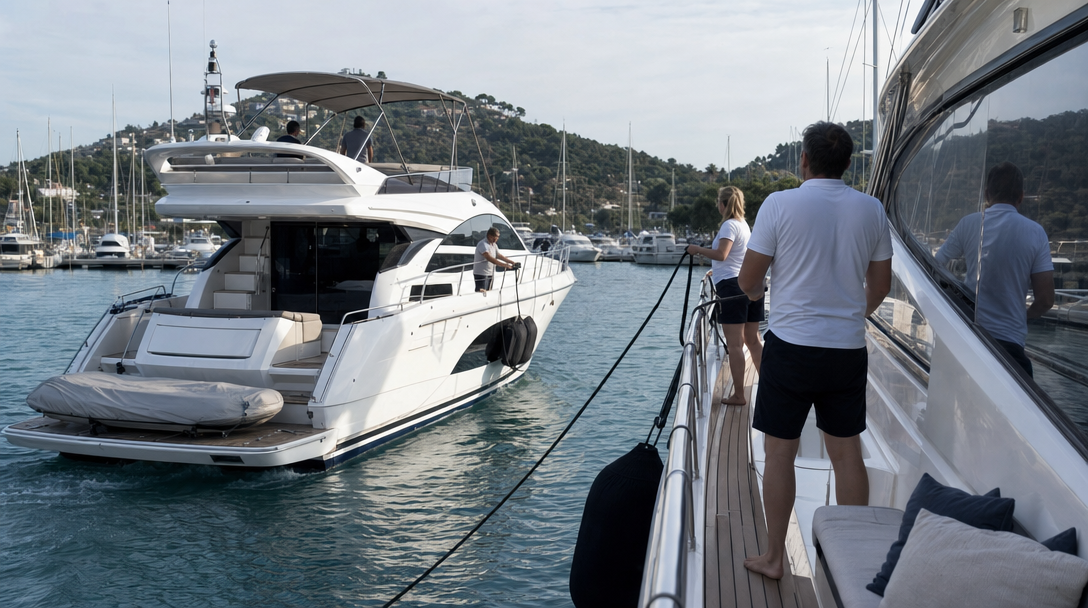
Another unspoken norm is mutual assistance. If the crew is dining at a port restaurant and sees a yacht entering the marina, and there's no one to take over the mooring lines, it's customary to get up from the table and help. Towing a stalled boat, helping with a clogged toilet, or taking over mooring lines is normal practice. It's a good idea to assess the wave before overtaking, ask for permission before mooring, and, if necessary, simply help your neighbors.
How to maintain peace and order in a shared crew
Sound travels across the water instantly. What seems like a fun party to one crew turns into a sleepless night for the entire marina. In 2018, a noisy flotilla mooring in France resulted in police action and fines following complaints from fellow yachtsmen. Respect for your neighbors means keeping your music and voices at a low volume.
Inside the boat itself, the challenge is living together. On a week-long charter, personalities and differences usually surface on the third or fourth day. In such a confined space, it's important to keep your emotions in check and not dictate to other members of the expedition what to do or where to go.
The key rules of conduct on board are based on the captain's authority. He bears personal responsibility for the safety of the vessel and the lives of those on board. This is why the route, departure time, and mooring procedures are not decided by vote. The captain's rightful rule is dictated not by a desire to command, but by the demands of survival.
If disputes arise on board, raising your voice, resorting to personal grievances, or publicly challenging the skipper's decisions is not acceptable. Any conflict is resolved through compromise. To avoid creating tension, simply be mindful of whether your actions are disruptive to the rest of the crew.

How to handle your yacht and its resources with care
Daily boat maintenance consists of many small habits. These aren't strict international laws, but rather simple tidiness that preserves the boat's appearance and conserves resources.
- Remove fenders after leaving the marina. They're only needed when mooring. Fenders left overboard while underway create unnecessary drag and spoil the boat's appearance.
- Remove the linen from the rails. Even if T-shirts and towels have long since dried, they are not left on clothespins, especially when entering a new marina.
- Handle red foods with care. Red wine, berries, and highly pigmented juices instantly penetrate light-colored clothing, deck plastic, and porous teak. Removing such stains is extremely difficult.
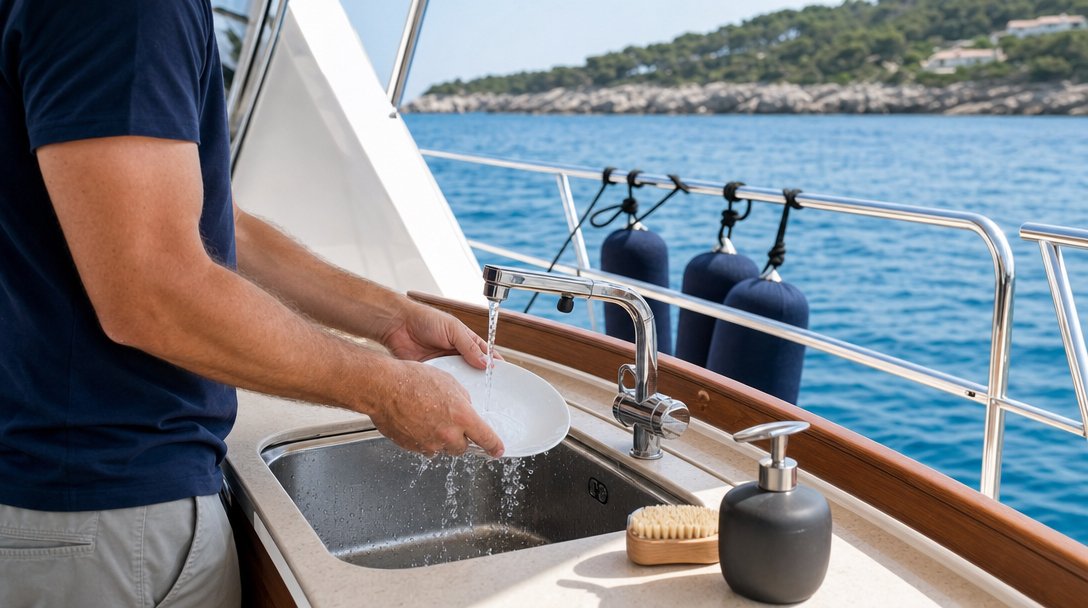
Fresh water is a limited resource on a yacht. You can't shower like you would in a city apartment. How can you conserve water on a yacht? In the shower, you only turn on the faucet to rinse off. Then you turn off the water, soap yourself, and turn it back on with a short stream to rinse off the foam. The same principle applies in the galley: you scrub the dishes with a sponge and detergent while keeping the faucet closed. During ocean voyages, when fresh water becomes critical, dishes are sometimes pre-washed with seawater and only rinsed with fresh water at the very end.
Yachting etiquette begins with respect
Yacht etiquette acts as a universal guide in situations not covered by maritime regulations. It is based on four pillars: prior permission, safety, personal space, and mutual assistance. Thanks to them, the deck remains clean, fresh water doesn't run out on the second day, and marina stays proceed without incident.
Before you do anything on your own or someone else's boat, just ask yourself four questions:
- Have you received express permission to enter, moor alongside, or use someone else's property?
- Are my speed, wave and volume of music causing problems for my neighbors?
- Am I arguing with the decision of the captain responsible for safety?
- Do I leave my bags in the aisle and turn off the water while I wash my hands?