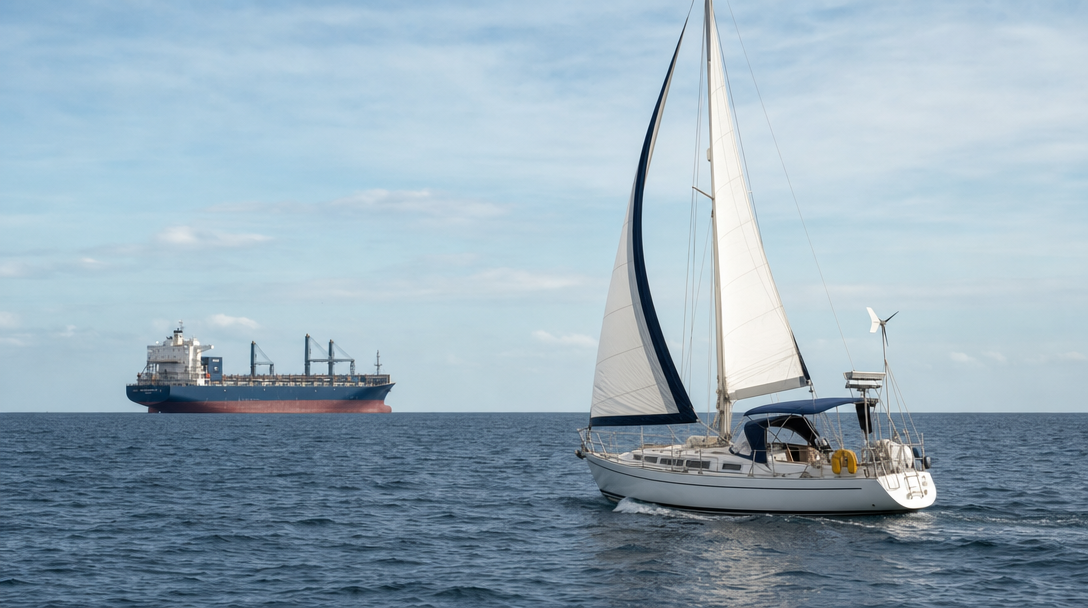
What's more cost-effective: paying to transport a boat on the deck of a cargo ship or investing a comparable amount in outfitting a yacht for an independent Atlantic crossing? Until recently, shipping a Beneteau 323 Golden Haze from Southampton to the Caribbean cost around £8,000. Now, the same route is quoted at £12,000.
For a crew of three, a solo voyage to Martinique would take 16-17 days. It's impossible to constantly steer the yacht manually, so the boat would require a self-steering system, additional power, long-distance communication, backup navigation, and an autonomous water supply. This calculation shows the costs involved in turning the idea into a feasible project.
Why independent travel has once again become an alternative to transportation
Before the pandemic, transporting Golden Haze on the deck of a cargo ship cost around £8,000. Later, voyages were cancelled due to a lack of customers, and amid the post-COVID shortage of ships, the estimated price rose to £12,000.
The increased shipping costs alone don't make a transatlantic crossing a cheaper alternative. Equipment must be purchased and installed, and the boat must be transported to the starting point. However, given comparable costs, the cost of an independent Atlantic crossing becomes an investment: the purchased systems remain on board. When making such a decision, it's worth weighing the current carrier price against the specific equipment a particular boat lacks.
How Golden Haze is prepared before its Atlantic release
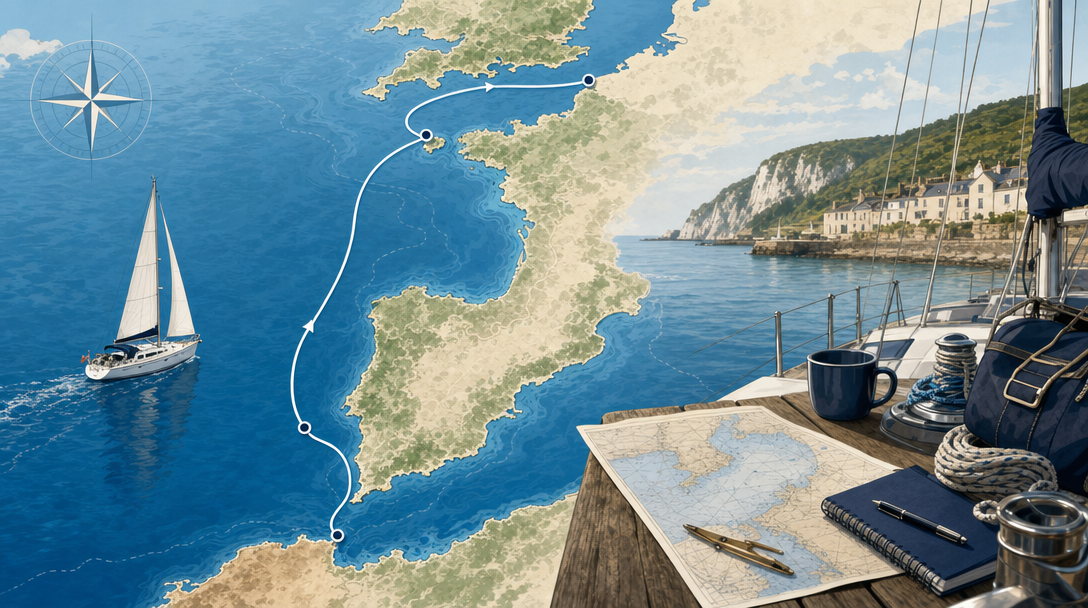
In addition to purchasing ocean-going equipment, preparing a yacht for the Atlantic includes logistics and hull maintenance. The route to the launch site is divided into several stages:
- Frame. At Newhaven the boat is taken ashore for two coats of Hempel Cruiser paint and anode replacement.
- Supply. In Port Solent, a dinghy, a Suzuki motor, and a life raft are being purchased, which will be needed for further stops on the Caribbean islands.
- Installation of systems. After Cherbourg, the boat heads to Guernsey, where a local shipyard will install a wind autopilot.
- Transfer to the south. The boat will descend to Tangier or Gibraltar, from where it will depart for the Canary Islands or Cape Verde before the ocean crossing.
The project budget includes hull maintenance, basic supplies, system installation, and ferry expenses. Choosing Tangier or Gibraltar allows the voyage to be divided into shorter sections, although this is not the only possible route from Europe to the Canary Islands for the Atlantic crossing.
How to choose a self-management system and provide it with energy
Wind rudder or electric autopilot
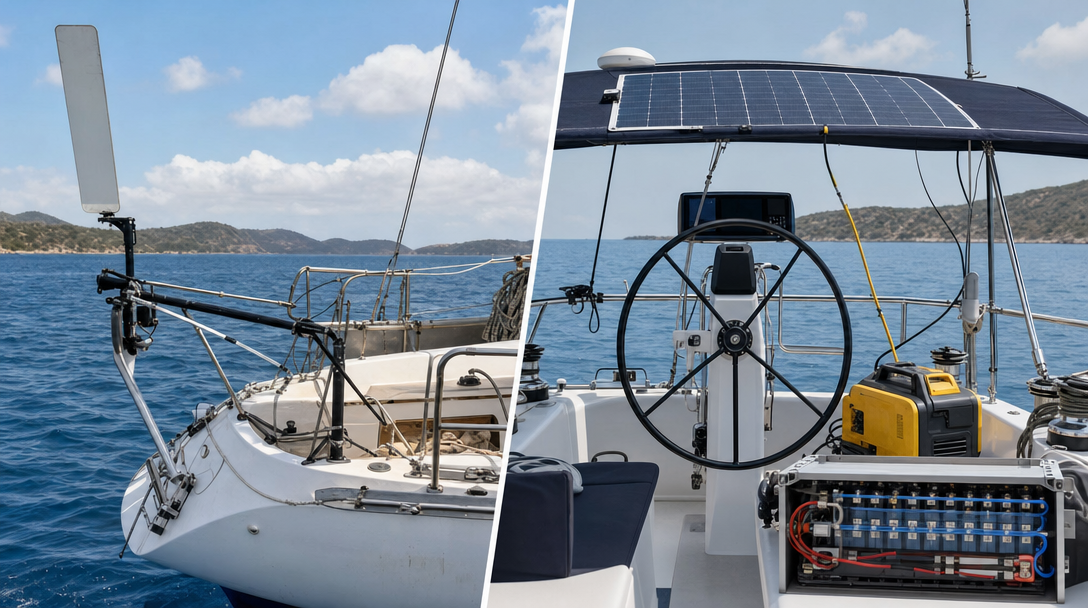
Continuous manual control for 16-17 days is impractical. A reliable autopilot for an Atlantic crossing becomes a major expense. Among the popular wind-powered steering systems—Aries, Windpilot, and Hydrovane—the Hydrovane stands out for its autonomy. This system steers the boat without additional lines to the helm drum and operates reliably over long distances.
For costing purposes, the Hydrovane is priced at approximately £4,500. A similar Windpilot costs around £3,000, and the Aries is almost £4,000, although the latter system has historically been better suited for tiller-steered boats. There are also more affordable wind rudders on the market, but the final choice depends on the specific characteristics of the specific vessel.
An electric alternative is a new helm-based autopilot, such as the Raymarine Evolution Wheel Pilot. The device itself is cheaper than a wind helm, but it consumes 1.5 to 3 amps per hour. To offset this consumption, you'll need a portable generator, such as the Honda EU10, which produces 8 amps while burning 0.58 liters of gasoline per hour. This setup requires storing fuel canisters securely on deck.
A complete system consisting of a helm-mounted autopilot, a gasoline generator, and a fuel reserve will cost approximately £2,600. Charging directly from the main engine's standard generator will require carrying significant amounts of diesel fuel in canisters on the boat's rails, which is not always safe. Ultimately, the choice comes down not only to the cost of the equipment but also to balancing the independence of the helmsman's power supply with the availability of fuel storage.
Solar panel and additional battery
A yacht's power supply at sea must cover navigation lights, instruments, and household lighting. On a 32-foot boat, deck space is rarely available, so a flexible 120-watt SunWare solar panel is conveniently mounted on the top of the bimini.
Installation will require cable, a cable gland, a charge controller, a battery monitor, and the services of a sailmaker to sew the fasteners to the bimini fabric. The system will be completed by a third service battery, installed next to the existing battery compartment. The financial plan here should take into account the entire equipment bundle, from the power source to the wiring, and not just the nominal cost of the panel itself.
What to add to the controls: communications, navigation, emergency equipment and water
Long-distance communication is the second most expensive item after the control system. A traditional Icom SSB radio has proven itself to be excellent on the ocean, but its installation requires an antenna tuner, insulators inserted into the backstay, heavy cable, and space in the navigation area. The total cost of such a setup is around £4,000.
A more affordable alternative is the Iridium GO! satellite terminal for yachts in the marine package. A kit with an external antenna on the stern rail, a subscription to PredictWind weather routing, and SIM cards costs approximately £2,000. For a one-time ocean crossing, satellite communication is often more practical, while for multi-year circumnavigations, captains still prefer the reliability of SSB.
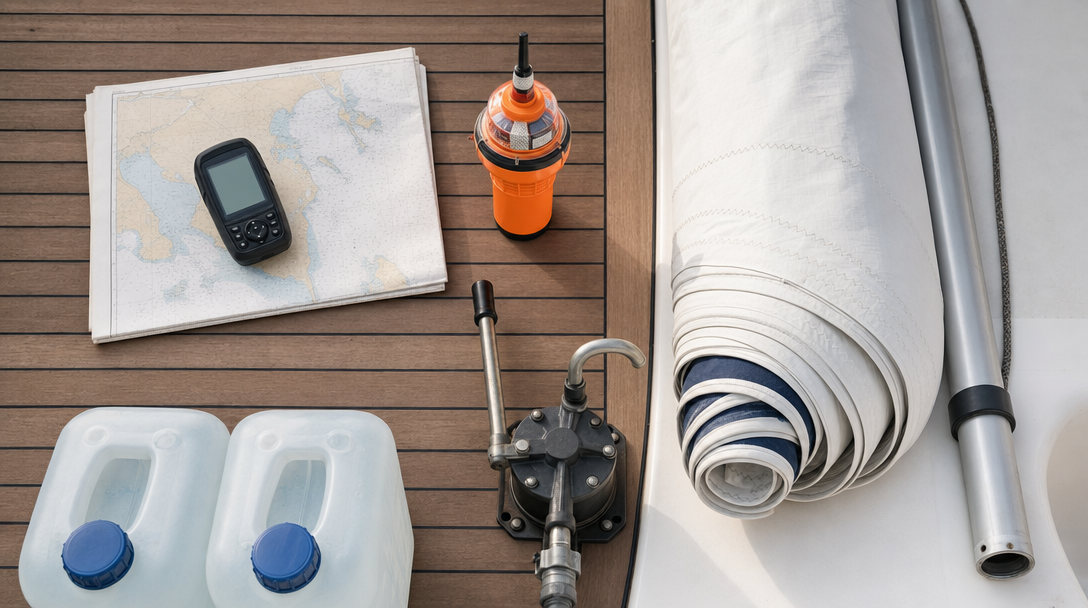
Communication on a yacht at sea is supplemented by backup navigation and emergency equipment. The basic kit includes an EPIRB buoy, a Navionics No. 46 electronic chart, a paper general chart for daily plotting of the midday position, and a backup independent GPS such as a Garmin 152. For stable sailing in full winds in the trade winds, a second genoa and spinnaker pole are required.
- Connection: SSB radio or Iridium GO! satellite hotspot depending on range.
- Navigation reserve: A standalone GPS receiver and a paper map in addition to the plotter.
- Emergency equipment: EPIRB satellite buoy.
- Water: Backup hand pump for galley and canister.
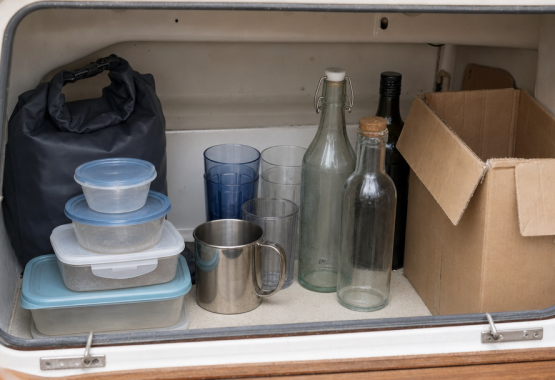
Water supplies require special discipline. There have been cases where a single shower left the crew stranded in the Bay of Biscay with only a supply of soda and canned fruit juice. The standard 160-liter tank is nominally sufficient for three people, but it's wise to turn off the electric freshwater pump during ocean crossings. With a daily water supply of three liters per person for drinking and washing, it's critical to secure reserve canisters to the lifelines and distribute bottled water throughout the lockers.
What does a budget of around £12,000 consist of?
The estimated cost of outfitting a yacht for oceangoing use and transporting it to the starting point summarizes key expenses. The table does not include equipment required for the yacht to survive in the Caribbean, regardless of the shipping method, nor the cost of specialist labor.
| Article | Grade | What does it include? |
|---|---|---|
| Self-management | £4 500 | Wind steering system |
| Solar system and battery | £1 800 | Panel, bimini upgrade, controller, and third battery |
| Long-distance communication | £2 000 | Iridium GO! satellite terminal in marine configuration |
| Navigation and emergency equipment | £1 000 | Navionics chart, separate GPS and EPIRB buoy |
| Sailing and water supply | £1 250 | Second genoa, spinnaker pole, pump and tanks |
| Marinas to the starting point | £1 500 | A month of short journeys and stops to the south |
The final cost comes to £12,000. The largest expense is self-steering, and choosing an electric autopilot with a generator can reduce this by several thousand pounds. Fuel is completely excluded from the calculation, both for the ocean crossing and for the southern leg, which only includes guest berths at marinas.
Independent transition remains a matter of choice, not just price.
The estimated cost of everything needed to cross the Atlantic on a yacht turned out to be comparable to the cost of transporting a ship on the cargo deck. However, £12,000 is only a preliminary estimate. It doesn't include diesel, gasoline for the generator, or electricians, and shipping company rates are subject to change before the season begins.
Before making a final decision, it's helpful to separate gear needed exclusively for the ocean from equipment that will be useful later. Only then should you compare current shipping rates with the actual cost of an independent Atlantic crossing for your specific boat.