You're eyeing a 40-foot monohull or a spacious catamaran and trying to figure out how much it costs to maintain it annually. Yachting forums often offer a scary formula: maintenance will cost exactly 10% of the vessel's price. But for sailing yachts, this rule almost never applies—a myth born from the world of powerful planing boats.
Maintenance for a sailing yacht is calculated differently. Two boats with the same price tag can require completely different annual budgets. Actual figures depend on the length, number of hulls, specific marina fees, and the age of the onboard systems.
What determines the cost of maintaining a yacht?
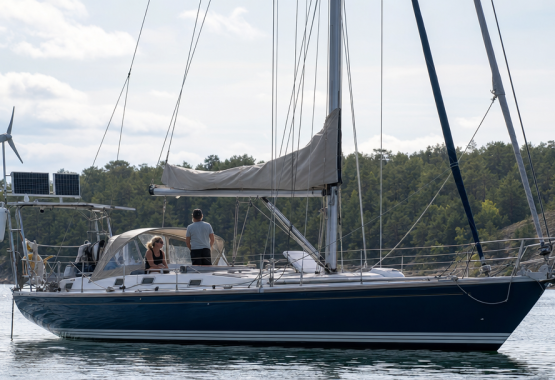
The most important parameter is the boat's length. It directly affects marina berthing rates, haul-out costs, antifouling coverage, sail area, and system maintenance costs. A compact 30-foot yacht will significantly reduce fixed costs compared to a 40-foot cruiser.
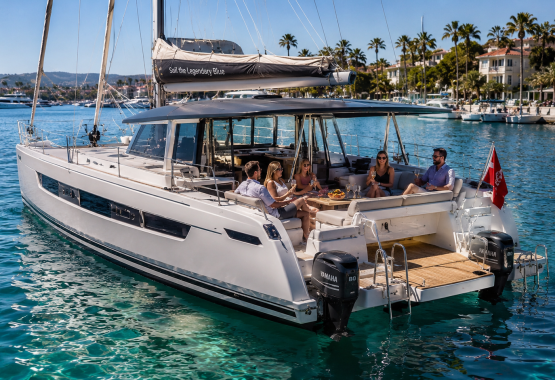
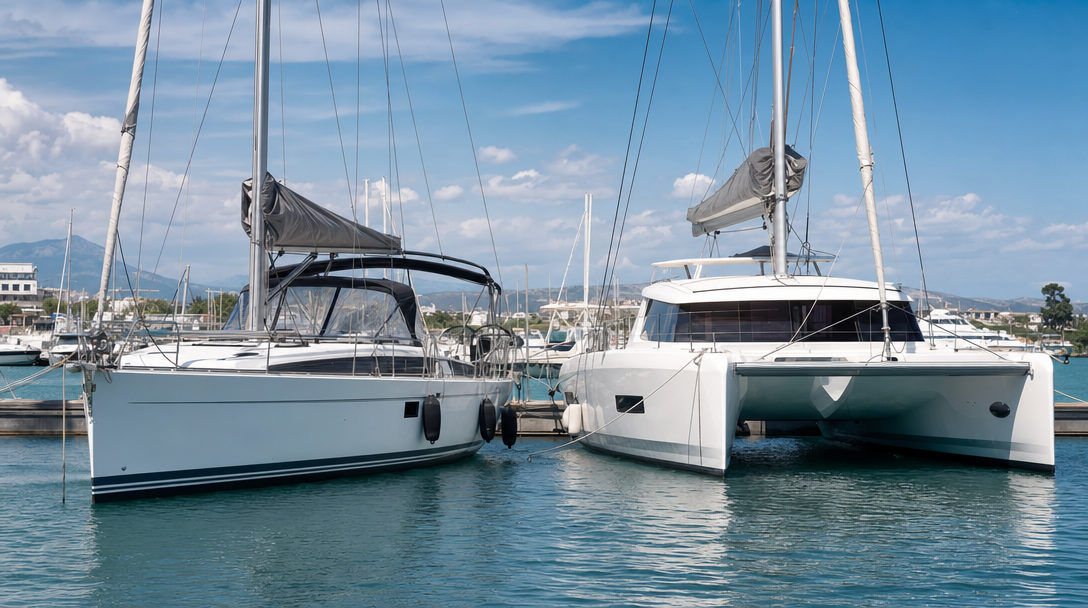
Next, the hull type is taken into account. On average, maintaining a catamaran costs approximately one and a half times more than a comparable monohull. This increase is applied to mooring costs, crane operations, and underwater work.
The location and security of the mooring also affect the cost. In central Barcelona, a berth will cost approximately one and a half times more than in a similarly secure marina 10 miles outside the city. On a river or reservoir, the cost is determined by the local yacht club's pricing and the need for winter storage onshore.
A new yacht and a three- to four-year-old boat require comparable regular expenses. However, a vessel older than 15-20 years steadily incurs additional repairs each season. Before diving into the numbers, it's worth establishing some basic information: hull type, length, navigation region, and mooring type.
What annual expenses should be included in the budget?
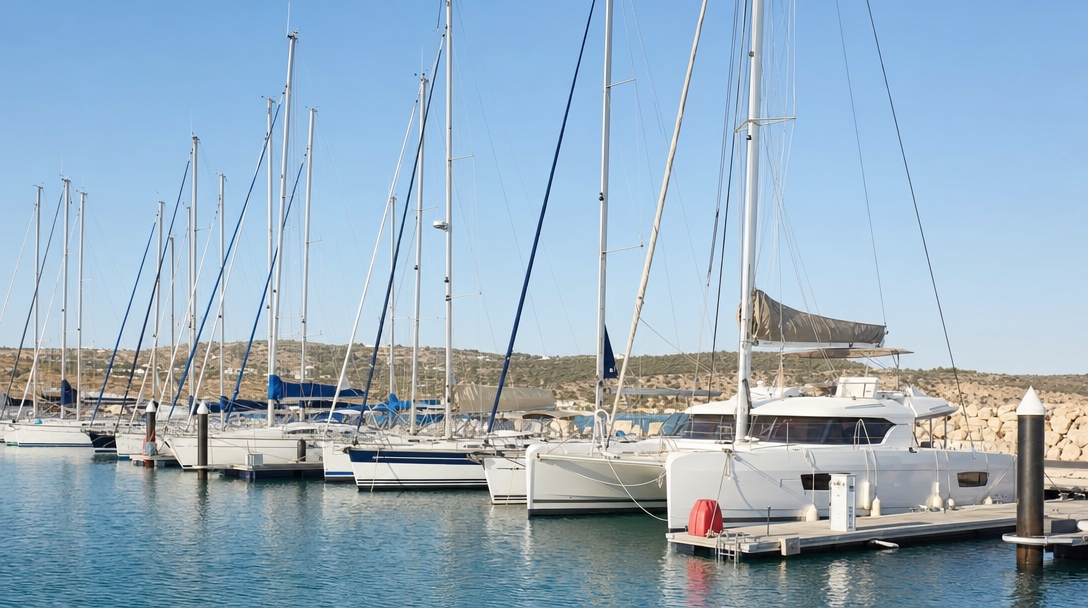
The largest recurring cost is usually the yacht's berth at the marina. An annual contract is significantly cheaper than a daily or monthly rate. Owners of multihulls should check the calculation rules in advance: some marinas calculate the area based on the outermost points, others use a coefficient of 1.5, and catamaran-friendly marinas charge catamarans by length, the same as monohulls.
| Yacht type or consumption | Landmark | What influences the amount? |
|---|---|---|
| 30–31 foot monohull | Moorings from 1,000 euros; good marinas – 2,000–3,000 euros | Region and marina level |
| 40-foot monohull | Parking 3,000–8,000–10,000 euros | Location and security |
| 40-foot catamaran | Parking 5,000–20,000 euros | Rules for calculating marina berths |
| 50–60-foot yacht | Parking 15,000–30,000 euros | The size and prestige of the marina |
| 40-foot yacht | Service for one engine: 300–600 euros | Marina and the cost of work |
The ranges listed vary by region and therefore cannot be combined into a single price list. In addition to mooring, the budget includes maintenance. The engine is serviced according to a schedule, usually with an annual oil change. Regular yacht maintenance costs also include replacing the protective anodes—on average, every one to two years.
Antifouling coating is renewed approximately every two years. For a 40-foot monohull, the work and lifting will cost €1,500–€2,500, while for a catamaran, it's around €2,500–€3,000. Meanwhile, for a compact 30-foot yacht, engine maintenance costs €150–€200, and lifting costs €500–€700.
Third-party liability insurance is often required when signing a mooring agreement. For a 40-foot boat, it costs €200–€400 per year, and for smaller yachts, up to €100. Comprehensive insurance is calculated separately and depends heavily on the deductible: rates range from 0.8% to 1.5% of the yacht's insured value.
Wintering on a river or reservoir requires payment for seasonal hauling, shore storage, mothballing, and spring reactivation of the systems. In sheltered bays of the Mediterranean, boats are often wintered on the water. Additionally, you can hire a local crew to ventilate and start the engines—supervision costs between 100 and 500 euros.
When choosing a basing location, they compare not only the annual tariff, but also the cost of crane operations, shore storage rates, and the availability of local service centers.
What replacements and maintenance do not appear every year?
An annual bill doesn't paint a complete picture unless major recurring expenses are factored in. Equipment wears unevenly: its lifespan depends on load, climate, and quality of maintenance. However, rough estimates help build a financial reserve.
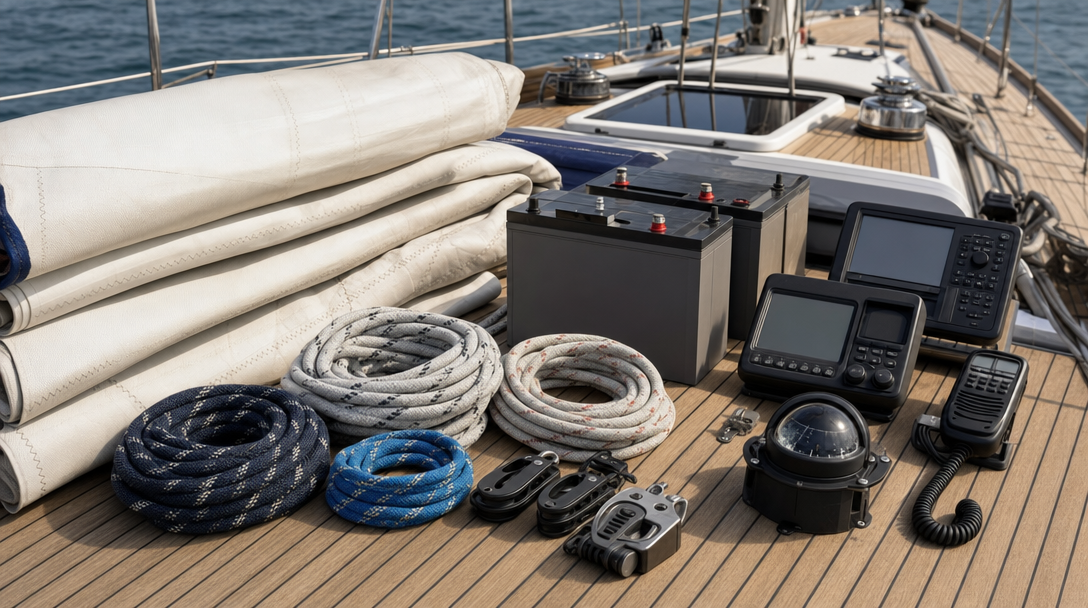
- Sail. With careful cruising, a Dacron sail will last about 7-8 years, while a Hydranet sail will last 11-12 years. For a 40-foot yacht, a Dacron mainsail and genoa will cost €5,000-€7,000, while a Hydranet sail will cost up to €10,000.
- Ropes and blocks. Sheets and halyards are replaced approximately every 7-8 years. A good set of 40-foot rigging costs €800-€1,000. During this cycle, several worn blocks may need to be replaced at €50-€100 each.
- Awnings and seats. Under the active sun of the southern Mediterranean, the fabric fades in 5–6 years; in the north of the region, covers last up to 8 years.
- Batteries. Starter and service batteries lose capacity on average after 3-4 years. The exact time depends on proper charge and discharge cycles, as well as ambient temperature.
- Electronics and sanitary systems. Chartplotters and autopilots become obsolete in approximately 7-8 years. A complete navigation system upgrade for a 40-foot boat will cost $10,000-$20,000. By this time, plumbing pipes will also calcify: replacing main lines and clamps will cost another 200-300 euros.
- High maintenance equipment. Natural teak decks require regular cleaning and treatment with special products, and the watermaker requires strict automatic flushing control.
Equipment doesn't break down exactly on schedule. A functioning navigation system simply slows down, and the sails gradually lose their shape. When inspecting a used boat, it's worth carefully checking the age of the batteries, sheets, pumps, and covers to understand the upcoming investment.
Why a yacht's age affects its budget more than you might think
Operating a new yacht and a three-year-old boat requires comparable regular expenses. The condition of a three-year-old boat depends entirely on the attitude of the first owner: manufacturing defects may be successfully remedied under warranty, or they may become an unpleasant surprise for the second owner.
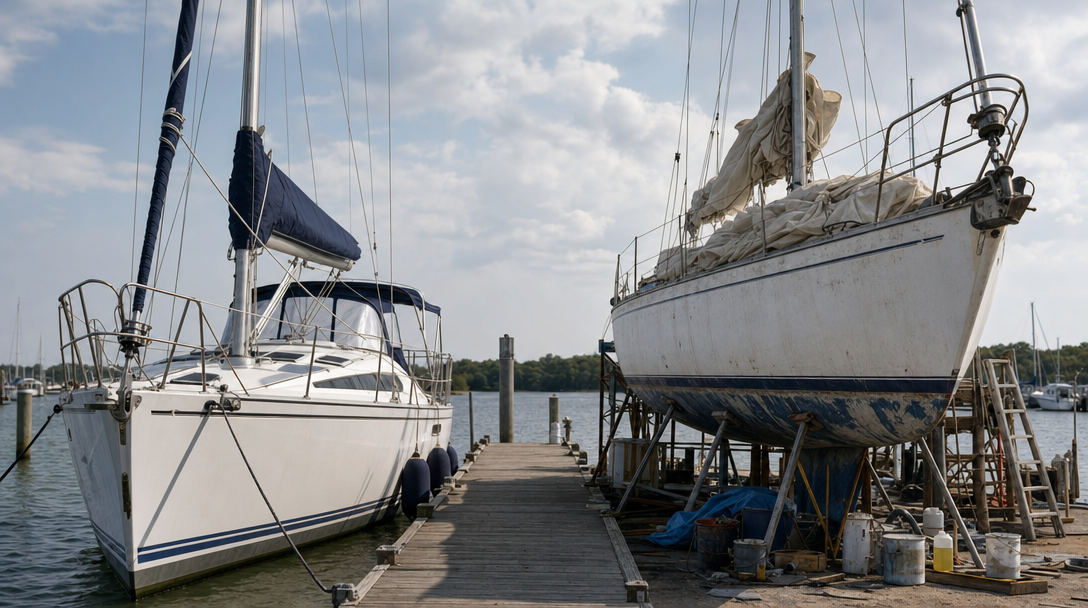
The situation is different for vessels older than 15–20 years. Scheduled maintenance inevitably overlaps with repairs. Almost every season, unexpected breakdowns occur, requiring immediate attention. Attractive prices on the used market do not guarantee low water costs.
The "refit" label in a brokerage ad requires careful interpretation. This term can refer to a complete overhaul of all systems or a cosmetic overhaul. It's important to have documentation to determine which components were updated.
A real-life case of a boat purchased for €8,000 is illustrative. The new owner planned to spend €3,000 on spare parts, but the actual cost reached €8,500, and that doesn't include hundreds of hours of labor. Restoring an old boat rarely pays for itself when resold.
When purchasing a vessel for a major refurbishment, it's essential to have a solid financial reserve. A detailed equipment audit will protect against a situation where the budget for scheduled sailings is completely wasted in the ongoing repairs.
How to compile your own calculation before purchasing
A proper yacht maintenance budget is based not on arbitrary percentages, but on the specific boat configuration and the destination. To give a general idea of the price range, annual maintenance for a 26-foot river boat is €1,600, while for a 31-foot yacht at sea, it's approximately €3,000–€3,200, including insurance, mooring, and scheduled maintenance.
- Determine the length and number of hulls: for a catamaran, apply an increasing coefficient to the base rates.
- Compare local marinas by annual contract price, area measurement rules, level of breakwater protection, and crane service costs.
- Calculate regular items: annual engine maintenance, antifouling coating renewal, insurance, seasonal storage and care services.
- Spread out the inevitable large expenses for sail sewing, battery purchases, rigging replacements, and navigation upgrades over the seasons.
- For an older vessel, establish a separate emergency fund for unexpected breakdowns.
- Consider chartering your vessel. Three to four weeks of successful chartering can cover basic expenses, but this is only a partial reimbursement opportunity and not a guaranteed financial plan.
What budget should I set before purchasing?
The exact cost of maintaining a sailing yacht depends on a combination of length, vessel type, location, and component wear. A catamaran is almost always more expensive than a comparable monohull, and the low price of an older vessel often translates into high repair costs.
Before closing, find out the marina's annual fees, estimate the remaining life of the sails and rigging, and request receipts for previous replacements. A detailed estimate will prevent you from falling into the trap of thinking a low purchase price automatically means a cheap boat.