Why does a yacht that starts flawlessly at the pier begin taking on water in the bilge or lose power due to engine overheating after just 24 hours at sea? Owners often think that delivering a purchased vessel to a new home port is simply a maintenance cruise. But delivering a yacht rigorously tests the true condition of its systems under prolonged stress.
When the waves hit, the portholes start leaking, the autopilot fails, and the captain is forced to become a mechanic on the fly. This job requires not only navigational experience but also a willingness to be responsible for the vessel's survival far from the safety of marinas.
Why is a yacht being transferred and what is the captain responsible for?
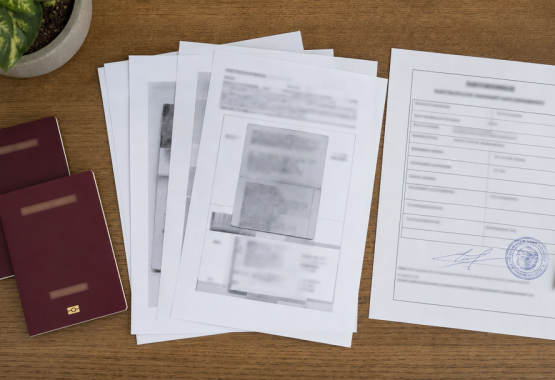
A captain is hired when the owner or chartering company does not plan to navigate the vessel themselves. The charterer can travel on board with the crew or wait for the boat at the final destination. Before departure, it's important to check the documents and the legality of the shipment: there's always a risk of encountering counterfeit documents or questionable cargo.
The captain's responsibilities remain fully intact during yacht transfers, even if the owner is nearby. There was an incident where the skipper hove to at night to avoid risking an unfamiliar port with a poor weather forecast. The client threw a fit, but navigational decisions are made solely by the captain.
An owner present onboard can sometimes unintentionally interfere with the crew. During a difficult mooring before a storm, any attempt to interfere with the controls is distracting and can lead to an accident. Therefore, before leaving, it's important to clearly define roles: who is in charge of the boat's movements, and who remains a passenger or ordinary crewman.
Why a yacht in good condition at the pier might not survive the passage
Preparing a yacht for a voyage is hampered by the impossibility of fully testing the boat in the marina. Mooring at the pontoon and a short excursion don't provide the same stress as hours of rocking, headwinds, and constant electronics.
It's like a car with a broken suspension: on perfect pavement, the damage is unnoticeable, but the first pothole will bring the car to a standstill. In harsh driving conditions, manhole covers suddenly leak, fuel pumps clog, and the autopilot fails to operate on rough water. Typical problems arise:
- water in the hold, the source of which cannot be quickly determined;
- contaminated fuel and clogged filters;
- engine overheating or failure during rocking;
- autopilot failures when facing a headwind.
During preparation, it often turns out that the owner is skimping on spare filters, fuel system cleaning, new ropes, and pyrotechnics. But the skipper accepts the vessel as being in working order and is obligated to return it in the same condition. Even brand-new boats straight from the shipyard can present surprises, as installation errors are regularly discovered.
When wondering what to check before shipping a yacht, it's best to avoid a simple visual inspection. The captain will need to thoroughly study the specific vessel's schematics and stock up on consumables in advance. Calling for technical assistance on the high seas is impossible.
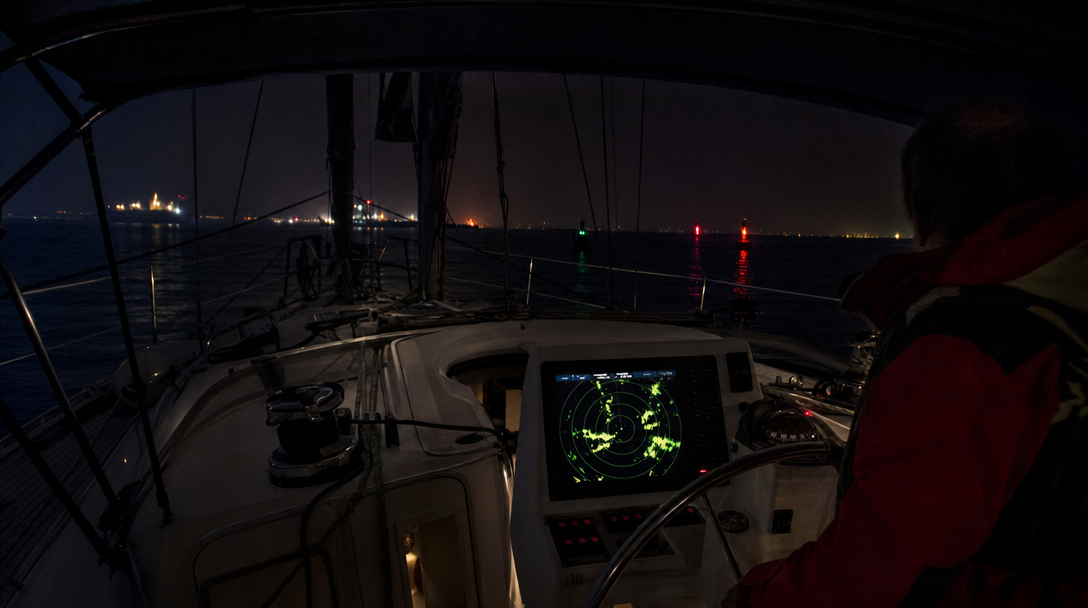
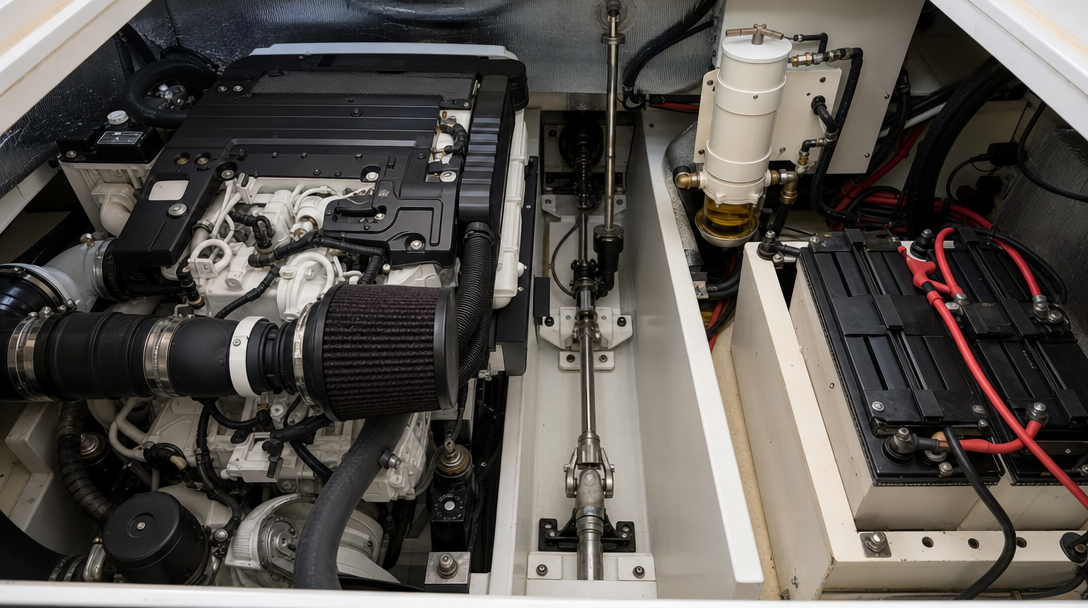
A yacht crossing is a life of strict watchkeeping. The rare stops are not for shore walks, but for bunkering, repairs, replenishing food and water supplies, or waiting out bad weather. Nighttime sailing becomes the norm, and the crew's rest depends entirely on the shift schedule and the route conditions. Having radar and AIS simplifies nighttime watches, but in areas of heavy shipping, fog, and on fishing banks, relying solely on electronics is unacceptable. Cargo vessels sometimes sail with their AIS turned off, fishermen rarely use it, and the boat being towed may not even have a passive reflector. The actual picture on the water often diverges from the data displayed on the screen. Fishing gear poses a serious danger. At night, numerous net poles are invisible, and their lights often fail. A net wrapped around a propeller kills the engine, and diving for it in cold water during heavy seas is deadly. On one voyage, the boat narrowly missed a torn mooring mine about a hundred miles from shore. Yacht safety in such conditions relies not on smart devices, but on continuous visual observation. Yacht breakdowns at sea disrupt more than just the schedule. Engine failure complicates mooring, steering gear malfunctions make the vessel uncontrollable, and gas or battery problems can lead to a real fire. Skippers are forced to learn related skills on board: electrician, motor mechanic, plumber, mechanic, rigger, and even seamstress. Diesel engines break down regularly: the engine stalls from strong turbulence, water is found in the tank, the filters become clogged with dirt, and the cooling water intake becomes clogged with debris. In one case, the control unit of one of the engines on a catamaran failed. Mooring it in a strong wind and in a confined area is a difficult and risky task. The transmission and hull also require constant monitoring. Gearbox failures due to clutch failure, emulsion in the saildrive, leaking stern tube seals, and leaking seacocks are common. Once, a seacock simply disintegrated in my hands after the boat had been pulled ashore. Emergency repairs often rely solely on the crew's ingenuity. Typically, the following must be repaired: Sails and rigging are no less troublesome. During transits, there have been problems with shroud and spreader attachments, the rudder has slipped, and the mainsail has once jammed shut. Electrical and gas systems pose a particular threat. An old stove pipe can leak propane directly into the cabin. Sulfation causes lead-acid batteries to swell and become so hot they're untouchable. Lithium battery controllers and expensive inverter units can burn out in complex systems. The combination of bronze and aluminum in saltwater quickly corrodes components. Just how far from ideal a vessel's condition can be is illustrated by the example of a boat from Sweden that had been moored on the shore for nine years. Nothing on it worked: the mast was loose, some of the rigging was missing, the terminals were corroded, and the batteries were dead. It was prepared in a tight timeframe on a minimal budget, cutting old hoses and powering the engine directly from a canister in the cockpit. The crew brought the boat safely to sea, but this incident clearly demonstrates that readiness for a voyage has to be ensured in spartan conditions. Many people are eager to join a yacht transfer for the free sea training. However, a captain's primary job is to safely deliver the vessel, not to serve as a navigation instructor. A mate will stand watch and carry out commands, but no one is obligated to provide them with systematic navigation training. A deckhand with technical skills will be much more useful. He'll be able to understand the plumbing and mechanics, repairing any faulty components alongside the captain. The harsh conditions—dampness, piercing winds, constant pitching, and an irregular sleep schedule—will quickly put everything into perspective. If a mate becomes seasick to the point of incapacitating them, they become ballast instead of a crew member. Therefore, before participating, it's important to honestly define your goal: is it hard work as a deckhand, practicing repairs in the field, or is it really just finding a training cruise, which isn't available here. Yacht insurance is negotiated strictly before leaving the marina. Third-party liability coverage is usually available, but coverage for damage to the hull or equipment is often lacking. Moreover, even a beautifully crafted document doesn't always guarantee compensation in the event of a serious breakdown. While separate captain's liability insurance provides excellent protection for skippers on leisure charters, professional charters require double-checking of the terms and conditions: any exclusions and legal caveats should be discussed with the owner ashore. The actual cost of ferrying a yacht depends on more than just the distance traveled. When sailing from the Mediterranean to Germany through tidal zones and stormy waters, the rate will naturally increase. Weather conditions can disrupt even the most ideal schedule: sometimes crews have to wait 10–14 days to safely enter the desired waters. To avoid conflicts, it's important to clearly define the financial terms before the start: what exactly the insurance covers, who pays for repairs to a broken pump or torn sail, how downtime is compensated, and who pays for moorings. Sailing a yacht independently or with a hired crew is fundamentally different from a relaxed cruise. A boat's ability to start its engine at the pier doesn't guarantee its endurance in rough seas. The captain assumes responsibility for navigation, the safety of the boat, and technical solutions far from shore. The assistant must accept the role of a working sailor, and the owner must accept the financial risks upfront. Before you go out, it’s worth clearly defining:
How the transition takes place and where navigational risks arise
What kind of breakdowns have to be repaired at sea?
What the assistant learns and why the distillation remains a job
What to clarify in advance about insurance and payment for the transfer
Indicator
Landmark
What is included or affects the amount?
Pay per mile
From 3 euros per mile
Route, parameters and condition of the yacht
Daily payment
Around 300–400 euros for the captain and assistant
Working days and separate payment conditions for non-working days
Daily transition
About 120-150 miles
Weather, expectations and actual route conditions
Customer's expenses
Airfare, fuel, marinas, necessary repairs
Costs of passage and shelter from bad weather
Yacht ferrying requires a willingness to be responsible for the vessel at sea.