What can turn a simple maneuver into a loss of propulsion in a matter of seconds? Sometimes all it takes is a rope left on the deck, overboard, or on a long leash. It snags a leg, gets caught in the propeller, and the crew loses a person to work, and the boat loses control.
In Greece, two catamarans lost control after lines became entangled in their propellers and ended up on rocks; one sank. Therefore, before setting sail, it's important to check not only the course, anchor, and sail, but also the order on deck, the crew's actions, the forecast, and the space around the boat. Below are ten mistakes made by novice sailors and ways to prevent a small problem from developing into serious consequences.
How to remove ropes from the deck without losing control
The first group of errors involves lines that remain where they are walked on. When the sail is lowered, the halyard can move at high speed. If the halyard is underfoot, it can catch a foot and pull a person toward the winch. A blow or injury immediately reduces the number of people available to help steer the boat.
You can't rely on arm strength when the sail is under load. If you open the stopper and simply hold the halyard, the rope can jerk forward and damage your skin. First, allow the winch to spin a few times, then open the stopper and release the line in a controlled manner—from the winch, not freely by hand.
Another mistake is attaching the working sheet to the lifeline. While the urge to retract the sheet is correct, when the sail is tensioned, the line on the other side begins to pull out and pull on the structure. In a strong gust, this can damage or tear the lifeline. The working sheet should be in its designated location, not on a component not designed to bear such a load.
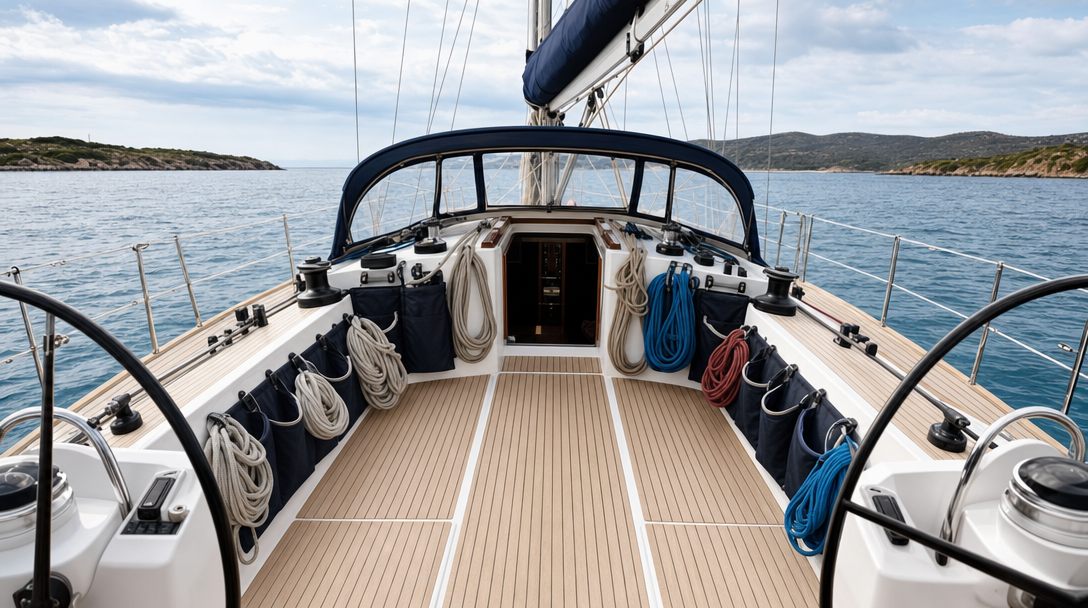
What should you do with ropes on a yacht's deck before maneuvering? Clear the passageways, and gather sheets, halyards, reefs, and furling lines into coils, stow them in bags, or hang them where they belong. Lines on the deck can easily sink into the water, where they can get caught in the propeller and render the boat inoperative. In Greece, two such boats lost control and ended up on rocks; one sank.
How to prepare the crew and forecast before the maneuver begins
The lack of a plan is noticeable even before the boat starts moving. People run, shout, duplicate actions, and try to pull different lines simultaneously. Even if the maneuver isn't perfect, everyone remains in their position and performs a clear task, because roles were assigned in advance.
Before starting work, the crew needs to discuss who is steering the boat, who is handling the anchor or mooring lines, who is monitoring the lines, and what to do if a problem arises. A plan isn't foolproof, but it prevents one unexpected situation from turning into several uncoordinated actions. When interacting with another boat, a simple principle applies: assist when asked, and don't interfere without permission.
A similar superficiality can occur when reading a forecast. In a GRIB file, it's not enough to just see the average wind: for example, 7 knots can be accompanied by gusts of up to 16 knots. You also need to consider rain, thunderstorms, changes in wind direction, and the CAPE as one of the parameters of the overall assessment. A single number doesn't describe the entire situation.
Before a maneuver or exit, check that everyone knows their actions and has read the forecast for all parameters. This ensures the crew has a clear procedure, and the weather is assessed using more than just one indicator.
How to avoid getting lines tangled around propellers in marinas and anchorages
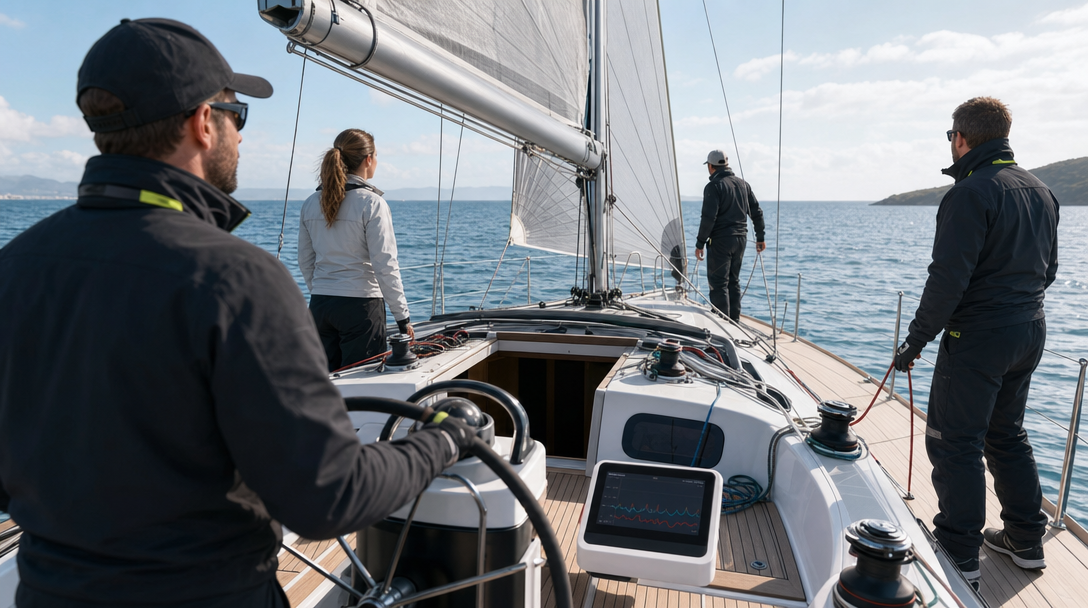
A dinghy being towed behind a yacht should not be left on a long line before anchoring. A line of about 6-7 meters reduces sudden jerks on waves, but the line can become submerged. When the boat begins to move backward after dropping the anchor, the line ends up in the danger zone before the anchor has fully set.
- Before anchoring, pull the dinghy close to the boat.
- Put him on a short leash.
- Only after this start moving backwards and control where the lines are in the water.
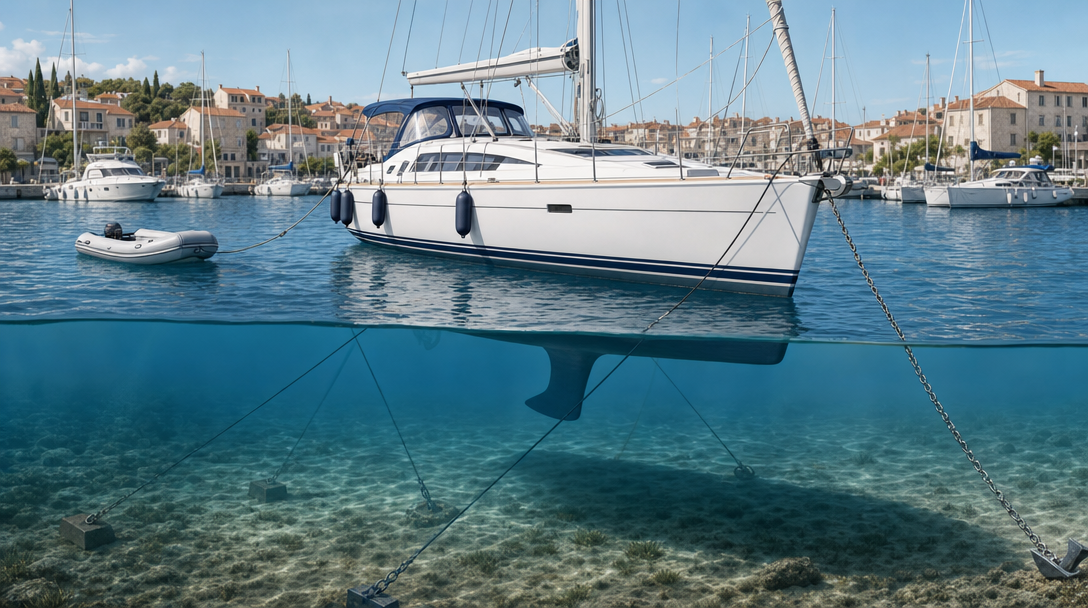
When approaching a marina, look not only at the bow and stern, but also under the boat. Neighboring boats' lines may extend from their bows to submerged points and end up in the path of the keel or propeller. In this case, the boat began to accumulate such lines and effectively became entangled with several neighboring vessels. Before moving, assess the distance to other boats and the possible trajectory of your hull.
Before moving in the marina: lines of neighboring boats and moorings
After an overnight stay, the mooring line may remain on the surface: a dry line does not immediately sink. The bow crew should not simply announce that the mooring line is released, but rather wait for the line to actually drop. Movement is permitted only after confirmation that the space beneath the boat is clear.
In a shallow marina, the mooring line may not go deep enough. In Spain, with a depth of about 2.5–3 meters and a boat draft of about 2.5 meters, the mooring line became entangled around the keel and propeller. In this situation, continuing to move without control could damage the boat and require untangling the line underwater.
After anchoring: holding, turning and other people's chains
When anchoring, consider the length of the chain you've released, how well the boat will hold up, and its position after a wind shift. If the wind changes, the boat will follow a different arc and may move closer to others who have set less chain. Several boats can begin to accumulate when turning.
A separate problem is an anchor dropped over another boat's chain or anchor. During a morning departure, one boat can pick up another boat's gear along with its anchor. In the described case, divers were called in to untangle the entanglement; a cost of approximately 100 euros was mentioned. Before setting off, it's important to understand where your own anchor is located and where the anchors of neighboring boats might be located.
How to Maintain a Visibility Under Sail
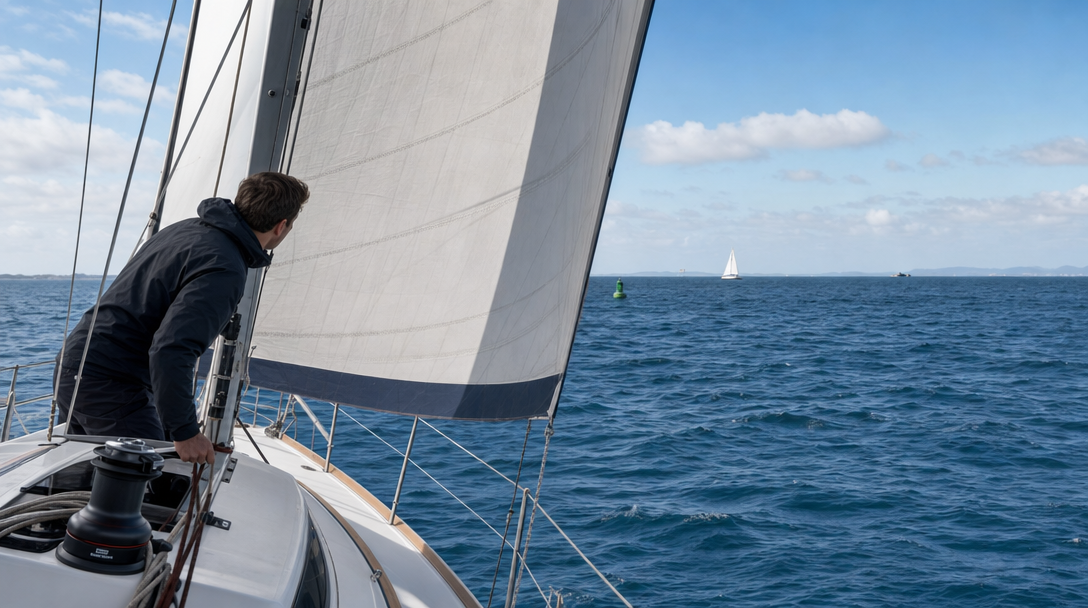
A sail can obscure part of the space in front of a boat. Looking only into the open area will leave the other vessel in a blind spot. In Italy, a monohull collided with a catamaran: the catamaran sustained serious damage and sank, but no one survived. The cause described in the story is hypothetical, so the incident cannot be pinned down to a single factor.
When sailing, blind spots should be checked both manually and on autopilot. If the sail is blocking your view, look out from behind it; if necessary, turn slightly, inspect the blind spot, and then return to course. Before your next move, check not only what's visible directly over the bow but also the area beyond the sail.
Why you can't ignore the condition of the crew and minor breakdowns
Wet clothing can be easily discarded on board, but it is recommended to change it immediately. During a passage, the crew may be busy and forget to drink; the author uses urine color as a guide to her hydration regimen, without presenting it as a universal medical test.
Minor damage to a sail shouldn't be automatically dismissed as insignificant. A seam that has split slightly may continue to separate before reaching the marina, potentially causing significant damage to the sail. Any problem detected should be assessed immediately, rather than relying on repairs later.
The same applies to mechanical components. If something breaks, it should be disconnected and repaired. When repairs are impossible before reaching the marina, it's best not to use the damaged component, or to assess the risks of continuing operation in advance. The condition of people and equipment directly impacts safety on the yacht.
What to check before the next maneuver
Mistakes happen to all sailors, even experienced ones. Experienced sailors make them less often, but order on the boat, clear commands, and a willingness to stop remain essential tools for any crew.
Before starting movement or work, check:
- Are the passages clear and are all lines in their bays, bags or designated areas and not on board or in the water?
- Who controls the boat, who performs each task, and what does the crew do if a maneuver doesn't go as planned?
- Are average wind, gusts, rain, thunderstorm, change in direction, and CAPE all rated together, rather than as a single number?
- Is the area around and under the boat clear, are blind spots visible, and is a damaged sail or mechanical unit not being used without supervision?