This crew's Turkish yachting trip began in Fethiye Marina: eight people chartered a sailing yacht for seven days and sailed along the coast to the bays near Kalkan, Kaleköy, Kaş, Gemiler, and back. The plan included sailing passages, overnight stays outside marinas, and stops at coastal villages.
Before setting sail, the crew had to take over the yacht, stock up on supplies, survive a collision in the marina, and then, in the first bay, deal with a jammed anchor. The week on board included rest, training, and constant involvement in the ship's operations.
Fethiye Charter: Yacht Check-In, Crew, and Departure Preparation
The yacht was picked up by the charter company at Fethiye Marina. A staff member showed the crew the main systems and equipment—from the anchor to the kitchen utensils—and explained the layout of the freshwater tanks and how to use the solar panel, the onboard power source.
In this case, the weekly yacht charter cost €4,000. The crew also paid a refundable deposit of €3,000, which was to be returned if the yacht was returned in good condition. These figures are specific to this trip and are not representative of the general market price of yacht charters in Turkey.
Preparing the yacht and supplies
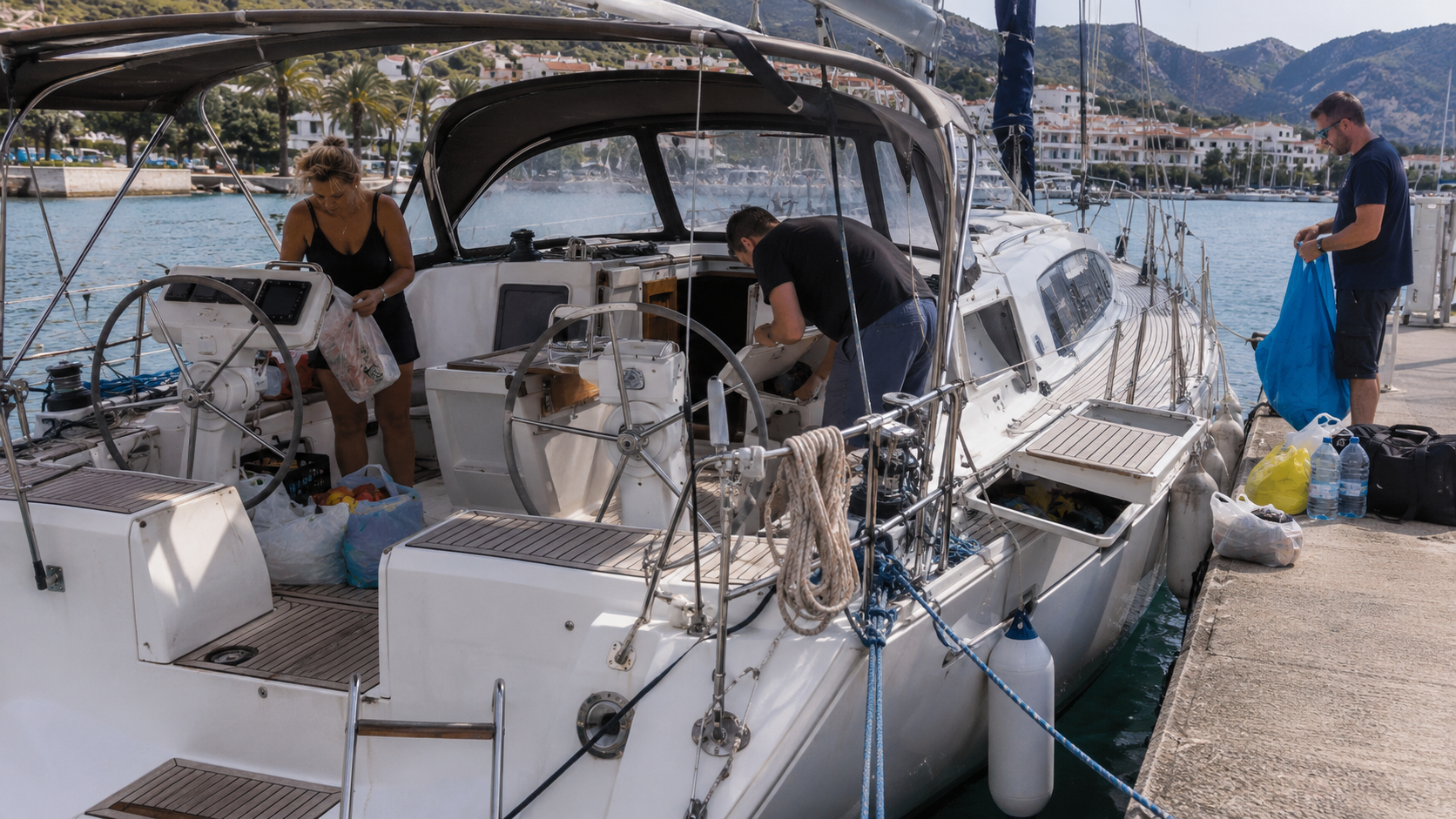
There were eight people on the crew. Slava's friend received his sailing license and became captain. The rest of the crew met on the boat. Before setting out, the crew bought food, water, and supplies, then distributed them among the boxes and compartments.
Food and personal belongings were stowed in the walls, sofas, beds, and even the floor. The tanks were filled with 800 liters of fresh water. The crew then assigned cabins: the yacht had five cabins and three bathrooms, so with eight crew members, multiple people were not accommodated in a single cabin.
Weekly cost and expense distribution
After preparations, all that remained was to set sail the following day. According to the crew's final estimate, additional expenses beyond the yacht rental amounted to €1,500–€1,600. Together with the rental, this came to about €700 per person, excluding flights. This figure did not include the refundable deposit.
| Position | Sum | Condition |
|---|---|---|
| Yacht charter | 4000 euros | The deadline is one week. |
| Refundable deposit | 3000 euros | Return with the yacht intact |
| Additional expenses | 1500–1600 euros | Crew assessment without rent |
| Total per person | About 700 euros | No flights |
From a marina accident to the first sailing trip
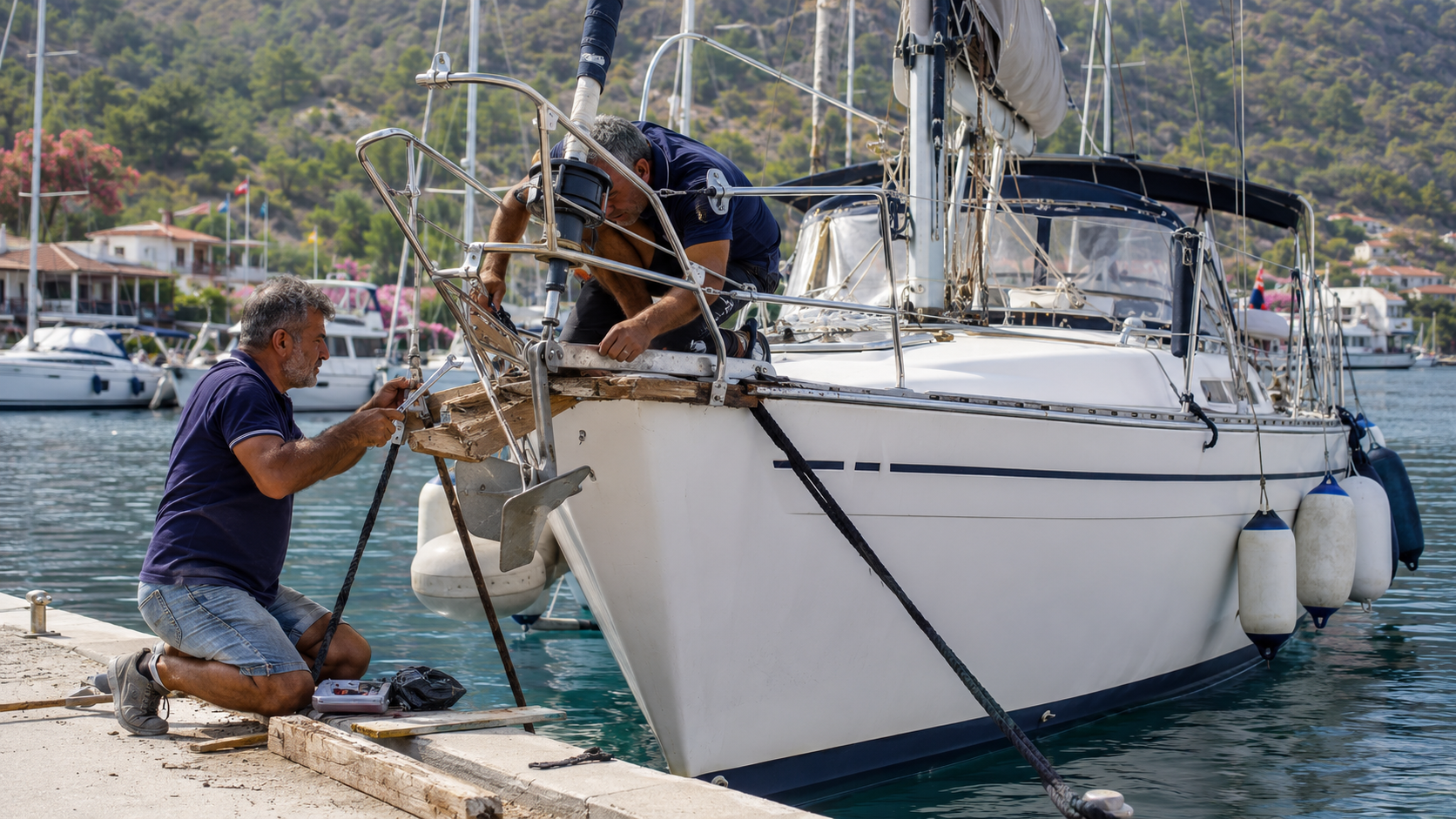
That morning, while the crew was preparing breakfast, the yacht suffered a severe impact: another boat collided with it. A technician had to assess the damage and determine whether the crew could return to sea. After inspection, it became clear that the anchor platform in the bow had been damaged.
The repair crew turned the yacht's bow toward the dock and began work. The wait lasted several hours. A launch was possible, but first, quick repairs were needed. The anchor platform was secured back in place with a wooden strut and a rubber band. This was an improvisation by the crew, not a standard yacht repair method.
The vessel was approximately 14 meters long and weighed approximately 11 tons, so maneuvering in the confined space required coordinated commands. After completing the checks, the captain started the engine. Despite being a sailing yacht, the engine was used for precise maneuvers at the marina.
The crew took their places, cast off the mooring lines, and began to sail away. Fenders—soft buffers to protect the hull during maneuvering—were hung along the sides. Some crew members worked the mooring lines, while others monitored the yacht's position and carried out the captain's commands.
We left the marina under engine power and headed across Fethiye Bay. During our departure, the captain explained the rules of sailing: until the sails are raised, the yacht is considered a motor vessel; beyond that, the situation depends on the type of vessel and its relative wind position. This was a brief explanation for those participating in a specific passage, not a comprehensive navigational manual.
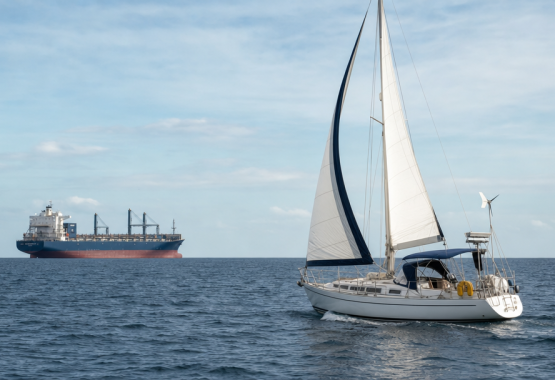
In the open sea, the team turned to sail. First, they hoisted the jib—the headsail at the bow—then the mainsail—the main sail along the mast. The crew had to master the sheets, boom, and winches, and hoisting the mainsail required coordinated action from the entire crew. The cockpit, home to the helm, table, and benches, became the command center and main relaxation area.
Life on board: sails, wind, and the crew's first skills
While underway, the crew secured gear, closed hatches, and tried to conserve fresh water. The cockpit had a non-slip surface, and when the wind picked up, the windshield was raised. Breakfast and other meals were taken at the cockpit table, if the weather permitted.
The first crossing began under motor due to a lack of wind, but the crew later caught a sea breeze. During the voyage, this was explained as the daily movement of air between land and sea. With the wind at a crosswind, or downwind, the yacht moved quickly but heeled noticeably.
Heel is the tilt of the hull caused by the wind acting on the sails. The heavy keel at the bottom of the yacht acts as a counterweight, tending to return the vessel to an upright position. This is a description of experience on a specific yacht, not a statement about acceptable heel angles in all conditions.
The participants practiced sailing: the captain demonstrated how to feel the rudder, set a course, and monitor the sail threads. This helped them see how the wind moved across the canvas. With a tailwind, the crew tried several times to sail "butterfly," with the jib and mainsail spread apart, but eventually switched to tacking—zigzagging to the right and left.
Several days on board consisted of passages, anchor handling, swimming, snorkeling, and shared dinners. During the long passage, the sun, sea, and constant movement tired most of the crew. Household chores, deck commands, and sail training were all part of the same journey.
Wild bays and unregulated moorings
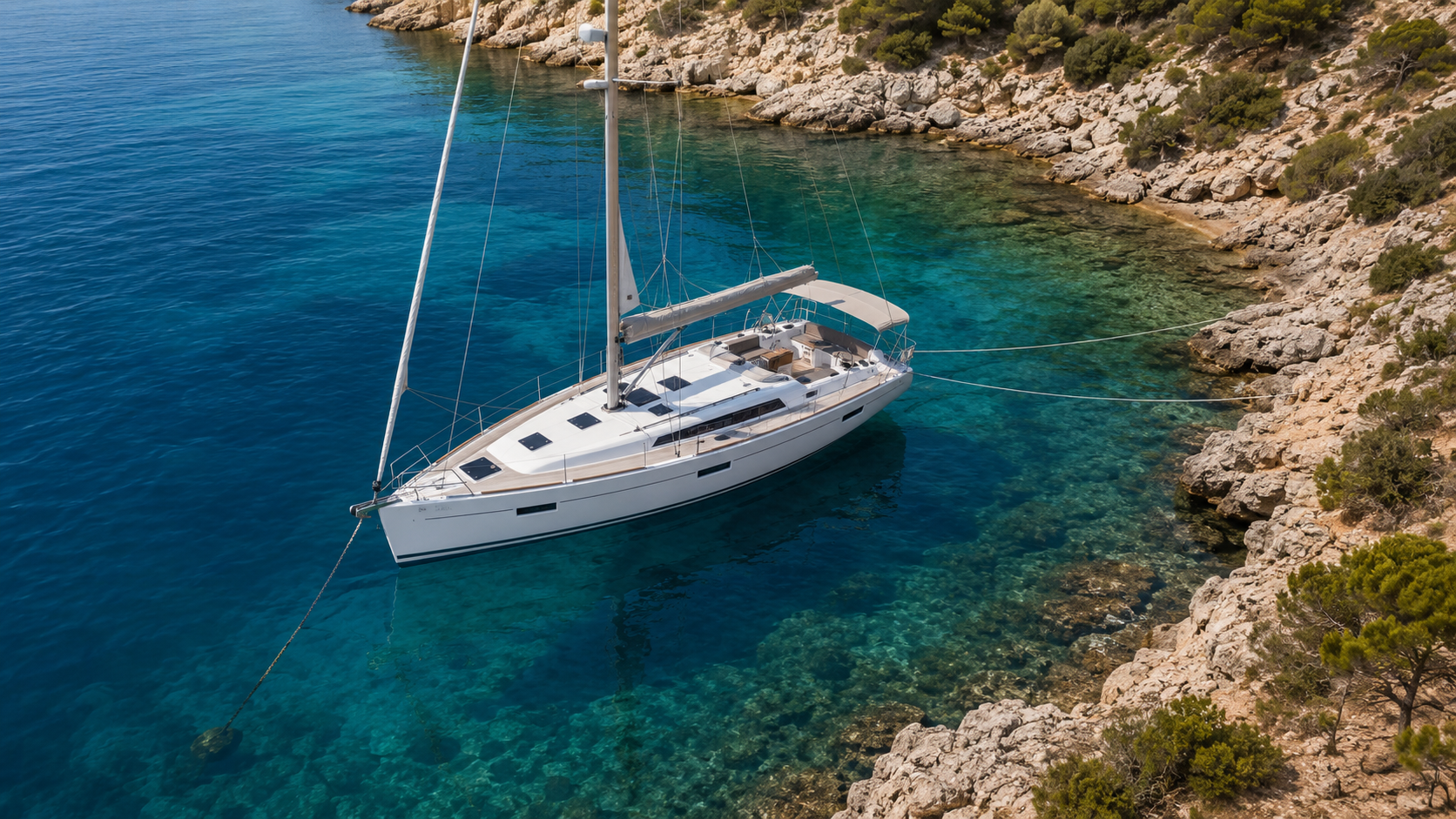
For their first overnight stay, the crew chose a mooring spot outside the marina. The plan was as follows: the yacht's bow would hold the anchor, while the stern of the boat would be secured to the coastal rocks with mooring lines. They needed to find a suitable spot and complete the maneuver before visibility deteriorated.
The problem was discovered immediately after the anchor was set. The anchor had jammed: a bent metal part had become lodged under the mechanism's wheel. The sun was setting rapidly, and the yacht could not be left motionless, as it could be washed toward the rocks or other boats.
The crew simultaneously maneuvered, attempted to free the anchor, and prepared to work from the lifeboat. As a temporary measure, the yacht was tied to a neighboring vessel to stabilize the vessel and buy some time. Then, the crew used a grinder to cut off the interfering wheel and freed the mechanism. This was an improvisation for a specific emergency, not a typical repair or mooring method.
After releasing the anchor, they dropped it again, and headed ashore in the dinghy to secure the lines to the rocks. This resulted in a Mediterranean mooring with an anchor: the bow is held by the anchor, and the stern is connected to the shore by mooring lines. The work took place in the dark and required coordination between the people on the yacht and in the dinghy.
Later, the crew continued to spend the night in remote bays and used anchorages. In one of the bays near Kaleköy, an attempt to transport the entire crew in a single boat proved unsuccessful: the boat was taking on water, so it took two trips to reach shore.
Route from Fethiye to Gemiler and return
The starting point was Fethiye. Before leaving, the crew walked along the embankment, stopped by the market, and saw the Lycian rock-cut tombs. The participants jokingly walked the Lycian Way, which begins in this area, by sea—along the same coastline.
The first night was spent in a bay near Kalkan. The crew saw the town itself from afar, as there was no time to disembark. The route then took them past cliffs and islands to a bay near the ancient settlement of Simena, part of which, according to the author, was flooded after an earthquake.
Kaleköy and Kash
Near Kaleköy, the yacht anchored in a wide, shallow bay, now without stern lines. The next day, the participants reached the shore by boat and explored the boatyard where old ships are stored and repaired. They then walked to the ruins of a fortress, saw Lycian sarcophagi, and descended to a roadless village on the cliffs.
The next major stop was Kash. Here, the yacht docked at the marina, and dockworkers helped guide it to its mooring berth and secure the mooring lines. The crew replenished supplies, strolled through the evening city, and spent the night on board.
Gemiler Island and the end of the charter
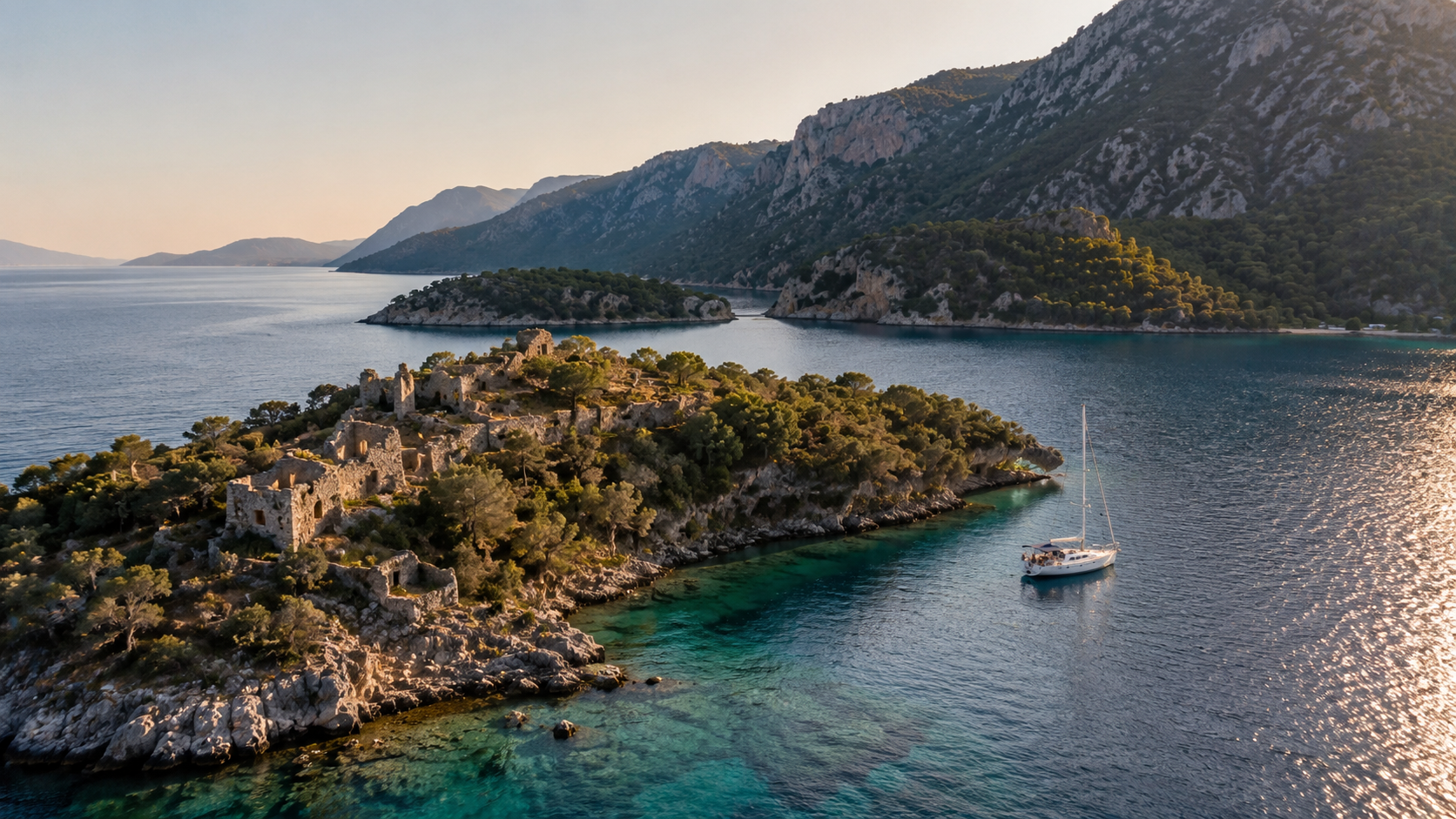
The final leg of the route proved to be the longest. After spending the night in a sheltered bay, the crew landed on Gemiler Island in the morning. There, they examined the remains of a long corridor, mosaic floors, and the ruins of monastery buildings. The story also mentions a lighthouse on the island's summit and a theory that this place is connected to the veneration of St. Nicholas; this information is relevant to the excursion.
By the evening of the sixth day, the yacht returned to Fethiye Marina. Before delivery, the crew refueled, pumped out the septic tank, prepared the vessel, and awaited inspection by company representatives. Following the inspection, the week-long charter concluded, and the crew returned to life on land.
What a week on a yacht revealed
According to this crew's estimates, the week-long trip cost approximately €700 per person, excluding flights. This estimate is based on specific charter terms, crew composition, and additional expenses, so it shouldn't be taken as a general price for yachting in Turkey.
The experience combined sailing, living in confined spaces, stocking supplies, yacht control, and emergency response. For the participants, it wasn't just relaxing on the coast but also constant involvement in daily life, crew coordination, and moorings.