Is it possible to live abroad on a sailing yacht without the usual visas, residence permits, and living expenses? The crew spent two years on a boat in Turkey and quickly discovered that a yacht changes one's residence, but doesn't change the country's rules.
In Turkey, renting a marina space helped with obtaining an ikamet, but the procedure remained standard. Below, we'll discuss life on a yacht abroad: what documents are needed, the differences between a marina and an anchorage, how much it costs to buy and maintain a boat for two, and what you need to be prepared for beyond the financial costs.
Why a yacht doesn't replace a visa or residence permit
Yacht owners and crew members are generally subject to the same rules as tourists and people entering the country through regular immigration. Owning a vessel does not, in itself, grant a general right to remain in the country for an extended period, nor does the maritime border constitute an exemption from immigration requirements.
The crew is in Turkey and has obtained a residence permit (ikamet). To do this, they rented a marina berth for a year, meaning a designated berth in the port, after which they went through the usual application process. At the time, renting a marina berth was treated more favorably than renting an apartment on shore, but owning a yacht didn't exempt owners from the paperwork.
Documents required for yachting should be considered individually: vessel registration documents, crew information, visa or residence permit, and the rules of stay in a specific country. There's no one-size-fits-all approach. Before moving, it's best to check the requirements of the country you're planning to reside in, rather than relying solely on boat ownership.
Sea border crossings sometimes create the illusion that formalities can be circumvented. There are no permanent checkpoints at sea, and some yachtsmen cross between countries or islands without official registration. However, this is a risky practice and not a legal method of immigration: if detected, the crew and vessel may be subject to questions, including detention, fines, or deportation.
In some places, yachtsmen spend years in ports or at anchor, taking advantage of the fact that security checks are conducted differently than when entering by plane. This discrepancy between practice and formal requirements should not be taken as a guarantee. In this case, a residence permit in Turkey on a yacht was obtained by renting a berth in a marina, but this experience does not automatically guarantee residency in another country. First, you need to verify the legal status of your stay and only then choose a boat and route.
Where to live on a yacht: marina, anchorage, or permanent voyage
Once the paperwork is complete, a practical choice arises: to move constantly, have a base in a marina, or live at anchor. The crew has experienced both traveling and staying in port, so these options can be compared in terms of daily responsibilities.
Marina: convenience, infrastructure and care
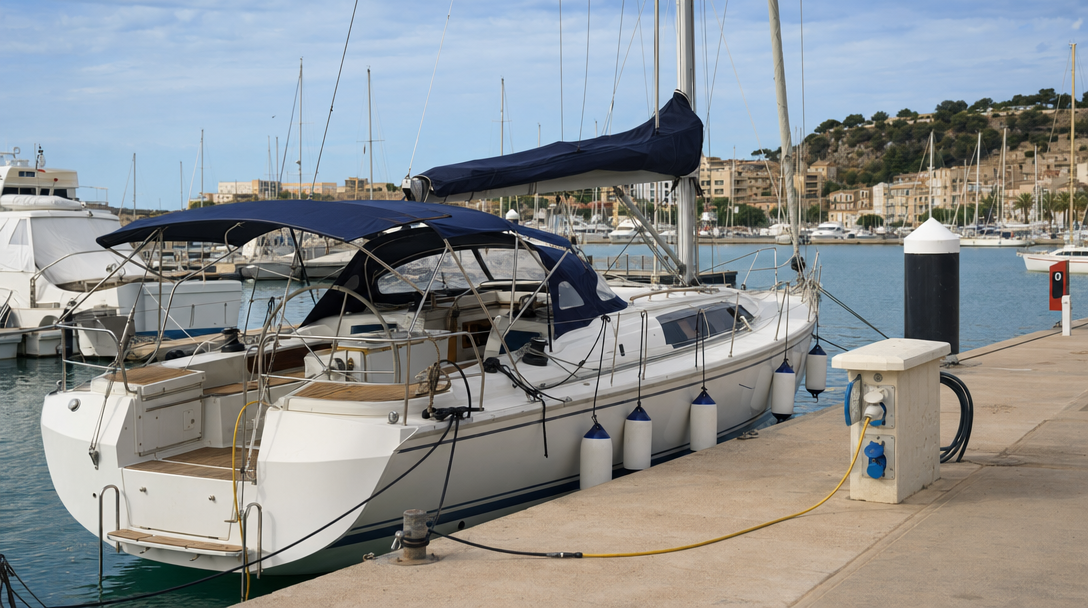
At the marina, a yacht has a designated berth, access to water and electricity, and onshore infrastructure. It feels a lot like living in an apartment: you can walk from the yacht to the port and city, and some daily tasks are completed onshore. Even the crew will likely use the onshore shower rather than the yacht's.
The main difference from home becomes apparent during bad weather. A boat can rock and creak even in a protected mooring, so you can't completely forget about the sea. However, a marina provides a predictable base: you can leave your yacht and leave for two weeks, confident that the marina staff will look after it.
Anchoring: Autonomy, Tender, and Weather Dependence
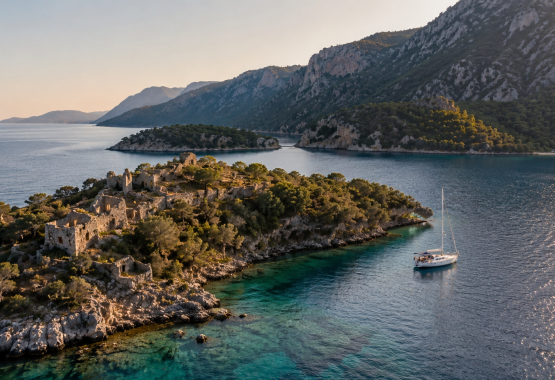
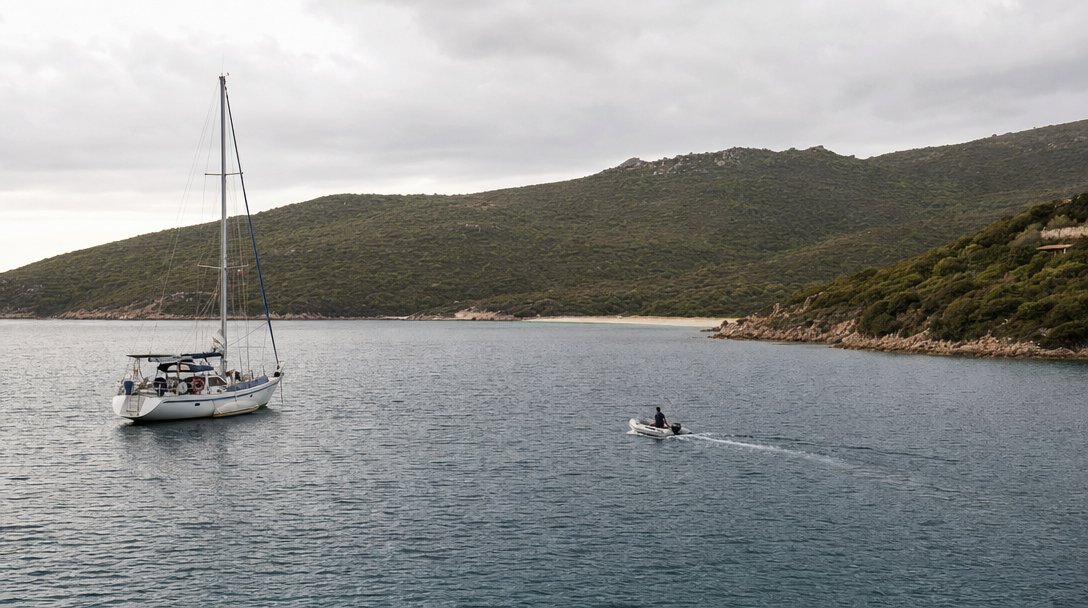
Life on a yacht in a marina or at anchor are two different situations. At anchor, the crew chooses a bay, leaves the boat there, and doesn't pay for a permanent berth. In exchange, they must provide their own electricity—using solar panels, a wind turbine, a generator, or an engine—and monitor the yacht's supplies and condition.
Weather at anchorage has a greater impact. Storms, rain, and waves can disrupt plans, and under unfavorable conditions, the anchor can break loose. An unsuitable harbor or lack of supervision poses additional risks: the crew lacks the same guarantees as in a marina.
There are also shore-based logistics. While it's enough to disembark the yacht on foot at the port, getting from the anchorage to shore requires a dinghy—a small boat used for ferrying passengers. Saving money on a marina means greater autonomy, equipment, and boat control, as well as greater dependence on the weather.
A permanent voyage combines these characteristics with a constant change of location. The crew spent a year sailing the Mediterranean, then returned to a base in Turkey and wintering in a marina. When choosing a format, it's important to consider whether you need infrastructure and the ability to safely leave the yacht, or whether you're prepared to maintain and care for the boat yourself at anchor.
How much does it cost to buy a yacht for living?
For the crew, purchasing a yacht wasn't the initial plan: the boat was purchased for a film shoot, and they later began living on it. It was a used 2001 Bavaria with four cabins. They paid approximately €60,000 for it at the end of 2021.
The crew later estimated the value of such a boat to be approximately €80,000 or more, taking into account price fluctuations and the investment made in the specific vessel. This estimate is based on personal experience, not a universal market benchmark. The condition of a used yacht can significantly alter the final price: even a surveyor's inspection cannot detect all problems in advance.
When it comes to the cost of buying a yacht for Mediterranean living, a starting point for a relatively comfortable life is around €40,000–€50,000. Sometimes you can find a boat for €20,000–€30,000, but then a lot depends on luck, the vessel's condition, and the owner's willingness to handle repairs themselves.
Size also influences the living scenario. As a rough guide, 36 feet is cited as the minimum length for comfortable living for two, while 40–42 feet is considered more comfortable. However, the specific details of the yacht vary in the stories, so they are best taken as guidelines rather than exact specifications.
The listing price doesn't equal the relocation budget. After the purchase, the crew installed solar panels and batteries and replaced wooden components. When comparing options, you need to weigh the boat's price against its condition, size, willingness to repair, and location of purchase. A cheap hull may require additional investment that will quickly alter the initial estimate.
What are the costs after purchase?
The yacht's price is just the beginning of the financial calculation. Registration and flag, berthing, shore haulage, upgrades, regular maintenance, and standard crew expenses all factor in separately. Below are guidelines based on this team's experience; costs may vary for other vessels and itineraries.
Regular and periodic expenses
| Article | Landmark | Condition | What to consider |
|---|---|---|---|
| Yacht registration | Around 1000 euros | Malaysian flag | Separate renewal costs 100 euros every two years |
| Parking in the marina | About 100 euros per day | Turkey | Water and electricity are paid additionally |
| One-year contract | 6,500 euros | Marina in Finike | You can stand for the entire period; the conditions of the specific place are important |
| Short stop | 5–10 euros in Greece; 15–30 euros in Spain | Examples from the route | Prices apply to individual locations and overnight stays. |
| Ascent and descent | Around 1000 euros | Along with a parking lot on the shore | The crew names a target for ascent approximately once every two years. |
| Boat maintenance | Around 300–400 euros per month | Minor repairs and replacements | With diesel and periodical documents - about 400-450 euros |
Registration affects more than just the initial payment. In this case, the Malaysian flag requires an additional formality upon entering Europe—transit logging, which involves temporarily importing the boat. Therefore, when choosing a flag, consider not only the registration cost but also the subsequent paperwork.
Berthing can be paid daily or with an annual contract. Some marinas charge separate fees for water and electricity, while at this particular marina in Finike they were free. An anchor reduces the direct costs of berthing, but does not eliminate the costs of autonomy, fuel, water, and boat maintenance.
After purchasing the yacht, the crew invested approximately €3,500 in solar panels and an arch, €1,500 in batteries, and approximately €2,300 in woodwork. These expenses were for bringing the yacht up to operating condition, not for regular monthly operation. They should not be confused with regular maintenance.
The monthly cost of yacht maintenance depends on its condition and cruising schedule. In some months, expenses may be minimal, while in others, they can reach €1,000–€1,500 due to refueling or repairs. Therefore, the monthly budget should include a reserve, not just the average of small payments.
Budget for living together
During the voyages, living expenses for two were around 2,000 euros per month. In Turkey, when the crew ate out less often, daily expenses amounted to approximately 500–600 euros per month, after which yacht maintenance was added on top. Over the course of a year of cruising, fuel costs were around 500 euros, but this is specific to the specific itinerary and does not represent the overall budget.
As a comfortable guideline for two, the crew suggests budgeting at least €2,000 per month, including the possibility of upgrading the boat. This doesn't guarantee the same level of expenses in every country: the amount varies depending on the number of voyages, stops, repairs, and daily habits.
Thus, the cost of living on a yacht is made up of several independent components. The fewer paid berths and passages, the lower the cash outlay, but the greater the demands on the owner's autonomy and time. Before purchasing, it's useful to separately calculate the cost of registration, the chosen berth, maintenance, and reserves for unscheduled repairs.
Weather and repairs as a constant part of life on board
Even a well-calculated budget doesn't eliminate two constants of yachting: dependence on the weather and the need to maintain the boat. Whether the crew is traveling or anchored, storms, headwinds, and waves force a change of plans. The route and anchorage must be adjusted to the weather.
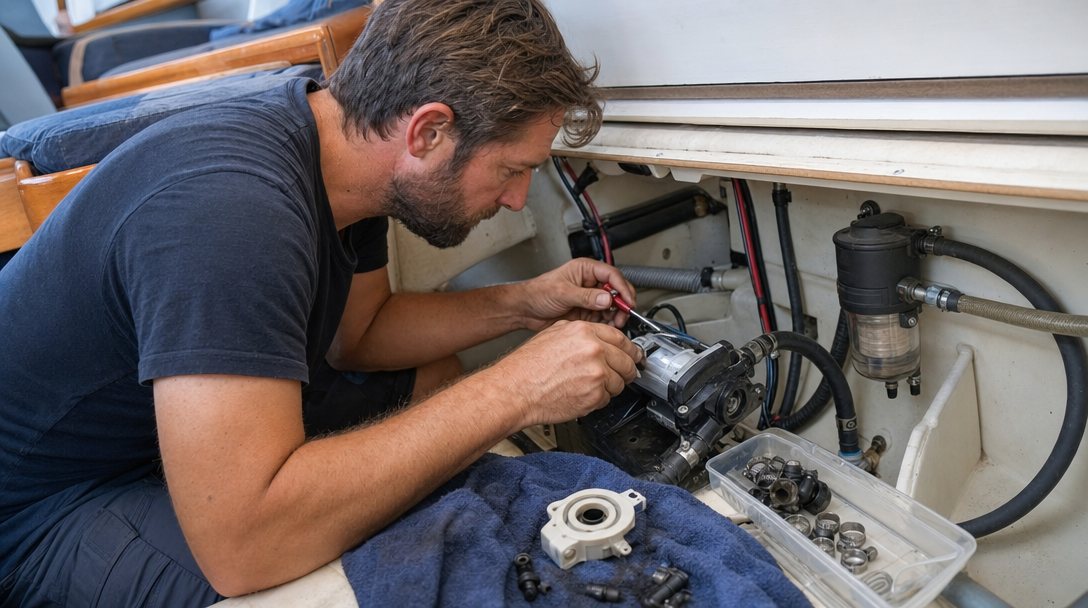
The second part is manual work. Minor defects occur on both new and used yachts, and calling in specialists can cost significantly more than the part itself. This doesn't mean every repair should be done independently: the crew weighs their own skills against the cost of services and the time the owner is willing to invest.
The case of the pump is telling. When it was sent to a yacht repair shop, repairs cost 300 euros, and two months later, the pump started leaking again. Another time, the crew disassembled it themselves, called a mechanic for a quick fix, and spent 12 euros on labor and parts.
This experience means the owner will have to gradually gain an understanding of the yacht's materials, electrical systems, pumps, lubricants, and other components, or factor in the cost of maintenance in advance. Living aboard requires more than just money; it also requires a willingness to learn, set aside time for maintenance, and accept changes in plans due to weather.
What you need to take before moving to a yacht
Living on a yacht can be a way to constantly change your residence, but the boat itself is not a standalone immigration scheme. Each country requires separate verification of the crew's legal stay, the vessel's documentation, and border crossing regulations. Turkish ikamet (residence permit) through renting a marina is a personal experience, not a universal guarantee.
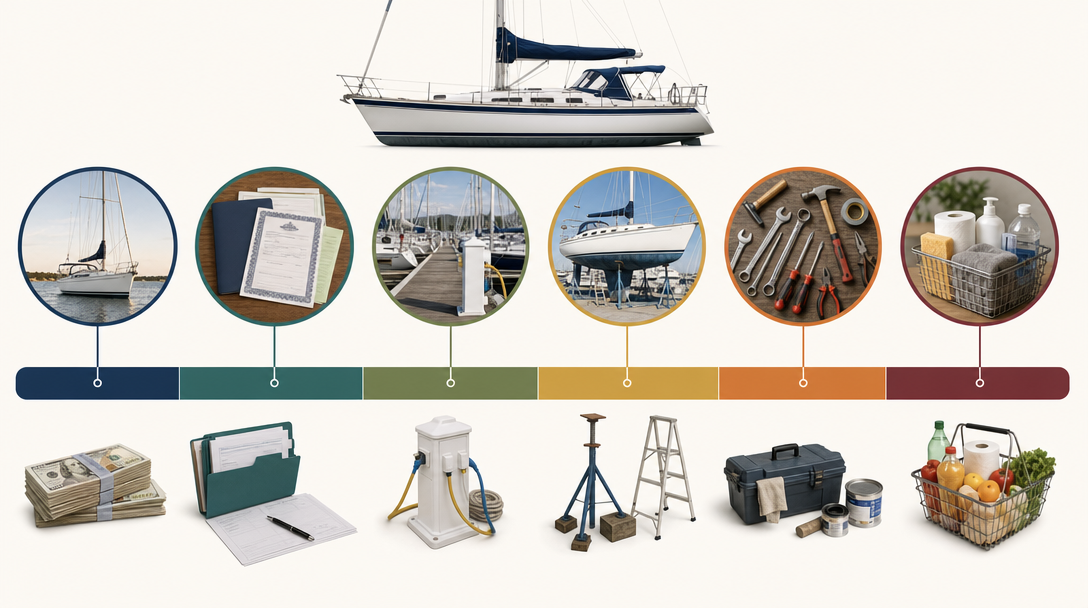
Before deciding to move, check four things: What documents are required in the selected country? Is a marina or anchorage right for you? Have you separated the purchase price from the total cost of ownership? Are you ready to deal with weather and repairs? If these questions have realistic answers, a yacht can become a living arrangement. But it still remains a boat that requires care, maintenance, and compliance with the regulations of each country.