An ad for a yacht for 500 euros, or even a symbolic dollar, raises a simple question: is this a great find or a future of endless repairs? Before buying, it's important to understand the boat's condition and how much additional investment will be required after the purchase.
Cheap yachts are almost always used. Age alone doesn't determine condition: for example, a 72-year-old yacht is in fairly good condition. But even after moving on board, breakdowns and everyday problems still arise. Therefore, you shouldn't look for the cheapest listing, but rather for a yacht that's suitable for your lifestyle, travel, and budget.
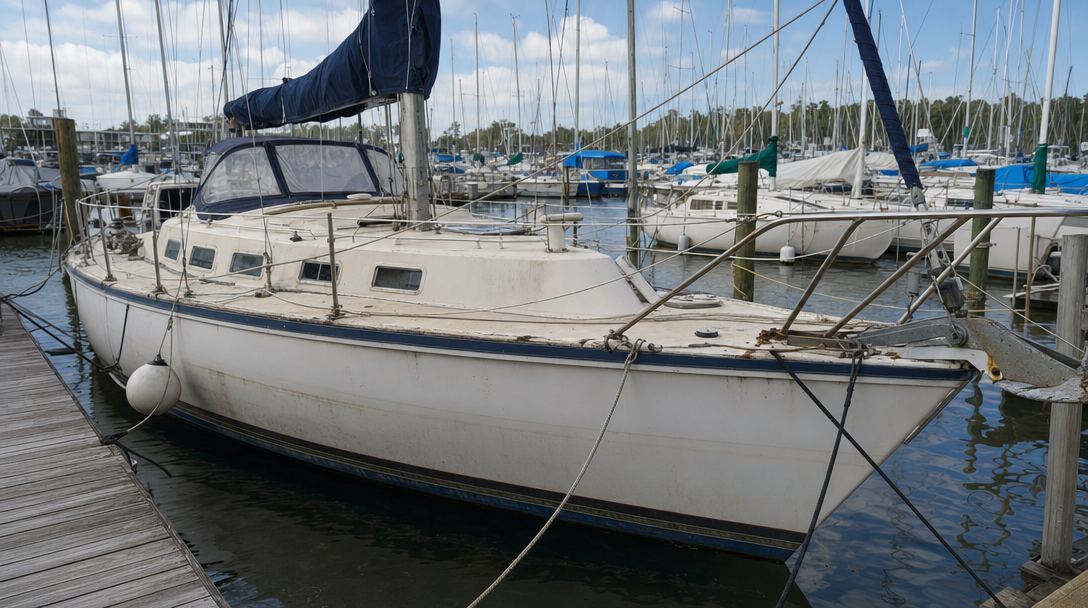
Start with a realistic budget, not the listing price.
A used yacht can be very inexpensive. I know people who bought boats for 500 euros in Sweden, and one owner even got one for one dollar. These are isolated stories, not typical market prices, and there's no guarantee that such a yacht will be ready for occupancy.
With a nominal price, the boat's condition will need to be assessed especially carefully. Even a well-maintained yacht will be used daily after the move, and the crew will need to adapt to the new conditions. Even those just starting out on a yacht have experienced breakdowns, so it's important to have some cash on hand before the deal.
It is best to divide the budget for purchasing and repairing a yacht into three parts:
- Price of the boat. The amount stated in the advertisement or agreed upon after negotiations.
- Reserve for repairs. One of the guidelines is at least half the cost of the yacht or even more.
- Supplies for the first months of life. It allows you to not be torn between work, everyday life and unexpected problems on board.
A reserve of half the boat's cost doesn't replace calculating future expenses, but it does help prevent you from making plans based solely on an attractive price. When comparing options, consider not just one figure, but the purchase price plus any savings you'll have after moving.
Where to look for cheap yachts and how to assemble a wide list
Where can you find a cheap yacht if one website isn't enough? Suitable offers appear on local sites around the world, in marina listings, at auctions, and sometimes directly onboard the boat. A comprehensive search gives you more options to compare before your personal trip.
Local sites, auctions and marinas
In 2016, we found about 150 boats in just a few days on local websites for 11 countries. For Scandinavia and Europe, Google Translate was helpful: phrases like "buy a yacht" were translated into the local language and then searched for listings on local websites. Destinations included Sweden, Norway, Germany, and the Netherlands.
In the US, you can search through eBay, Craigslist, and local auctions. Another option is marinas. If you can drive there, it's worth checking out the area and the classifieds: sometimes boats are sold without a visible presence on major sites, and there might be a simple "For Sale" sign on the side.
A marina listing doesn't tell you anything about a yacht's condition. It's simply a way to find additional options. It's a good idea to review the list regularly: good deals on local sites disappear quickly.
Regional variants requiring verification
Greece and areas damaged by hurricane seasons are also being considered as possible search areas. Stories of abandoned yachts at Greek marinas and damaged boats require separate verification and should not be taken as a guaranteed route to a cheap purchase. Restoring a damaged yacht can be a separate undertaking.
Make a list of regions and channels, review them regularly, and don't limit yourself to the first few dozen listings. Some options will be discarded during the initial search, some after a trip, and some will prove unsuitable due to layout or condition.

Use options and negotiations as part of your buying strategy
Thirty-five listings can quickly turn into just a few viable candidates: owners don't always respond, specifications need to be clarified, and a personal tour isn't suitable for every boat. A large list is useful for comparison and allows you to more easily reject unsuitable options.
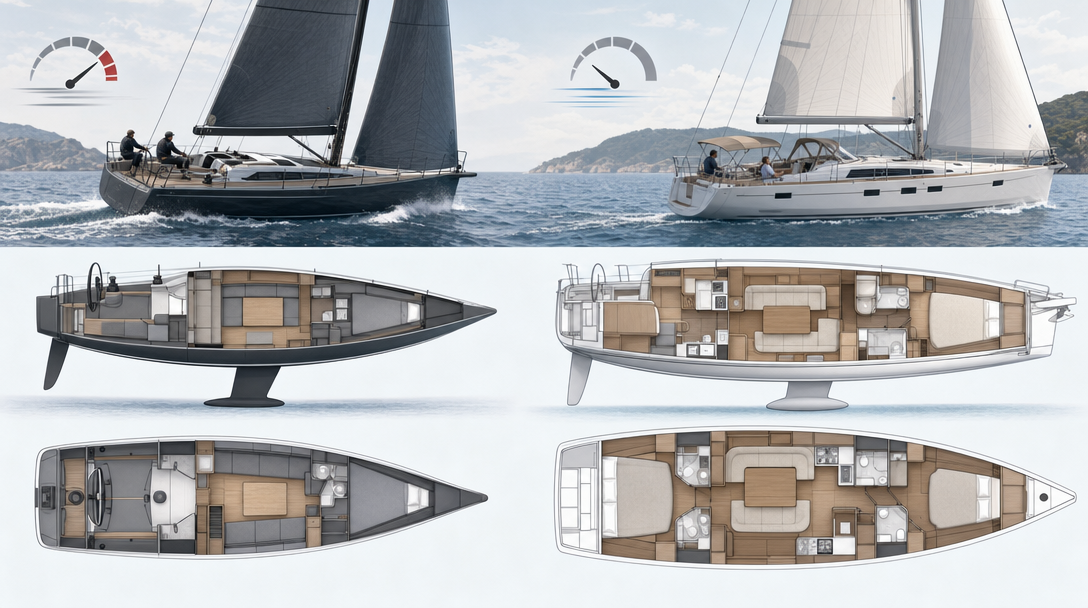
The same hull length doesn't necessarily mean the same yacht. Two ten-meter boats can be very different inside: one will be a sports boat with a galley and head, while the other will have two cabins, a head, a separate large galley, and a spacious cockpit. For life on board, this difference can be more important than appearance and length.
Having multiple options also helps with negotiations. Some friends managed to reduce the price of their boat by 50 percent in two months. This is an isolated example, so you can't count on such a discount for every yacht. However, an offer slightly higher than your initial budget is sometimes worth considering if there are alternatives and the ability to negotiate. Compare boats by price, condition, layout, and location, not just by the one listing you like.
What to check on a yacht before deciding to buy
Photos are helpful in starting your search, but they don't convey how comfortable it will be to live on board every day. Therefore, a yacht inspection before purchasing should include a personal visit to several options. Even if you immediately liked one boat based on the photos and the first visit, it's best to continue comparing.
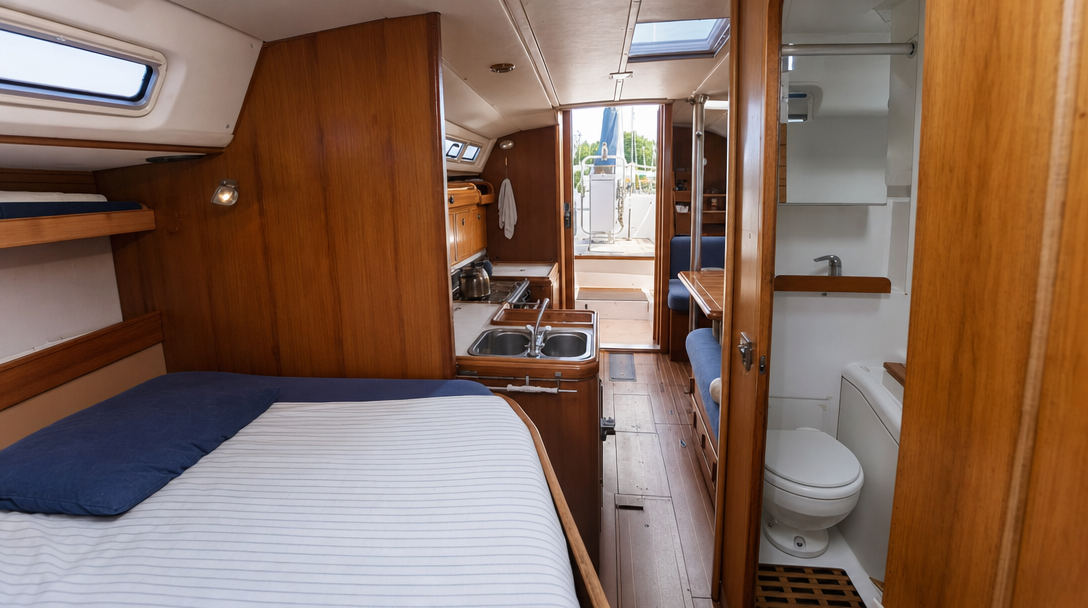
- Ceiling height. Check if you can stand upright in your cabin. A low cabin where you have to constantly bend over can quickly become tiring.
- Size of beds. The length and width should allow you to fully fit in and rest comfortably.
- Cabin layout. Compare the number and layout of cabins, as well as the organization of everyday living spaces.
- Kitchen. Check to see if there is enough space for food preparation and if this area is convenient to use.
- Toilet and shower. It's best to notice any recurring household inconveniences before purchasing.
- Cockpit. Assess its size and how comfortable it is to be in the common area.
- Feelings on the water. A boat may appear comfortable in the marina, but when underway, it will list, and at anchor, it will pitch and roll. These characteristics cannot be fully appreciated from photographs.
Life on a yacht still comes with its share of discomforts: the kitchen isn't quite like home, the shower can be awkward, and the cooking area is smaller than usual. But the more basic comfort you experience when inspecting the boat in the marina, the more you'll understand its limitations. After challenging passages, the ability to rest, a comfortable bed, and a space that doesn't require constant adjustment are especially important.
How Yacht Length Affects Speed and Day-to-Day Expectations
Before purchasing, it's easy to imagine a yacht that would move quickly between moorings. In practice, a ten-meter yacht typically traveled at around 4.5–5 knots, and in good Mediterranean conditions, it reached approximately 6–6.5 knots. It felt like riding a bicycle: the landscape changed slowly.
For a displacement cruising yacht, hull length limits speed. A rough guide for this case is: 1.34 × √ waterline length in feet — the result is in knots. For a waterline length of 21 feet, a value of around 6.4 knots was cited. This is a guideline, not a precise guarantee for any boat: actual speed depends on conditions, load, and other circumstances.
Length is important not only as a hull characteristic: it's also related to the duration of your voyages and your expectations for sea travel. If you're choosing a yacht for long-distance cruising, consider its size and estimated speed against your travel scenario. A longer boat doesn't automatically make it a better option.
A cheap yacht is the result of an inspection, not a chance find.
To buy a yacht affordably and avoid making a mistake, start with a broad search and then narrow your list through correspondence and in-person visits. Compare price, condition, layout, onboard comfort, and the appropriateness of the length for your intended voyages. Symbolic offers for 500 euros or one dollar may exist, but they alone don't indicate future costs.
Before deciding, check four questions:
- Do you have a separate reserve for repairs and the first months of life?
- Have you compared several boats in person, not just from photos?
- Is the space suitable for sleeping, cooking, hygiene and general movement on board?
- Do the length and expected speed match your transition plans?