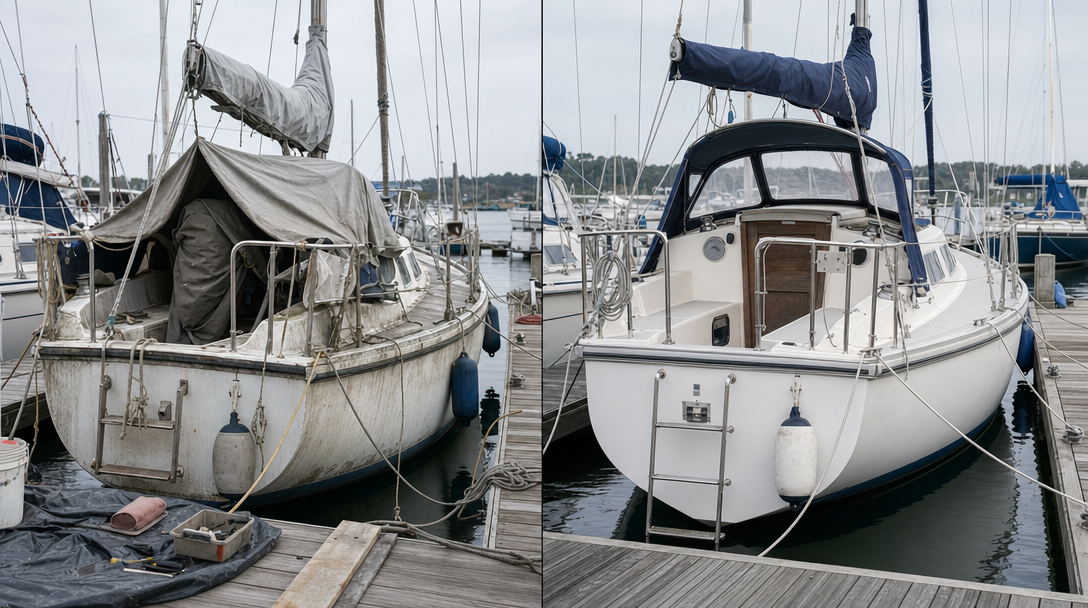
You have two boats in front of you. The first is priced at $5,000, but it needs a new engine, rigging, deck repairs, and a paid mooring for the long haul. The second is listed for $15,000: its hull is intact, its engine runs, and its major systems don't require immediate attention. Which one will cost less in the first year?
The answer lies not in the price tag, but in the total cost of ownership. To understand how to buy a cheap sailboat without regretting it, you need to look not for the lowest price, but for a viable platform. That is, a vessel whose basic structure remains solid, and whose future costs can be accurately calculated before you even shake hands with the seller.
First, calculate not the price of the boat, but the transaction budget
Any old yacht consists of components with vastly different lifespans. The 30/70 rule illustrates this difference well: approximately 30% of a vessel's value is accounted for by the hull and deck—its basic shell—while the remaining 70% is taken up by the engine, standing rigging, sails, electronics, plumbing, steering, seacocks, and fittings. A boat may appear fully equipped, but be functionally worn out.
This independent aging of internal systems explains the sharp drop in the value of used yachts. Different components have their own life cycles and often begin requiring replacement at the same time. The owner doesn't always try to fix hidden defects—often the vessel simply reaches a point where upgrading everything at once becomes economically unfeasible.
This is where the 50/50 rule comes into play when buying a boat. Only half of your total budget should be allocated for the yacht itself. The other half should be immediately set aside for repairs, safety work, mooring, and unforeseen issues. Spending all your available money solely on a lucrative listing price is a surefire way to ensure the boat never leaves the marina.
Before you start searching, clearly divide your budget into three parts: the cost of the yacht itself, a reserve for its restoration, and ongoing expenses like insurance or storage. This approach will ensure that a cheap option with faulty systems will show its true value and will be compared fairly with a more expensive but well-maintained vessel.
How to inspect the hull, deck, keel, and rudder before negotiating the price
The hull is the only part that is economically unfeasible to replace. Therefore, any inspection begins with the plastic. Solid fiberglass boats, produced in the early days of the industry, often boasted enormous strength reserves and could last for decades. Later designs with balsa or foam cores offer advantages in weight and rigidity, but carry another risk: water seeping through old deck reinforcement or holes causes rot and hidden delamination of the material.
Inspection of fiberglass and deck
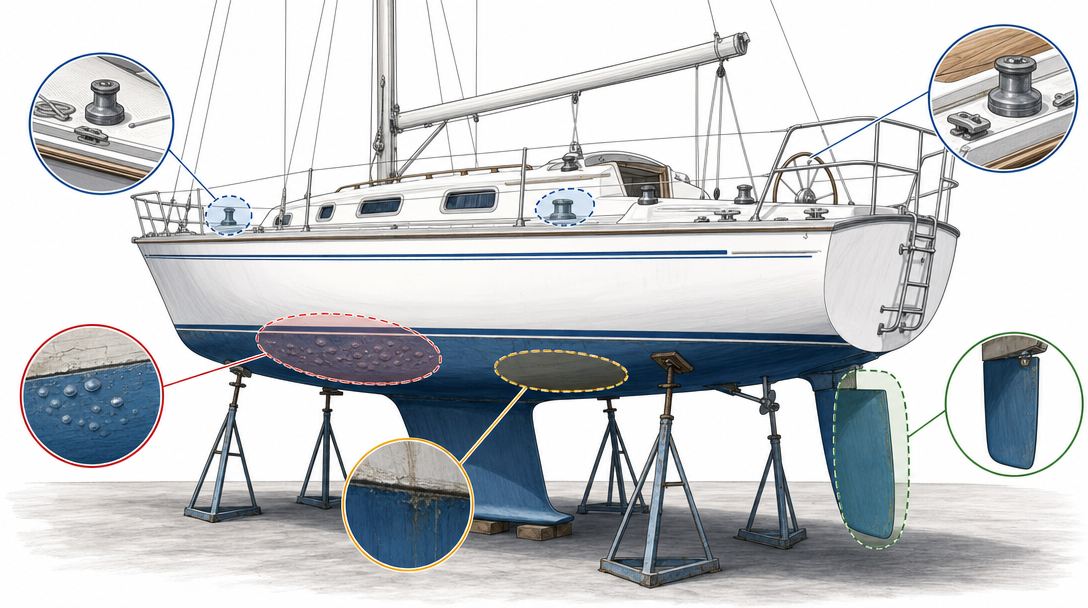
When figuring out how to inspect a boat hull before buying, it's important not to panic at the first sign of a bubble. Osmosis occurs when water penetrates beneath the gelcoat, and rare, small blisters are often merely a cosmetic issue. However, clusters of blisters ranging from a quarter to a full inch in size, or dark liquid oozing from them, are a sign of a serious problem. Such a hull will need to be completely stripped, dried, and coated with a barrier compound, which will require a significant budget.
When inspecting the deck, pay special attention to the reinforcement and any signs of old leaks. For sandwich structures with core, areas where moisture may have seeped through neglected fastenings for years are critical. Fresh paint on the freeboard doesn't make the vessel safer—it merely disguises the true condition of the fiberglass.
- Individual bubbles on the gelcoat should be distinguished from systemic osmosis.
- Look for signs of old leaks and soft areas of filler near deck reinforcement.
- Polishing and fresh paint do not replace a thorough inspection of the internal structural elements.
The keel and rudder as the boundary of acceptable risk
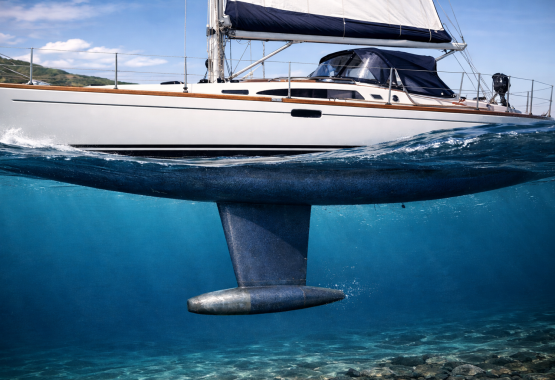
The greatest concentration of stress is below the waterline. Where the ballast keel meets the hull, look for a so-called "smile mark"—a characteristic crack on the leading edge of the joint. Rust streaks, displacement, traces of corrosion on the keel bolts, and microcracks around them indicate serious impacts or lack of maintenance. If the ballast is integrated, the fiberglass shell around it should be carefully inspected: water ingress can undetectably damage the internal structural members.
The rudder and steering system require no less meticulous attention. Excessive blade play, binding when shifting the helm, cracked fasteners, and obvious signs of impact with the ground are reasons to reconsider the feasibility of the purchase. On yachts with cable steering, the wiring and pulleys should be inspected, paying attention to any breaks in individual steel threads. Worn-out cabin cushions can be discarded and replaced, but a torn keel joint or rudder failure in harsh weather can be life-threatening for the crew.
Engine and standing rigging: two systems that can cancel out the benefits
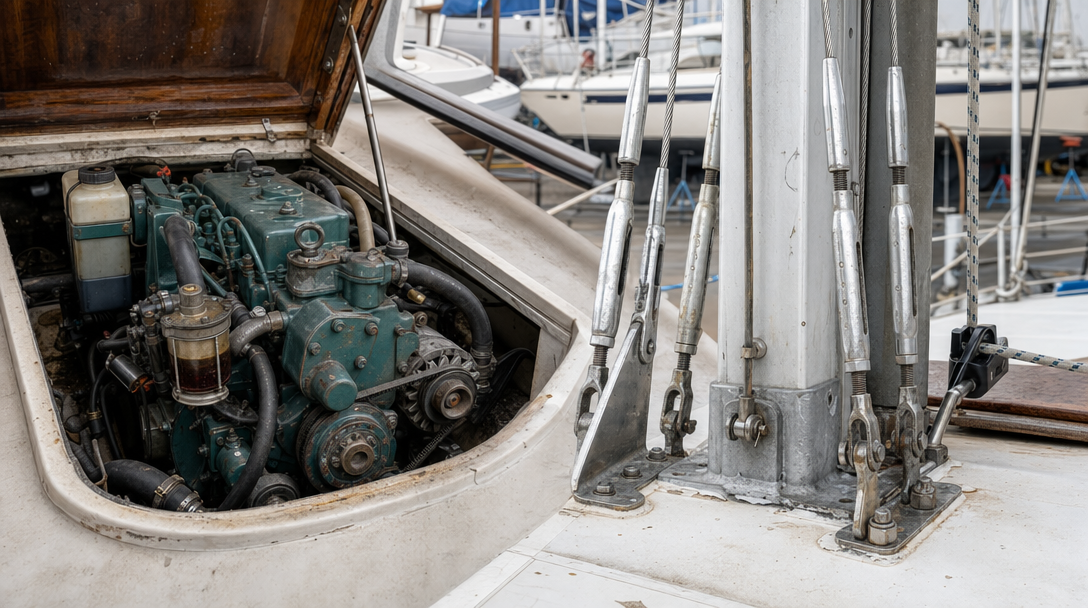
Marine diesel engines are designed with a generous lifespan: their typical service life is between 5,000 and 8,000 hours. However, among the cheaper options, engines that have been sitting idle for years and have received only perfunctory maintenance predominate. Therefore, the task of checking a sailboat engine boils down to one requirement: a cold start. A unit helpfully warmed up by the salesperson before your visit will conceal half the important symptoms.
Observe the color of the exhaust during the first few minutes of operation. Blue smoke indicates oil burning and hints at worn piston rings or valve guides. Black smoke indicates incomplete fuel combustion—this could be caused by faulty injectors, lack of air, or simple overload. White smoke often indicates water entering the cylinders or the presence of unburned diesel fuel.
A dying engine shouldn't be taken lightly. Replacement will cost between $10,000 and $25,000 depending on the size and complexity of the installation, often exceeding the value of the yacht itself. For a more accurate picture, it's helpful to have the engine oil analyzed: traces of copper or iron will indicate critical component wear even before the engine seizes.
Standing rigging supports the mast under constant loads in a corrosive salty environment. Ropes are typically replaced every 8-10 years, but the main drawback of standing rigging is that it appears reliable right up until the moment it breaks. When inspecting standing rigging, it's important to consider the actual age and condition of the fastening points, not the apparent shine of the steel.
- Inspect the crimped cable ends for microcracks.
- Check the chain plates, paying attention to corrosion and signs of leaks into the interior.
- Inspect the mast steps and reinforcement attachment points, where damaged aluminum may be hidden under a layer of paint.
Water seeping through chain plates will quickly rot the wooden bulkheads and weaken the entire structure. If a yacht requires both engine and steel shroud replacement, you're looking at a classic boat as a project. It's worth undertaking only if the initial cost is close to zero and your budget can easily accommodate both costly steps.
How to choose a boat that you can maintain after purchase
The final choice of a sailboat is based on more than just the condition of the plastic. Commonly produced yachts are valued not for their famous name, but for their predictability. The availability of many similar hulls provides a rich used parts market, active owner forums, and the opportunity to compare several options before making a purchase. Classic lines like the Catalina 30, Pearson 30, Tartan 30, Beneteau First 30, or Dufour 3800 are excellent examples, but it's always the specific deck, not the brand, that matters.
Auctions, abandoned vessels, or flash sales attract buyers with huge discounts. Often, owners prioritize stopping monthly marina charges over recouping their investment. However, such yachts may lack keys, maintenance records, or warranties, and port authorities will demand immediate vacancy. No discount justifies legal hassles: a transparent history, proof of sale, and the readiness of the paperwork for re-registration directly influence the final decision.
The actual cost of owning a boat includes its purchase, emergency safety maintenance, logistics, winter storage, mooring, taxes, insurance, and a reserve fund. Insurance and registration requirements vary greatly depending on the jurisdiction and marina's regulations, so it's important to research them in advance.
Berth rates are tied to the hull length, region, and season, and the port administration is completely indifferent to how cheaply you purchased the vessel. A large yacht at the lower end of the market requires more systems, a larger paint area, and more expensive spare parts. Dry storage helps save money in the early stages: berthing on keel blocks is cheaper than water, allows the fiberglass to dry, and allows for repairs to be made at a convenient pace.
Ultimately, the most sensible strategy is to look not for the maximum square footage for your budget, but for a size you can afford. A compact yacht for $15,000 with a live motor, replaced shrouds, and a predictable wintering budget will allow for far more sailing trips than endless construction on a huge $5,000 boat.
Conduct a prioritized inspection and consider repairs before purchasing.
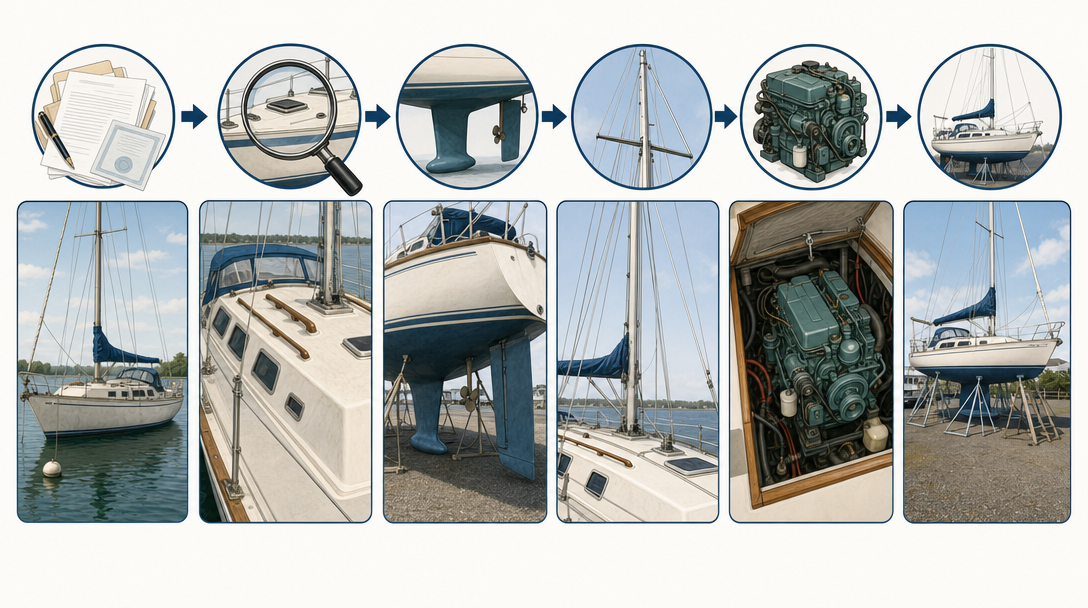
Inspecting a boat before purchase requires a cool head, ensuring that the fresh paint on the cabin or the broker's rosy stories don't overshadow the main risks. First, confirm the legal transfer of title to the vessel, then assess its structural integrity, and only then the onboard systems. If you discover a defect, immediately determine its status: is it routine wear and tear on a replaceable pump or a critical frame issue that could wipe out your entire budget.
- Check the documents. Make sure the seller has the right of ownership, there are no liens, and the necessary transport documents are available.
- Inspect the hull and deck. Learn to differentiate surface defects in gelcoat from deep osmosis and rotting filler.
- Check the keel and rudder. Look for cracks in the keel joint, signs of deformation, corrosion of bolts and dangerous play in the steering wheel.
- Set the age of the rigging. Don't take our word for it - check the replacement date, the condition of the terminals, chain plates and mast step.
- Ask for a cold engine start. Monitor the starting speed and exhaust color, mentally preparing for a possible replacement of the unit.
- Calculate storage and repairs. Add the seller's price to the costs of the initial restoration work and a year's storage.
If the deal is done, invest in the yacht strictly based on safety priorities. The hull and keel are addressed first, then the old seacocks are replaced, the rigging is updated, and the propulsion system, sails, and anchor are serviced. New chartplotters, beautiful tableware, and soft sofas are purchased last. No modern electronics will prevent the mast from falling if the old shroud snaps in a following sea.
The best cheap boat stands up to calculation, not just first glance
A truly worthwhile purchase is often a modest yacht with a worn interior, stretched sails, and old instruments, but whose hull, deck, keel, and steering system remain structurally sound. Worn equipment can easily be replaced over time if its remaining lifespan and the cost of new parts are honestly factored into the overall calculation, along with taxes and winter storage.
Standing in front of your chosen board, ask yourself four control questions: Is the basic design really sound? Is the actual age of the engine and rigging known? Do the documents allow for quick re-registration of the vessel? Is the deal still profitable after adding all the required work? If even one point raises doubts, a cheap price tag will turn into a financial hole, and the dream of the sea will turn into an endless construction site on the outskirts of the marina.