You've found a yacht for €120,000 and are already mentally planning your ocean voyage. But after purchasing a Beneteau Oceanis 46, another question arises: can you immediately set off on a round-the-world voyage, or will you first need to invest separately in rigging, engines, water, power, and safety?
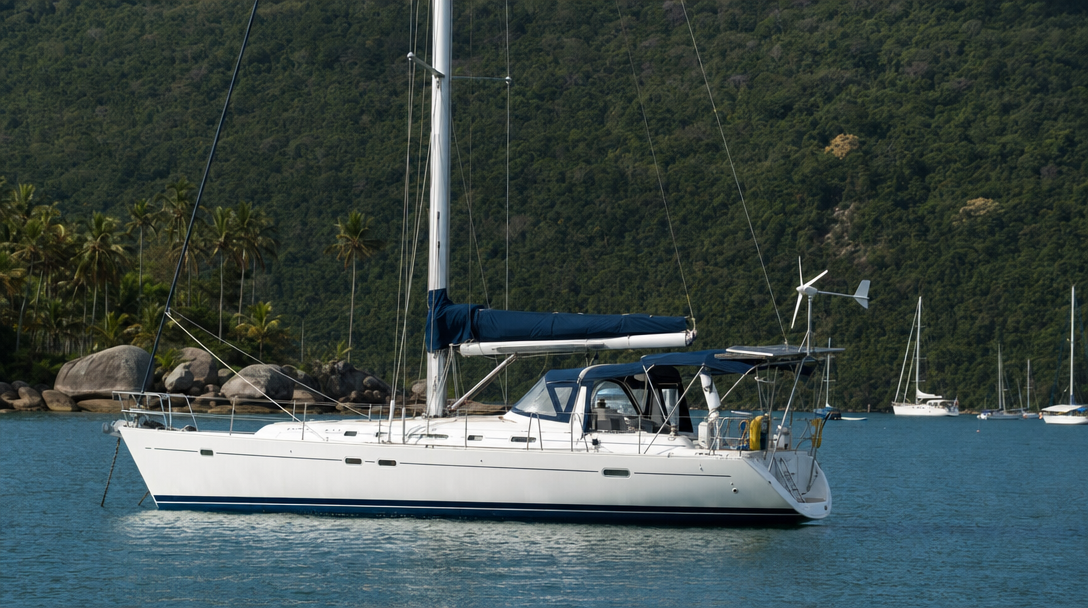
There's no one-size-fits-all yacht for a round-the-world voyage. The choice depends on budget, desired comfort level, and the number of people on board. A specific example is the 1998 Beneteau Oceanis 46: the yacht has sailed approximately 6,000 miles from Turkey to Brazil, completed one circumnavigation, and is currently on a second. Its price of approximately €120,000 is just the beginning. Next, you need to evaluate what needs to be checked, replaced, and prepared before heading to remote areas.
Where to start when choosing a yacht for a round-the-world trip
Choosing a yacht for a round-the-world voyage begins with your own requirements. One crew will prioritize price, another the level of comfort, and still another the number of people expected on board during the long voyage. This will alter the requirements for space, supplies, and equipment, so the same yacht will mean different levels of subsequent work for different owners.
The 1998 Beneteau Oceanis 46 serves as a specific example here, not a recommendation for everyone. The yacht costs approximately €120,000, has traveled approximately 6,000 miles from Turkey to Brazil, and is already on its second circumnavigation. In terms of scale, this sum is comparable to the price of a two-bedroom apartment in Moscow, but after the transaction, there remains the technical budget. Before making a decision, it's important to determine how many people will be living on board, what comfort the crew requires, and how much money will be left over for yacht maintenance.
What to check on deck before heading out to sea
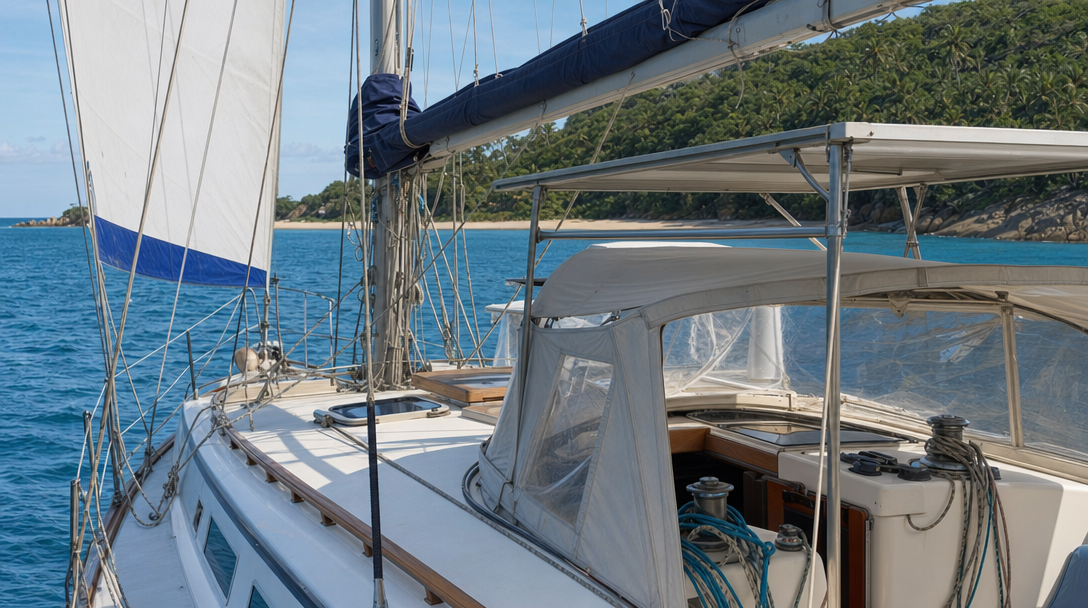
Preparing a yacht for a round-the-world voyage begins with the elements whose failure could stop the voyage or create a serious problem. The first thing to be checked is the rigging: shrouds, stays, and associated components. French insurance regulations stipulate that rigging older than seven years may result in the denial of mast fall insurance. This is a condition of specific regulations, not a universal limitation applicable to all countries and insurers.
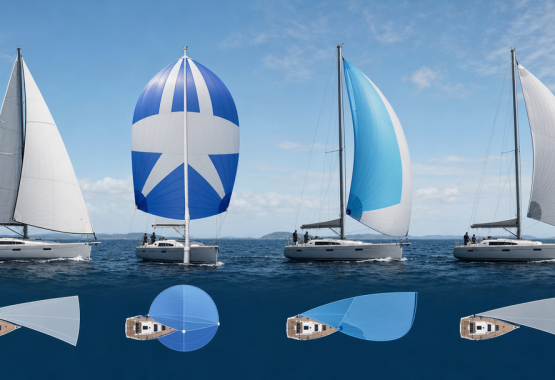
On a yacht of this size, replacing rigging a few years ago would have cost between €7,000 and €11,000, depending on the location. Add to this the condition of the deck rigging. Halyards wear out, and sheaves and blocks suffer from use and UV exposure. There are many of them, and even small parts can significantly increase the overall scope of work. If the mast doesn't have space to secure a spinnaker pole, it will also need modifications: the boom is used to pull the genoa to one side.
| Element | Cost guide | What to consider |
|---|---|---|
| Rigging | 7,000–11,000 euros | Estimated several years ago; depends on the location of work |
| Set of sails | More than 8,000 euros | A better quality option can cost around 10,000 euros. |
| Simple Bimini | About 6000 euros | Lifespan depends on sun exposure, care and storage |
The lifespan of sails depends on the load, UV exposure, and how they are adjusted and used. A guideline is around five years, but there are boats with sails that are 15 years old and still working.
The deck inspection continues beyond the rigging. On this yacht, the dinghy is stored under a cover to protect it from UV rays. Hatches can develop leaking seals over time, so their condition and maintenance are also included in the inspection. One section of the sprayhood retained its protective coating, while the unprotected section had become dull within a year or two. In the tropics, sun protection also applies to the bimini: its lifespan can be approximately five to seven years, but this depends on use, covering, and care.
What systems ensure autonomy and safety?
The equipment for a circumnavigation on this yacht begins with life-saving equipment: a life raft, an EPIRB, and flares. The navigation electronics are old but functional. However, electronics alone don't provide complete protection: after a lightning strike, some equipment can fail, so paper charts and sailing directions are kept on board.
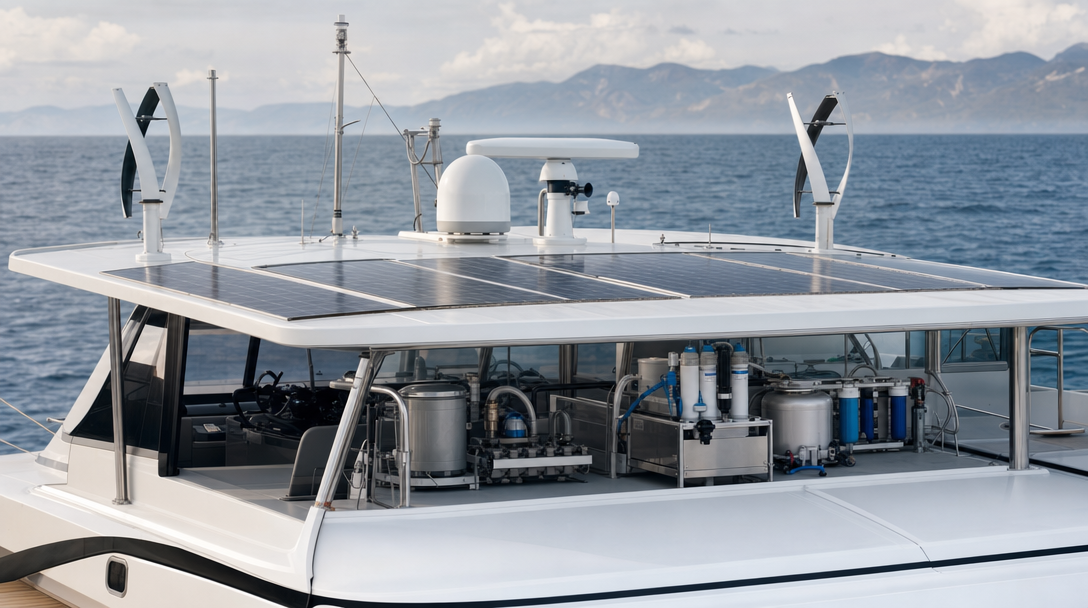
Starlink and Iridium are used for communication and information, and solar panels and wind turbines are located on the roof. The power system's composition should be assessed in conjunction with the loads: the radar consumes a significant amount of power, and refrigerators are among the yacht's main electricity consumers. LED lighting helps reduce the load compared to incandescent and halogen bulbs.
Autonomy also depends on water. This yacht is equipped with three independent tanks with a total capacity of 800 liters, and the supply system is backed up by a second water pump. If the main pump fails, the backup can be used. A watermaker with a capacity of 30-40 liters per hour, assembled from individual components, was priced at approximately €4,000-€4,500, while a ready-made factory kit costs €7,000-€8,000. Higher-performance options are more expensive, so the choice of equipment should be based on the crew's actual needs.
In hot climates, fans are used on board. Air conditioners require a separate generator, shore power, or engine power to generate electricity, so their presence is determined by anchorage conditions and the chosen power source. A barometer with a pressure graph remains useful even with digital forecasts: it shows not only the current pressure but also the change in pressure over time. Before departure, it's worth checking water reserves, power sources, communication and navigation status, and the availability of paper charts.
How space management affects yacht life and maintenance
A yacht's technical inspection before purchase should include more than just expensive components. Small onboard features that determine the crew's speed are crucial: line organizers, a knife near the helm, and a second knife under the mast. A signal whistle is also kept in an accessible location to summon the crew for assistance if needed.
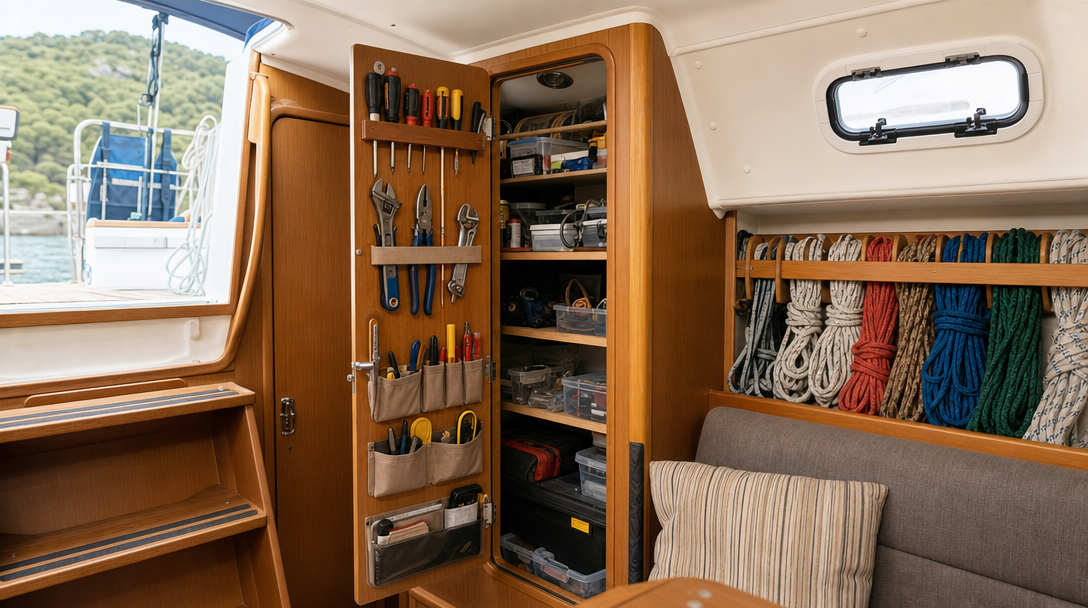
Space management is especially noticeable during renovations. If tools are stashed away in drawers, searching for them quickly becomes time-consuming. On this yacht, a separate door has been installed for them, and the tools are organized by category and easily accessible. When inspecting a used yacht, it's worth lifting the floors: here, the underfloor space is used for storage, while the space is kept dry and clean. Dirt and signs of neglect in such areas are a reason to take a closer look at the rest of the boat.
Layout details also impact everyday life. Two hatches allow for different options on port and starboard lists, should one become inconvenient. There's a washing machine and large refrigerators on board, but no freezer—the latter is considered useful, but not essential. During the inspection, it's important to assess not only the availability of equipment but also the accessibility of tools, the condition of storage, the ease of access to hatches, and the arrangement of the lines.
Why you should evaluate the engine and spare parts inventory in advance after purchasing
This yacht is equipped with a four-cylinder, 40-horsepower Yanmar engine that's approximately 26 years old. Before a round-the-world voyage, it's important to inspect not only the engine itself but also its associated components: the gearbox, driveline, shaft, and sterntube seal. The cost of a new engine is approximate, and the gearbox, driveline, installation, and other labor are always added to the cost of the engine itself.
With an old engine, you have to decide between maintenance, overhaul, or replacement. A lengthy repair can take years, and its cost can approach that of a new engine. This doesn't mean every old engine needs to be replaced immediately, but the age and condition of the powertrain should be carefully assessed.
The same principle applies to spare parts for a yacht on a round-the-world voyage. It's best to prepare tools, consumables, and parts where you can easily find what you need and get the job done. In other countries, finding the right part can take time and increase costs. Therefore, before setting out, it's important to check the condition of the engine and associated mechanisms, determine what parts are available, and, if possible, complete critical work ahead of time.
What's included in the budget for a yacht for a round-the-world trip?
A yacht's price of approximately €120,000 isn't the budget for a round-the-world trip. After purchase, critical systems, rigging, engine, sails, safety equipment, water, power, sun protection, tools, and spare parts are all assessed separately. The final cost depends on the condition of the specific boat, the location of the work, and the level of autonomy and comfort required by the crew.
Before making a purchase, it's helpful to separate two decisions: purchasing the hull and preparing the yacht for a round-the-world voyage. Replacing or servicing all critical components in advance will reduce the need to deal with problems in remote countries, where repairs can be more time-consuming and expensive.
- Is it clear what condition the rigging, engine and associated components are in?
- Is there a separate budget for equipment upgrades and sun protection?
- Have backup solutions been considered for water, energy, navigation and communications?
- Is it possible to quickly find tools, consumables, and necessary spare parts on board?