A sailing yacht's structure is a combination of the hull, rigging, deck equipment, and numerous onboard systems. A sailing yacht can be a simple pleasure craft or a fully-fledged home on the water; in this article, we'll explore its basic components and practical maintenance techniques.
1. Introduction
A modern sailing yacht incorporates hundreds of components, from the Bermuda rig to the steerable mainsail and staysail. It's important to understand the terms: a Bermuda rig is a triangular sail, the mainsail is the main sail, and the staysail is the fore-and-aft sail.
2. Hull and contours
Hull materials include wood, metal, fiberglass, and carbon fiber. Each material offers advantages in terms of strength, repairability, and weight. The hull is divided into above-water and underwater sections: the above-water section is usually varnished or polished, while the underwater section is coated with protective materials.
Yacht hull and keel
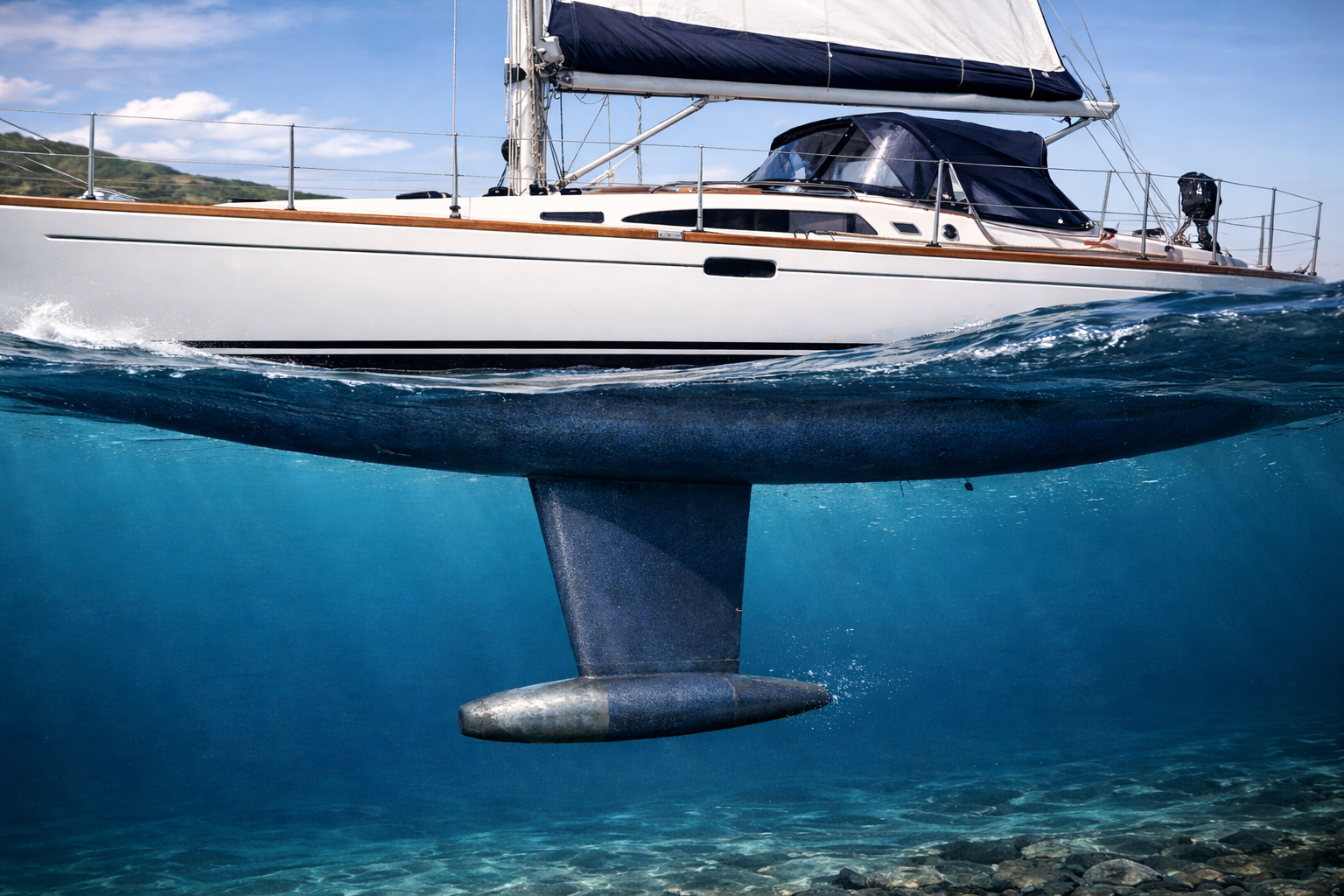
A yacht's hull and keel determine stability and performance. The keel is a heavy ballast that prevents capsizing and reduces drift in wind and current.
Underwater part and coating
The underwater section requires regular maintenance, including antifouling paint and inspection. Antifouling paint for a yacht's hull prevents algae and barnacle growth, maintains speed, and improves fuel economy.
Propellers and engines
Propellers come in fixed, folding, and blade-count configurations; folding propellers reduce drag under sail. Drives, such as the S-drive, ensure a sealed and compact installation, reducing propeller lift and simplifying maintenance.
3. Control and maneuverability
The rudder consists of a rudder blade and a steering wheel. Turning the blade creates hydrodynamic force and turns the yacht. Larger yachts often have two steering wheels connected by rods and a quadrant, which improves visibility and comfort in the cockpit.
Thruster and yacht maneuvering
A bow thruster assists with docking and low-speed maneuvers. Maneuverability is highly dependent on speed: sometimes it's necessary to engage the engine and increase throttle for effective steering and trimming.
4. Deck equipment
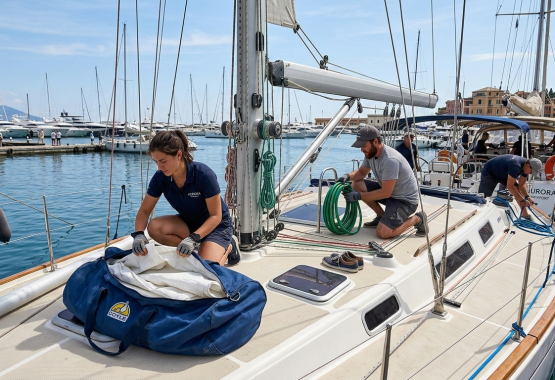
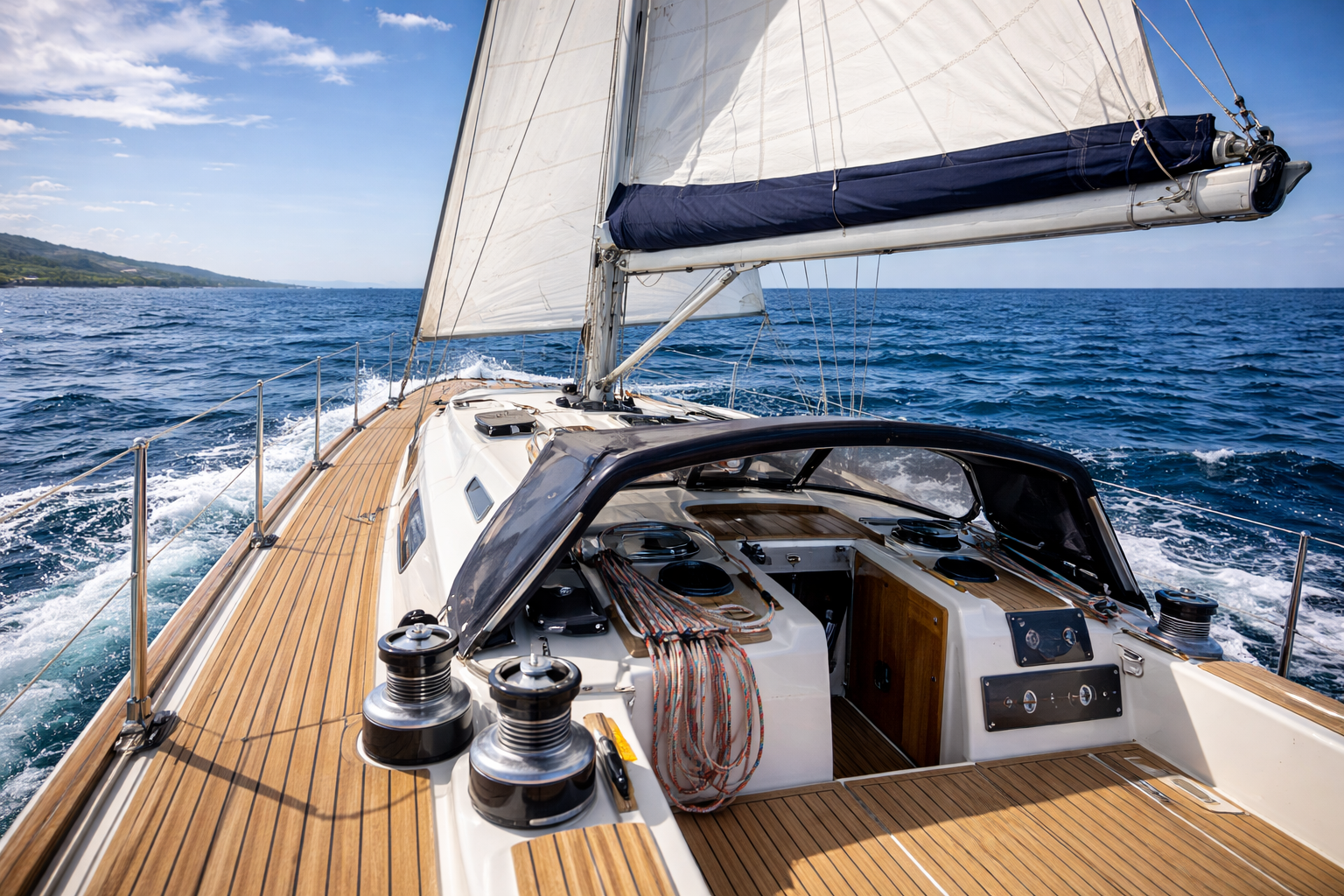
The deck contains the cockpit, rails, railings, and safety posts. All equipment is positioned to ensure work areas are accessible and safe during mooring and sail handling.
Winches and stoppers
The loads on sheets and halyards exceed human strength, so winches and stoppers are used. Winches are designed so that the drum rotates preferentially in one direction and is blocked in the opposite direction; the sheet is laid from bottom to top, clockwise.
How to use a winch on a yacht
A simple algorithm for working with a winch:
- Load the sheet onto the drum from bottom to top, clockwise.
- Install the handle and increase the force by turning it clockwise.
- Secure the tension with the stopper and check the installation for quick release.
Cam lock instructions
Cam locks are widely used on yachts:
- Open the stopper - the rope goes in both directions.
- Pull the sheet through and guide it into the stopper.
- Close - the stopper allows the rope to pass only in the tightening direction and holds the load.
- To release the rope, remove the stopper, release the rope and tighten it again if necessary.
5. Rigging and ropes
Rigging is divided into standing rigging, which secures the mast, and running rigging, which controls the sails. All ropes are divided into halyards (for hoisting the sails), sheets (for control), and additional fine adjustments.
6. Sails and sailing equipment
A typical Bermuda rig consists of a mainsail and a staysail—two triangular sails. Each sail has three corners: the halyard, the tack, and the sheet—to which the corresponding lines and weights are attached.
The mainsail rests on the boom and is covered with a cover, the jib is set on the jib cleat and is steered with a sheet. Additional sails for downwind are the spinnaker and gennaker.
7. Below deck space and utility areas
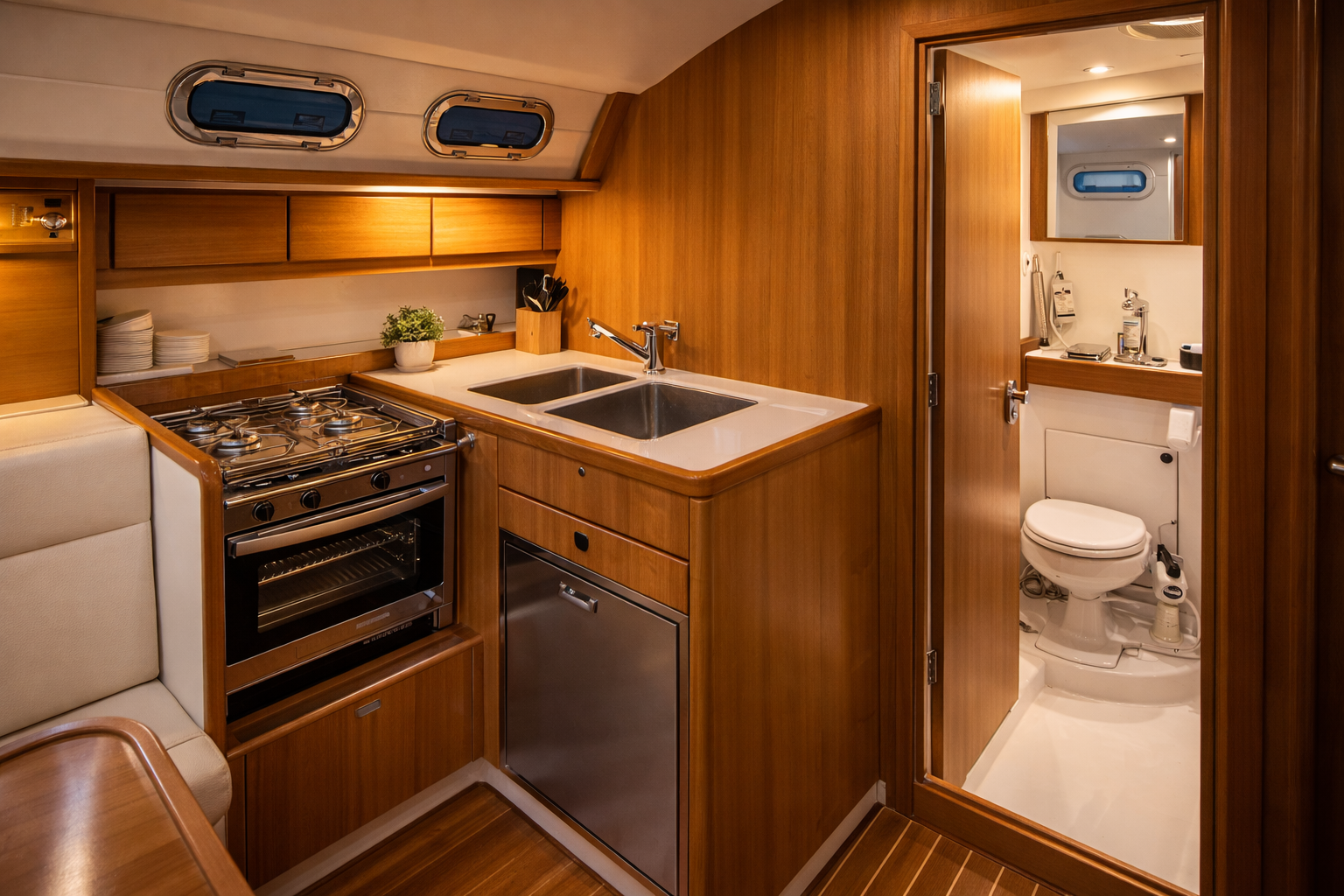
The yacht's interior layout, saloon, galley, and latrine, is compact and functional: a saloon with a dining area and chart table, a galley with a stove, oven, and refrigerator, and a latrine with a pump and shower.
Manual flushing of a toilet on a yacht
Instructions for manually flushing a toilet on a yacht:
- Make sure that only flushable items go into the toilet.
- Switch the pump to the dry position and pump several times to remove solid objects.
- Switch to the wet position and perform at least 15 pumps to completely rinse and send the contents to the storage tank.
- Switch back to "dry", remove the handle and lock.
8. Command panel and on-board systems
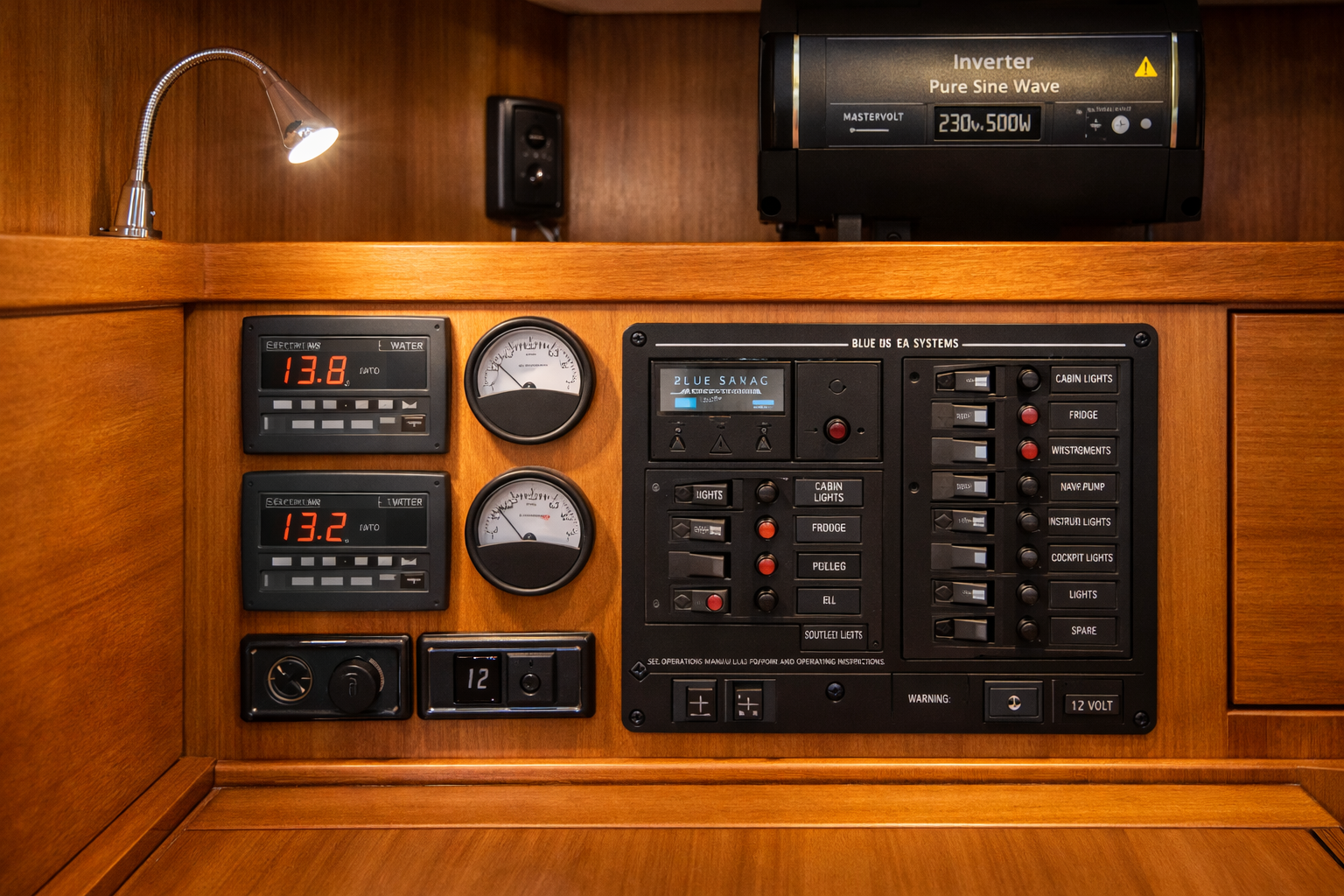
The panel near the chart table contains switches, indicators, and testers for batteries, water, and fuel. Labels and color coding make it easy to operate the systems at sea.
Yacht electrical system 12/24V inverter
The electrical system typically consists of 12V or 24V batteries, divided into service and starter batteries. Onboard power may include 220V shore power and an inverter for generating 220V for autonomous operation.
9. Water supply, fuel and gas
The water supply is provided by tanks and pumps. Fuel is stored in diesel tanks; the engine could be, for example, a Volvo Penta 40. The gas system powers the stove and oven, but requires strict safety precautions.
Water supply and pumps on a yacht
Water tanks and pumps deliver water under pressure; conserve fresh water and monitor the level on the panel testers.
Yacht gas system safety valves
The gas cylinders are located outside with an external valve, and there's a second valve inside under the stove. Always turn off both valves before heading out to sea and check for leaks.
10. Step-by-step procedures and operating skills
Short instructions and familiar operations save time and ensure safety.
- Winch: lay the sheet, set the handle, turn clockwise, secure with the stopper.
- Cam stopper: open, guide rope, close; remove stopper to release.
- Toilet flush: “dry”, “wet”, at least 15 strokes, “dry” – fix.
11. Terminology, tools and methods
Remember the key terms: keel, rudder blade, wheel, winch, cam stop, halyards, and sheets. Trimming sails and adjusting line is a daily routine for the crew.
12. Practical examples
- Example 1: two triangular sails - mainsail and staysail in a Bermuda rig.
- Example 2: Flushing the toilet with 15 strokes ensures reliable discharge into the holding tank.
- Example 3: Volvo Penta 40 - four-stroke diesel with transparent fuel tank for visual level checking.
13. Common mistakes and recommendations
- Do not throw foreign objects into the latrine - this will cause clogging and damage to the pump.
- Incorrectly laying the sheet on the winch will make it difficult to release the sail in an emergency.
- Unsecured stops can result in sudden loss of load and injury.
- Leaving a gas valve open is a serious risk, always turn off the valve.
- Do not neglect visually checking the fuel and water levels, even if there are sensors.
14. Post-results checklist
- Checking the antifouling paint on the underwater part and cleaning the hull.
- Checking the condition of the yacht's keel and fastenings and the presence of cracks/corrosion.
- Synchronization of thrust on two control wheels and quadrant test.
- Checking winches, sheet laying and operation of cam stops.
- Fuel and water levels, engine condition (e.g. Volvo Penta 40).
- Gas valves and safety - are the valves closed inside and outside?
- Pump operation, water pressure tests and reserve status.
- Battery status, charge and connection to shore power or inverter.
15. Conclusion
The hull, rigging, deck, and onboard systems combine to form a reliable and comfortable sailing yacht. Regular procedures, checklists, and knowledge of winches, stoppers, and onboard systems will ensure a safe and enjoyable sailing experience. Ready to get started? Subscribe to our upcoming articles and set sail with confidence.