Sailing yacht safety is a practical system of actions and habits that truly saves lives. This article provides concise, helpful instructions on what to check on a vessel, how to prepare the crew, which life jackets and signals to choose, and a checklist to complete before heading out to sea to minimize risks.
1. Preparing the yacht for sailing
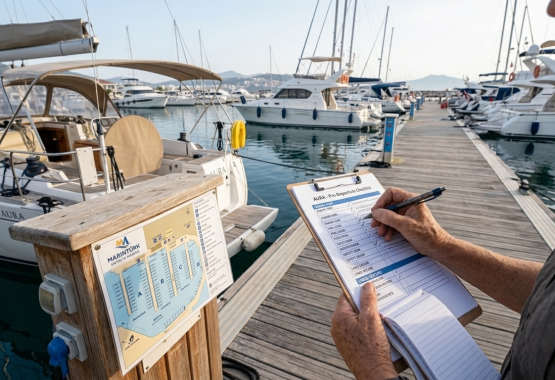
The captain is responsible for conducting a briefing and ensuring the vessel is ready for voyage. Key checks:
- Sealing the hatches prevents water from getting in during a storm or large waves.
- Seacock shut-off - Seacocks should be closed when not in use to prevent flooding.
- Turn off the gas supply - close the cylinder and valves, check the system for leaks before sailing.
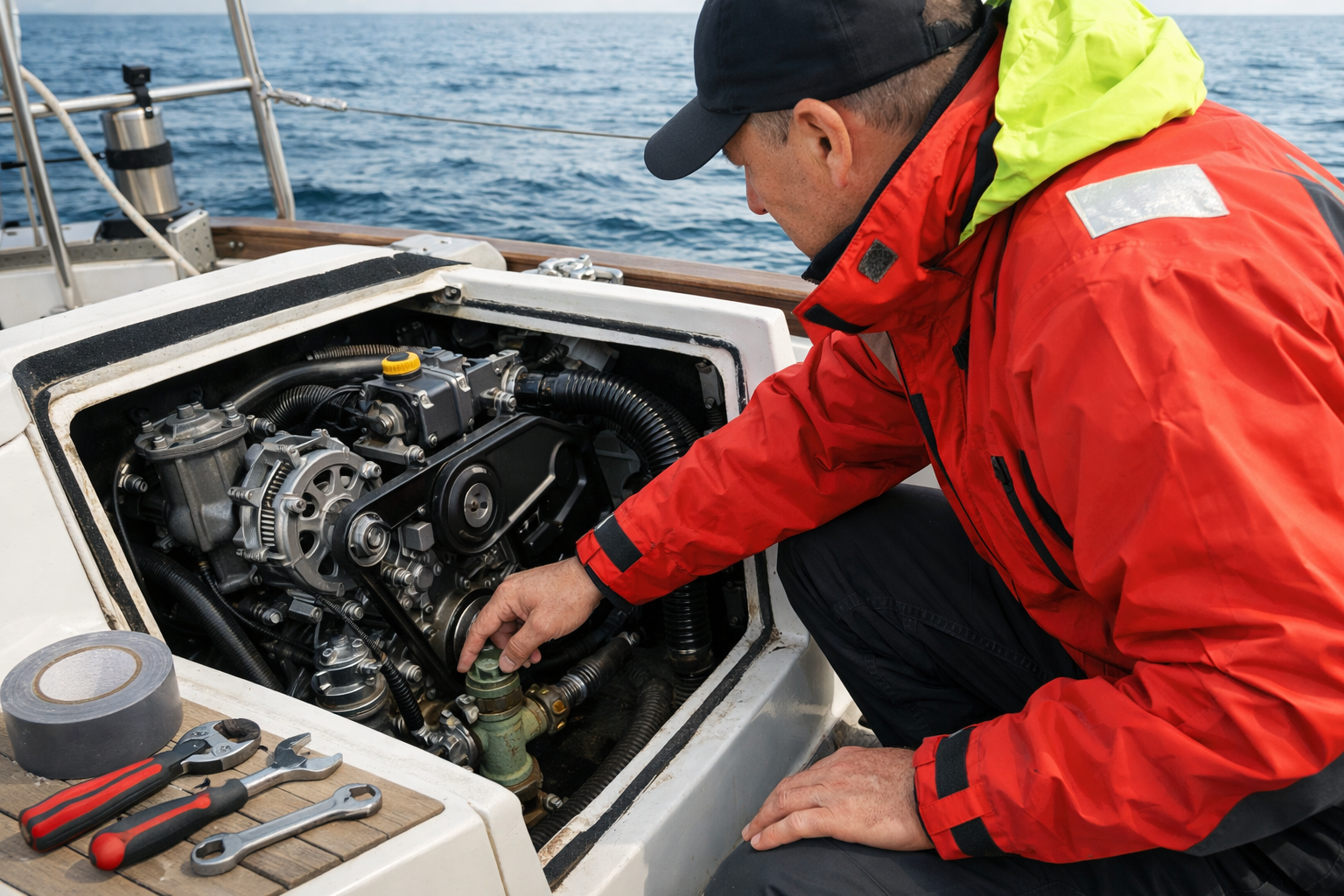
- Checking the engine and electrical system: Start the engine, monitor the oil temperature and pressure, and check for any abnormal noise; check the battery charge.
A detailed technical checklist and practical videos are available in the "Preparing Your Yacht for Sea" section.
2. Crew preparation
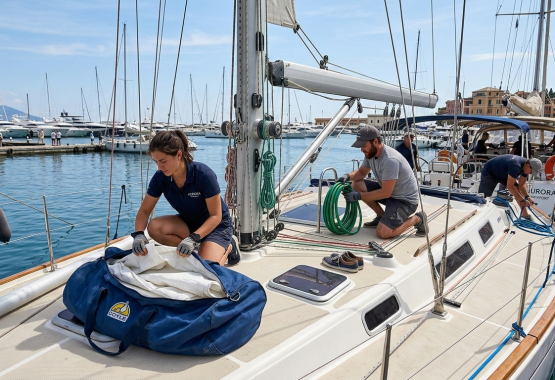
A short and clear briefing is the bare minimum. The crew must gather their personal belongings and equipment and know where everything is stored.
- Medical information: Everyone informs the captain of any chronic illnesses, a list of medications taken, dosages, and the exact location of medications - this is critical in emergency situations.
- Storage: Secure items in lockers to keep them out of the way and out of the way during rough seas.
- Gloves and shoes: Use gloves with open thumbs for precise rigging work; shoes should be lightweight, with non-slip soles and closed toes.
- Sun protection: A hat and quality sunglasses reduce the risk of overheating and glare from reflected light.
3. Personal rescue equipment (vests)
A vest is a basic piece of personal safety equipment. Let's look at the different types and how to inspect them.
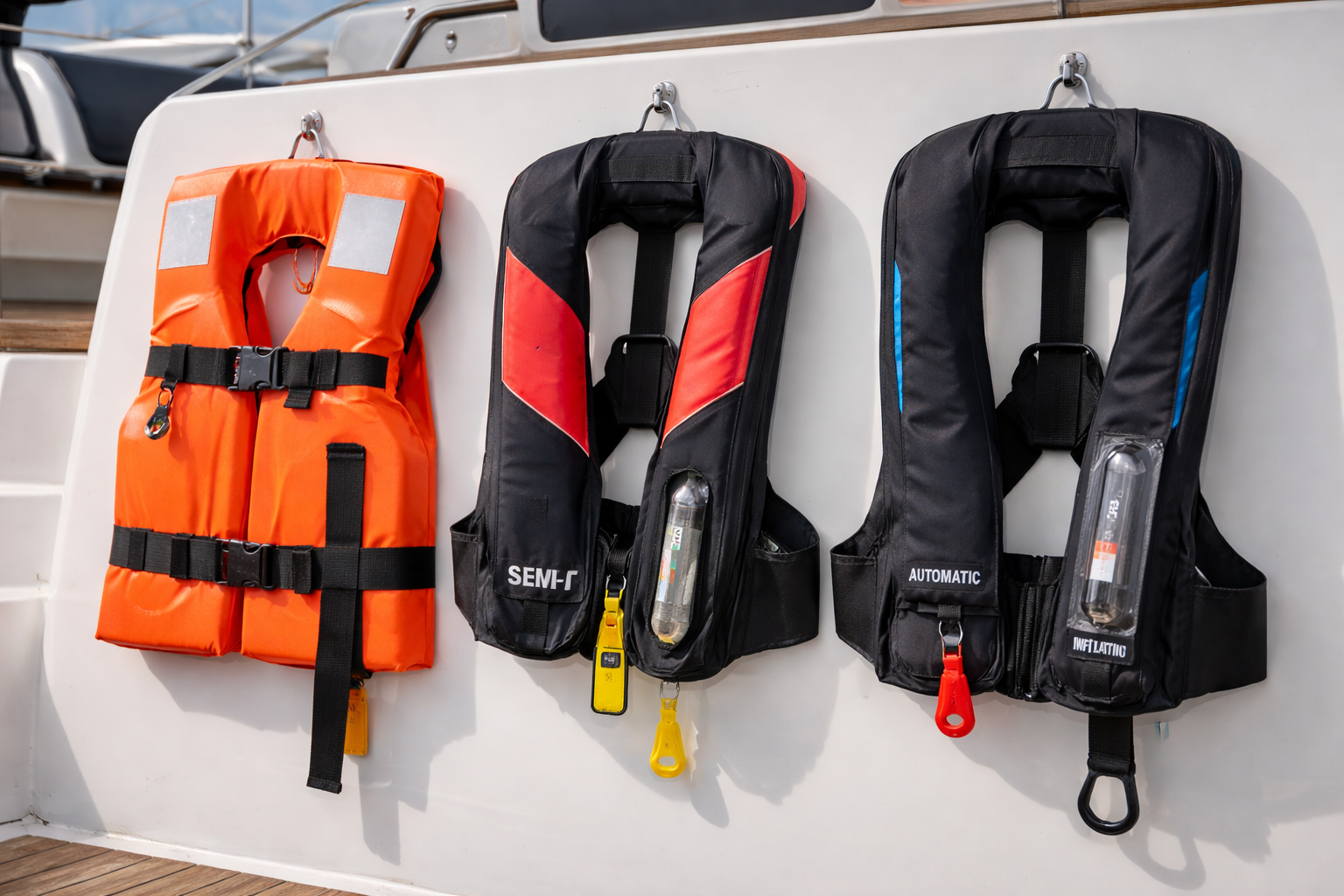
Foam vest
Reliable and simple: dense padding, a headrest for turning into a safe position, a whistle, and reflectors. Please pay attention to the size and load capacity label when choosing.
Semi-automatic vest
It's worn like a jacket, secured with a buckle, and has a safety clip for the tether. A yellow pin serves as a manual activation—pull it to inflate the vest; use the manual valve to top it off if necessary.
Fully automatic vest
It's activated by a built-in sensor upon contact with water and usually has a red pin. Always check the pin is intact and that manual activation is possible before leaving.
Fitting and inspection: The vest should fit snugly, with all straps fastened. Check for the presence of the cylinder and safety pin, inspect for corrosion and damage, and ensure the expiration dates of the components.
4. Signal pyrotechnics
Pyrotechnics are a reliable way to attract attention in a distress situation. The crew must know the storage location and operating procedures for each type of signal.
- White flares - to illuminate the area around the yacht, useful when searching for a man overboard in the dark.
- Red flares are the international distress signal; used in cases of real threat to life.
- Orange smoke is a daytime signal, clearly visible from a distance and helps indicate the position of a vessel.
Store fireworks in a dry, marked place, check expiration dates regularly and follow safety precautions when using.
5. Life-saving appliances of the vessel
This is a life raft and buoys - everyone should know their location and how to use them.
- Life raft: Everyone knows where it's stored and how to quickly launch it. In this example, the raft is in the portside locker—practice following the instructions beforehand.
- Rescue buoy: used in the case of a man overboard as a marker and support. Keep the buoy ready and practice throwing and pulling the victim.
6. Working with running rigging
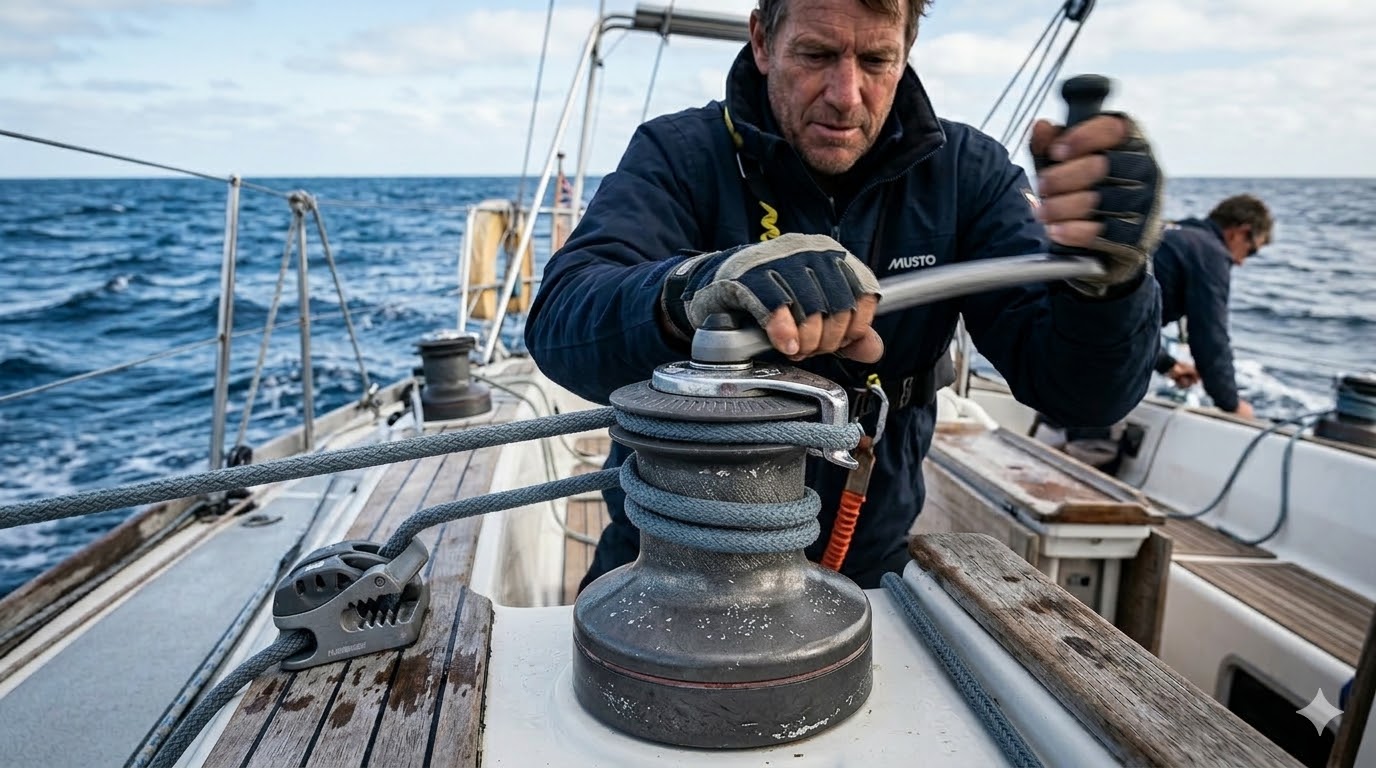
On a cruising yacht, the key tools are the key stop and winch. Understanding their operation reduces the risk of injury and saves time.
Key stopper
Two positions: open—the rope moves in both directions; closed—movement is limited to one direction. Use the winch to fine-tune the tension.
Winch: Hoses application order
- Place 2-3 hoses on the drum from bottom to top clockwise and take up the slack.
- Add 2 more slings through the guide, secure the rope with the stop slot and insert the handle.
- Rotate the handle with both hands, first counterclockwise; if you apply strong force, reverse direction—the winch rotates clockwise, but the technique depends on the direction of the handle.
Rule of thumb: Use one winch at a time for all key stoppers, moving it between the rigs.
How to pay out a rope under tension
Safe sequence:
- Remove the handle and carefully pull the rope out of the locking slot.
- Maintaining tension, loosen the rope two turns.
- Open the stopper and smoothly release the desired length, holding the rope with both hands.
- Close the stopper and remove the rope from the winch if necessary.
7. Rules for moving around the yacht deck
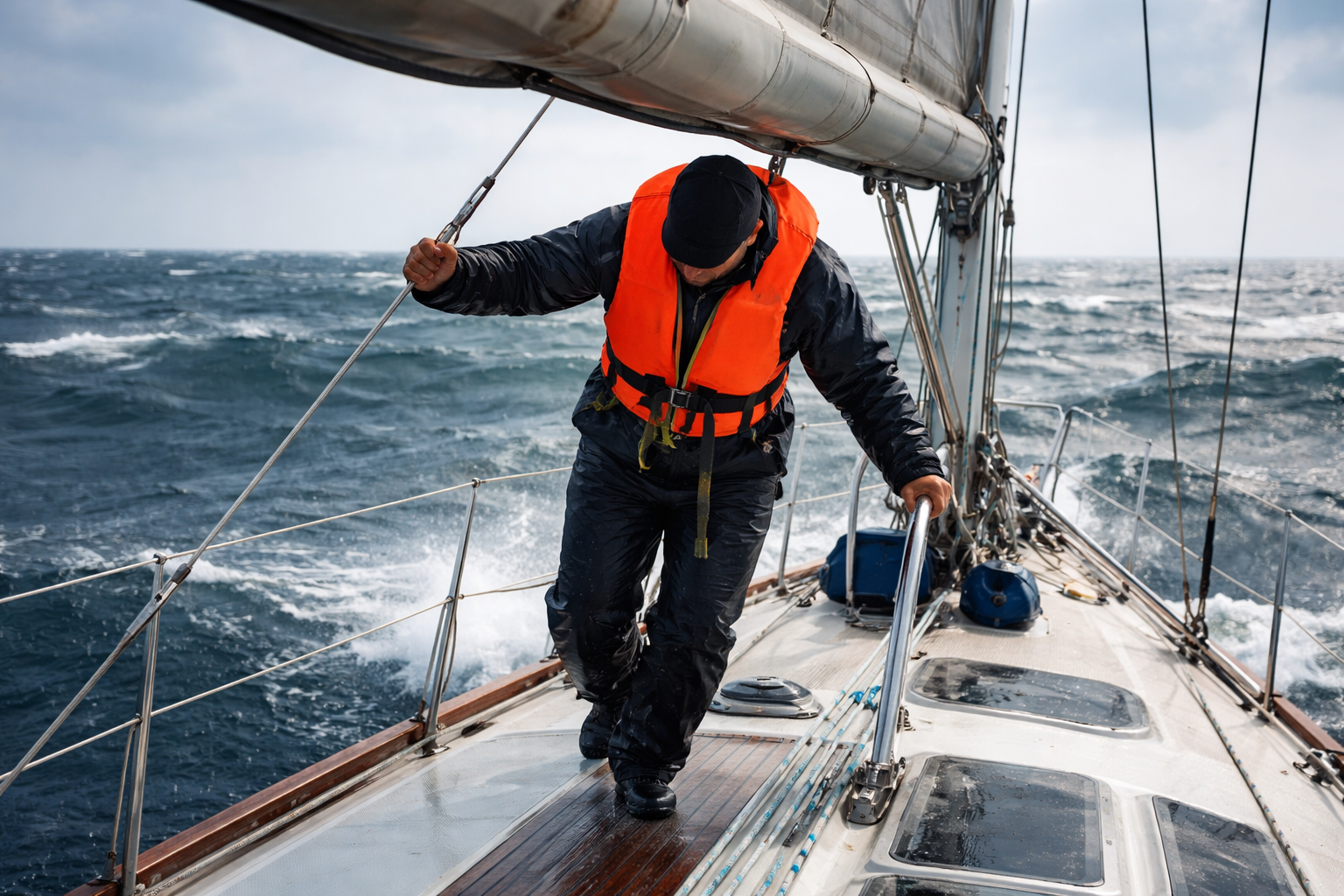
Deck discipline prevents injuries. The basic rules are simple and mandatory.
- Wear a life jacket when going out to sea and in bad weather.
- Approach the bow along the windward side in an inclined position, holding onto the rail and handrail.
- Do not raise your head above the boom level - this reduces the risk of being hit when it is moved.
8. Step-by-step instructions before going to sea
- The captain conducts a briefing and collects medical information from the crew.
- Batten down the hatches and close the seacocks.
- Turn off the gas and check the electrical system.
- Check the engine and batteries.
- Lay out the equipment: vests, gloves, shoes, glasses.
- Check the location of the life raft and signal pyrotechnics.
- Inspect the winches and stoppers, prepare the ropes.
- Make sure everyone knows the rules for moving around the deck and the emergency procedures.
9. Tools, methods and principles
Briefly about the principles to remember:
- Key Stop - Choose the correct position to control the movement of the tackle.
- Winch - observe the order of the hoses and the technique of turning the handle.
- Semi-automatic vest - check the receipts and know how to inflate the vest through the valve.
- Automatic vest - treat the automatic as a backup, always check the manual activation.
10. Practical examples
Here are some helpful scenarios to practice with:
- The location of the life raft in the left locker and the algorithm for its extraction must be practiced until it becomes automatic.
- Working with a winch: 2-3 hoses, selecting slack, additional hoses and fixing before working with the handle.
11. Common mistakes and how to avoid them
- Failure to inform the captain about your health and medications may result in delayed assistance; inform in advance.
- Store items loosely - secure them to avoid injury and loss.
- Working without gloves and appropriate footwear increases the risk of injury during rigging work.
- If you don't know the structure of the vest and the location of the pin/cylinder, conduct a quick briefing before the flight.
- Staying on the bow without a life jacket and restraint is prohibited; always hold onto the lifeline and maintain a safe position.
- Incorrect use of winch and stoppers - practice maneuvers in calm conditions.
12. Yacht safety checklist before going out
- The captain was briefed and medical information from the crew was collected.
- Battened down hatches and closed seacocks.
- The gas was turned off, the engine and batteries were checked.
- Vests for everyone; types, receipts and cylinders checked.
- Signal pyrotechnics and life raft are in place and in working order.
- Yachting gloves and non-slip shoes on board.
- The winches and key stoppers have been checked and the ropes have been prepared.
- The rules for moving around the deck have been communicated to the crew.
13. Conclusion
Safety on board is built on three pillars: thorough yacht preparation, responsible crew briefings, and regular practice. Go through the checklist before setting out, practice at the dock, and maintain your gear—this significantly reduces risks and makes sailing more relaxing and enjoyable.